


13 Perennials to Prepare for Winter With October Pruning!
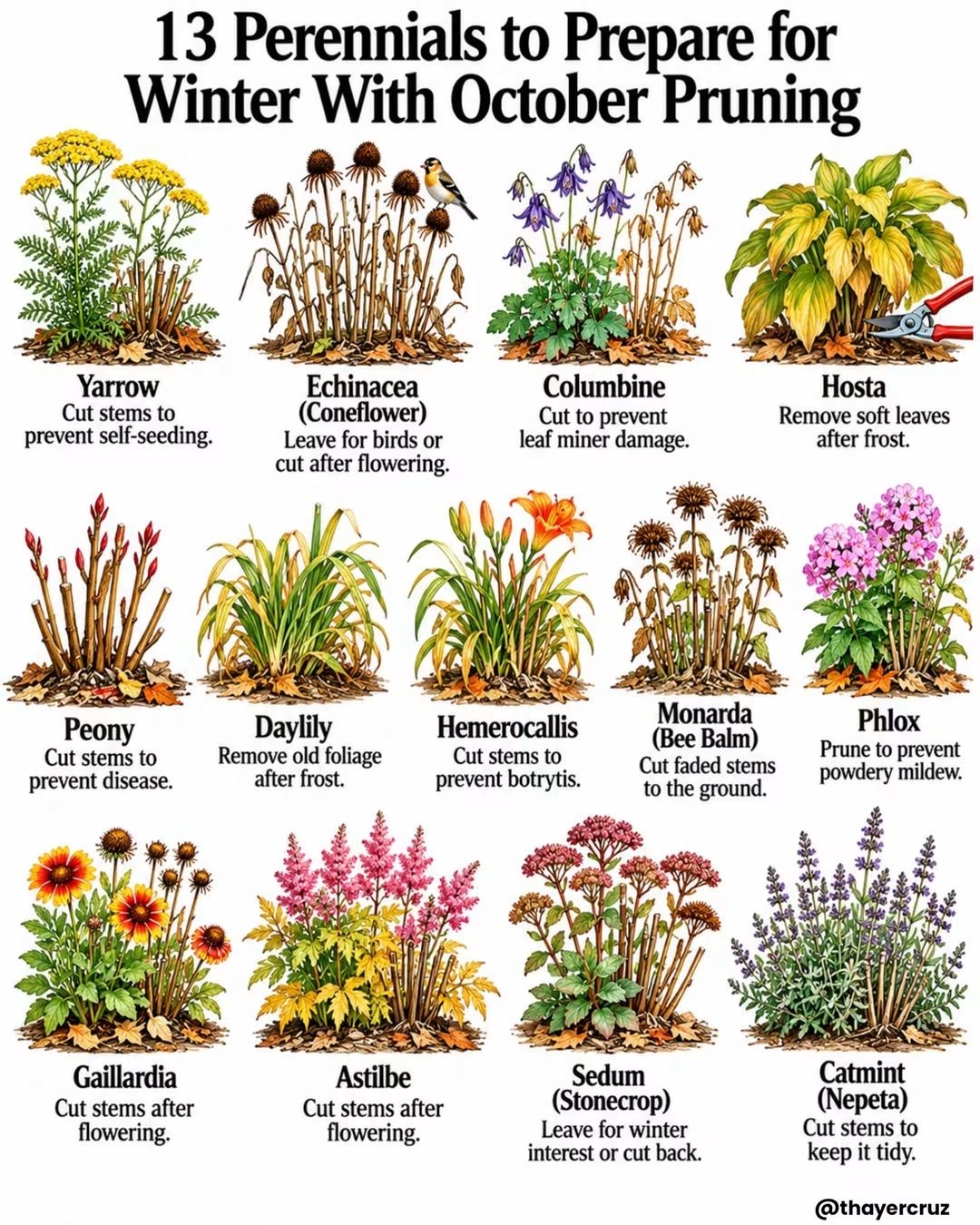
October is a good time to cut back certain perennials, including Peonies, Hostas, Daylilies and Bee Balm. Remove dead, damaged, or diseased foliage after the growing season to keep plants healthy and reduce the risk of overwintering pests and diseases.
Not every perennials needs fall pruning. Leave seed heads on Coneflowers, Sedum, and Yarrow to provide food for birds and shelter for beneficial insects. Their dried stems also add natural beauty and structure to winter gardens.
After pruning, remove diseased plant debris and apply a layer of mulch around the base of your perennials. Mulch helps regulate soil temperature, protects roots from repeated freezing and thawing, and supports healthy growth when warmer weather returns.
13 Perennials to Prepare for Winter With October Pruning!
October is a good time to cut back certain perennials, including Peonies, Hostas, Daylilies and Bee Balm. Remove dead, damaged, or diseased foliage after the growing season to keep plants healthy and reduce the risk of overwintering pests and diseases.
Not every perennials needs fall pruning. Leave seed heads on Coneflowers, Sedum, and Yarrow to provide food for birds and shelter for beneficial insects. Their dried stems also add natural beauty and structure to winter gardens.
After pruning, remove diseased plant debris and apply a layer of mulch around the base of your perennials. Mulch helps regulate soil temperature, protects roots from repeated freezing and thawing, and supports healthy growth when warmer weather returns.
0 Commenti
0 condivisioni
11 Views

 English
 Arabic
 French
 Spanish
 Portuguese
 Deutsch
 Turkish
 Dutch
 Russian
 Romaian
 Portuguese (Brazil)
 Greek