



All Intentions To Educate, Clips Belong To The Rightful Owners
-
1 A la gente le gusta esto.
-
207 Entradas
-
175 Fotos
-
27 Videos
-
Vista previa
-
People and Nations
Buscar
© 2026 FriendsYouAre
 Spanish
 English
 Arabic
 French
 Portuguese
 Deutsch
 Turkish
 Dutch
 Italiano
 Russian
 Romaian
 Portuguese (Brazil)
 Greek
Actualizaciones Recientes
-
In 1847, Missouri passed a law that prohibited teaching Black people, both enslaved and free, to read or write. In St. Louis, this forced Reverend John Berry Meachum to close the school he had been operating in the basement of his church. Rather than accept the restriction, Meachum found an unusual way to continue teaching. He moved the classroom onto a steamboat anchored in the Mississippi River, beyond the reach of Missouri's state jurisdiction.
The school became known as the Floating Freedom School. Meachum equipped the vessel with desks, chairs, and a library, while students were carried from the St. Louis shore to the boat in smaller vessels. The school served both free and enslaved Black students and educated hundreds of children during the 1840s and 1850s. One of its students was James Milton Turner, who later became an important Black educator and political leader in Missouri after the Civil War. [Steamship Historical Society]
The image often shared with this story identifies the boat as the *Ben Campbell*, but historians caution that the exact vessel used as the Floating Freedom School is not established with complete certainty. The *Ben Campbell* is commonly associated with the school, but surviving historical evidence leaves some uncertainty about the identification.
Meachum's story reveals how education itself became an act of resistance under slavery. Missouri could criminalize the classroom, but it could not easily extinguish the determination of Black families and educators to pursue literacy. The Floating Freedom School was more than a place to learn. It represented a deliberate effort to preserve access to knowledge when the law was being used to take that opportunity away.
#BlackHistory #BlackEducationIn 1847, Missouri passed a law that prohibited teaching Black people, both enslaved and free, to read or write. In St. Louis, this forced Reverend John Berry Meachum to close the school he had been operating in the basement of his church. Rather than accept the restriction, Meachum found an unusual way to continue teaching. He moved the classroom onto a steamboat anchored in the Mississippi River, beyond the reach of Missouri's state jurisdiction. The school became known as the Floating Freedom School. Meachum equipped the vessel with desks, chairs, and a library, while students were carried from the St. Louis shore to the boat in smaller vessels. The school served both free and enslaved Black students and educated hundreds of children during the 1840s and 1850s. One of its students was James Milton Turner, who later became an important Black educator and political leader in Missouri after the Civil War. [Steamship Historical Society] The image often shared with this story identifies the boat as the *Ben Campbell*, but historians caution that the exact vessel used as the Floating Freedom School is not established with complete certainty. The *Ben Campbell* is commonly associated with the school, but surviving historical evidence leaves some uncertainty about the identification. Meachum's story reveals how education itself became an act of resistance under slavery. Missouri could criminalize the classroom, but it could not easily extinguish the determination of Black families and educators to pursue literacy. The Floating Freedom School was more than a place to learn. It represented a deliberate effort to preserve access to knowledge when the law was being used to take that opportunity away. #BlackHistory #BlackEducation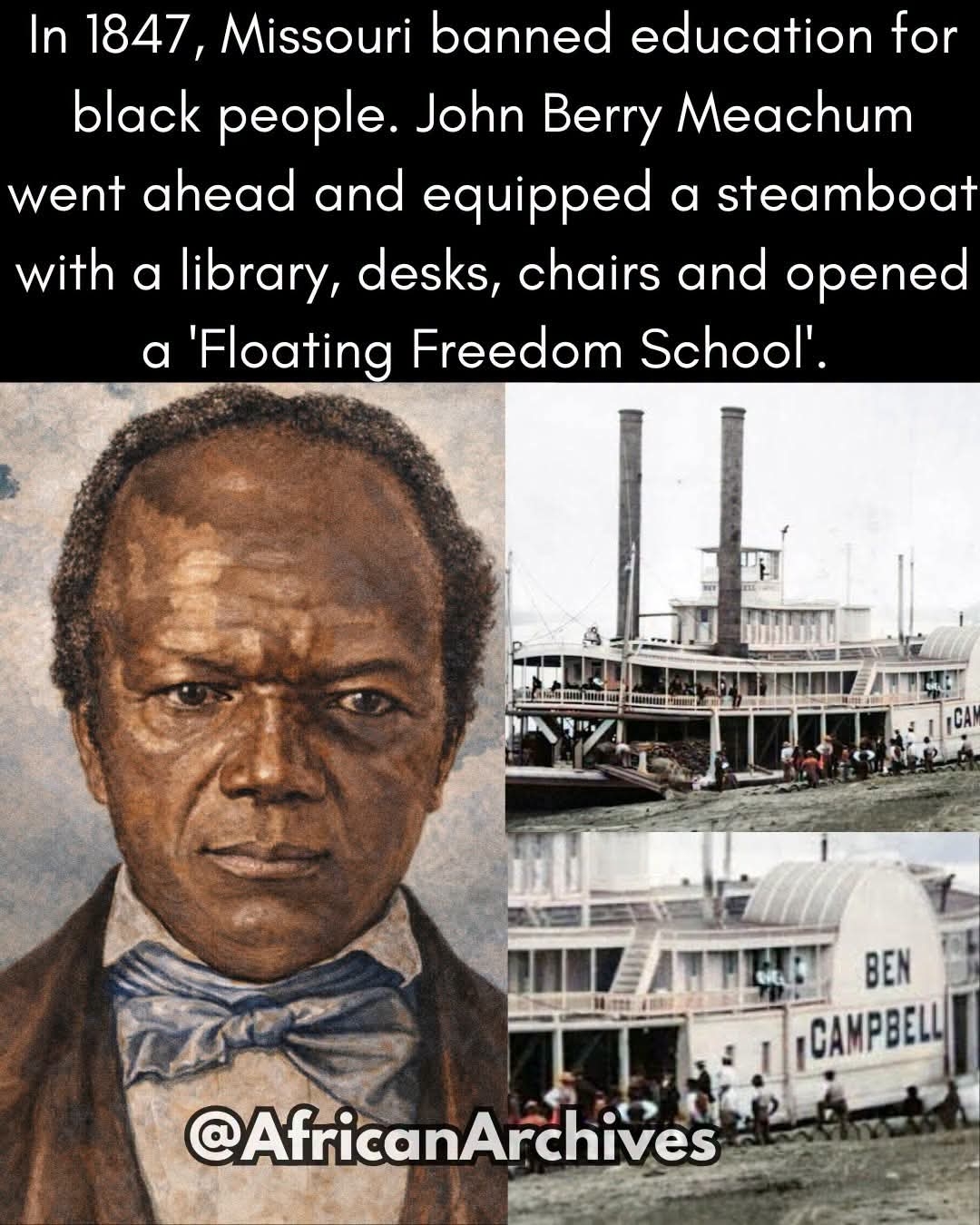 0 Commentarios 0 Acciones 134 Views
-
Sold at auction in Georgia. She was bought by a plantation owner who worked her in the fields for 15 years, then in the kitchen for 12 more.
In 1865, when emancipation came, Ella was 28 years old. She had nothing. No money. No home. No family.
She worked as a sharecropper for the next 12 years and saved every penny she could.
In 1877, at the age of 40, Ella bought 40 acres of land. She paid $400 in cash — roughly $12,000 in today’s money. She was one of the first Black women in Georgia to own land in her own name.
She farmed that land for 30 years. She raised seven children. She died in 1907.
In her will, she left clear instructions:
“This land was bought with hands that were once sold. Do not sell it. Ever.”
Her descendants still own the land today. It has remained in the family for 146 years. The property is now worth $2 million.
Ella’s great-great-granddaughter, a lawyer, said:
“My grandmother was sold for less than a horse. She bought land for more than most men earned in a lifetime. That is not a story of slavery. That is a story of ownership.”
This is the story of one woman who turned nothing into something that would last for generations.Sold at auction in Georgia. She was bought by a plantation owner who worked her in the fields for 15 years, then in the kitchen for 12 more. In 1865, when emancipation came, Ella was 28 years old. She had nothing. No money. No home. No family. She worked as a sharecropper for the next 12 years and saved every penny she could. In 1877, at the age of 40, Ella bought 40 acres of land. She paid $400 in cash — roughly $12,000 in today’s money. She was one of the first Black women in Georgia to own land in her own name. She farmed that land for 30 years. She raised seven children. She died in 1907. In her will, she left clear instructions: “This land was bought with hands that were once sold. Do not sell it. Ever.” Her descendants still own the land today. It has remained in the family for 146 years. The property is now worth $2 million. Ella’s great-great-granddaughter, a lawyer, said: “My grandmother was sold for less than a horse. She bought land for more than most men earned in a lifetime. That is not a story of slavery. That is a story of ownership.” This is the story of one woman who turned nothing into something that would last for generations.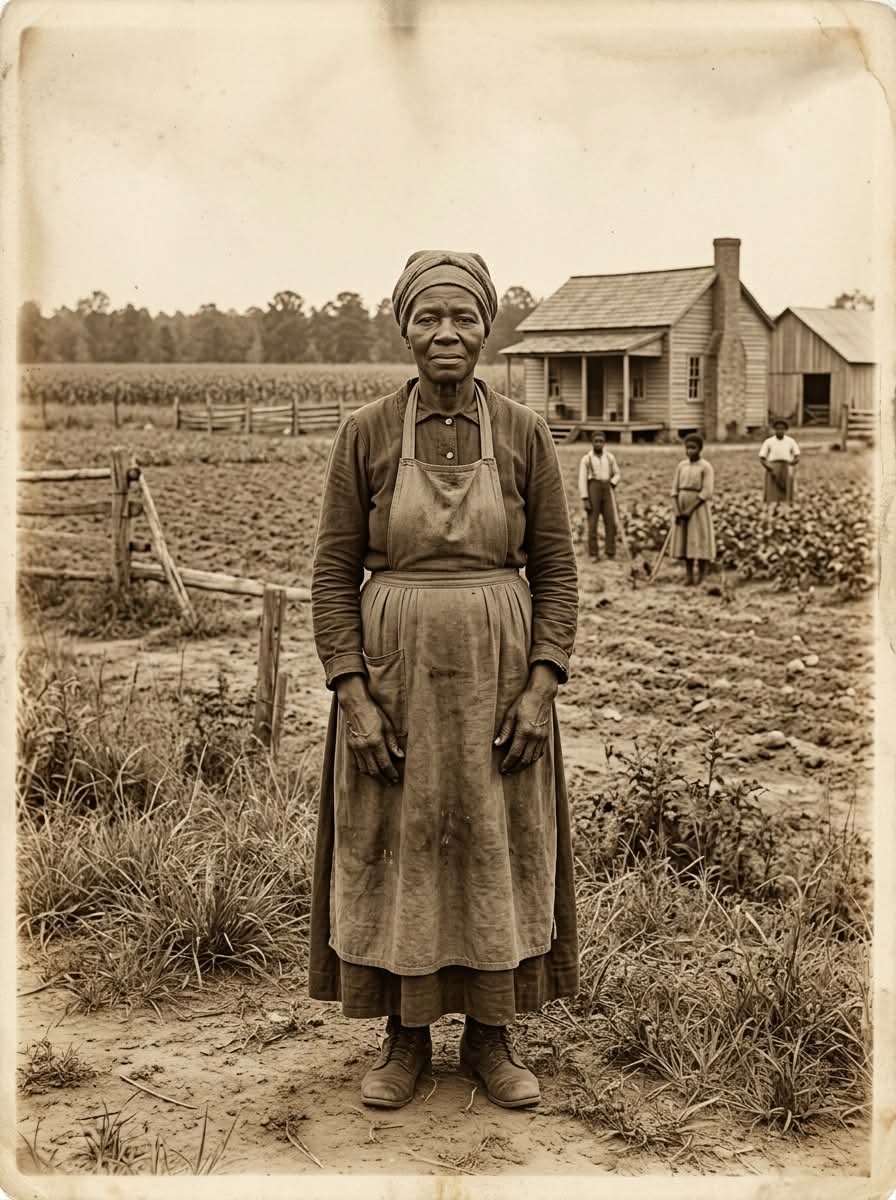 0 Commentarios 0 Acciones 455 Views
-
In 1932, a powerful photograph captured a family of tenant farmers standing outside their modest one-room cabin in Greene County, Alabama. The image, now preserved in historical collections, offers a revealing glimpse into the hardships experienced by countless rural families during the Great Depression. The small cabin, with its weathered wooden walls and narrow front porch, represented the endurance and resilience required to survive through years of economic uncertainty and hardship.
Tenant farming remained widespread throughout the South during this era, with landowners supplying farmland and basic tools while farming families worked in exchange for a portion of the crops they produced. For many families, including this one, the arrangement often resulted in ongoing debt and very little independence. Life under these conditions demanded exhausting labor, and families remained deeply dependent on the land while possessing few resources and almost no control over their future.
Despite the visible signs of struggle shown in their clothing and posture, the expressions on the family’s faces still reflect quiet dignity, patience, and strength. The small cabin behind them, though simple and worn, served as a place of shelter, unity, and survival where family members depended on one another through difficult years. More than simply documenting poverty, this photograph stands as a tribute to the determination of those who endured the Great Depression, preserving both their hardships and the enduring spirit that carried them forward.In 1932, a powerful photograph captured a family of tenant farmers standing outside their modest one-room cabin in Greene County, Alabama. The image, now preserved in historical collections, offers a revealing glimpse into the hardships experienced by countless rural families during the Great Depression. The small cabin, with its weathered wooden walls and narrow front porch, represented the endurance and resilience required to survive through years of economic uncertainty and hardship. Tenant farming remained widespread throughout the South during this era, with landowners supplying farmland and basic tools while farming families worked in exchange for a portion of the crops they produced. For many families, including this one, the arrangement often resulted in ongoing debt and very little independence. Life under these conditions demanded exhausting labor, and families remained deeply dependent on the land while possessing few resources and almost no control over their future. Despite the visible signs of struggle shown in their clothing and posture, the expressions on the family’s faces still reflect quiet dignity, patience, and strength. The small cabin behind them, though simple and worn, served as a place of shelter, unity, and survival where family members depended on one another through difficult years. More than simply documenting poverty, this photograph stands as a tribute to the determination of those who endured the Great Depression, preserving both their hardships and the enduring spirit that carried them forward.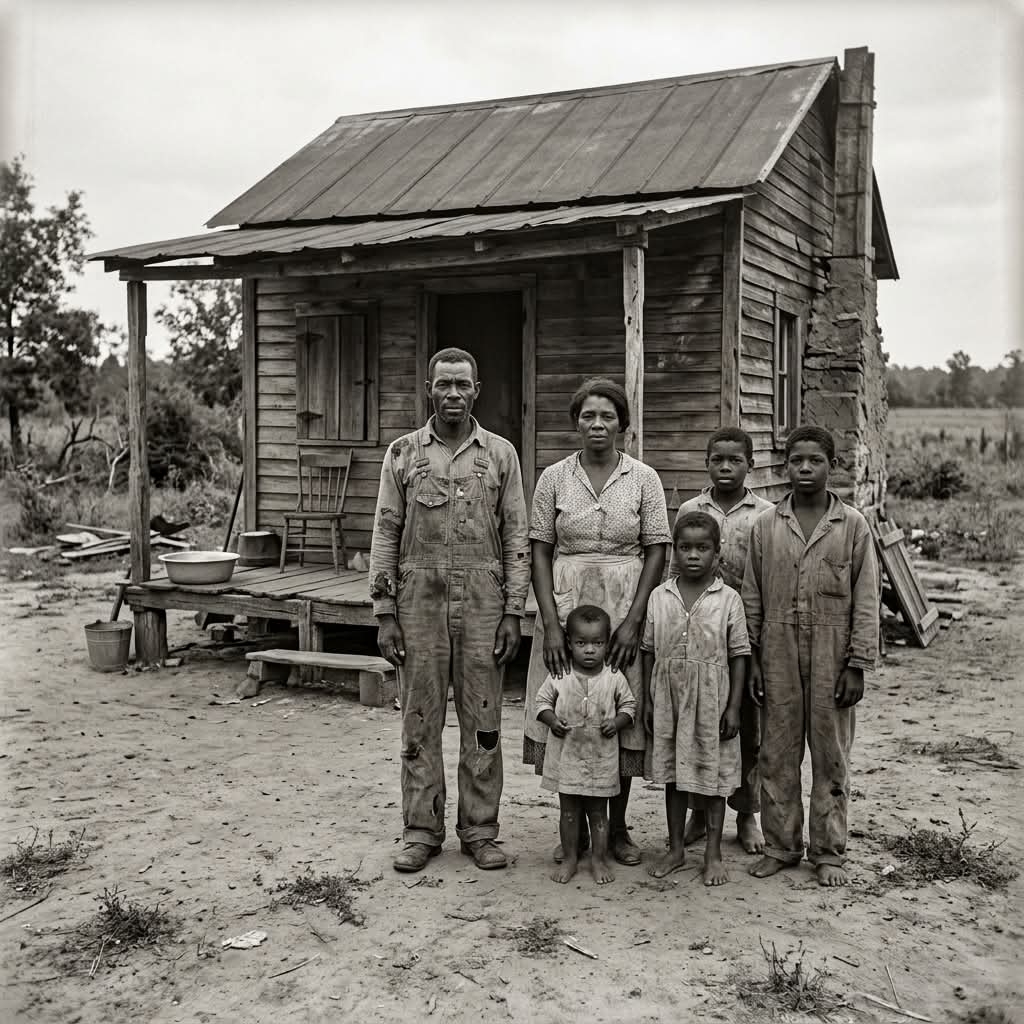 0 Commentarios 0 Acciones 511 Views
-
https://youtu.be/rehhl_3xP_s?is=BoKbUo9akzI8TeuH
 0 Commentarios 0 Acciones 382 Views
-
https://bsky.app/profile/contemprainn.bsky.social/post/3mtpp6nklms2b0 Commentarios 0 Acciones 325 Views





Quizás te interese…