


10 Causes of Blown Fuses
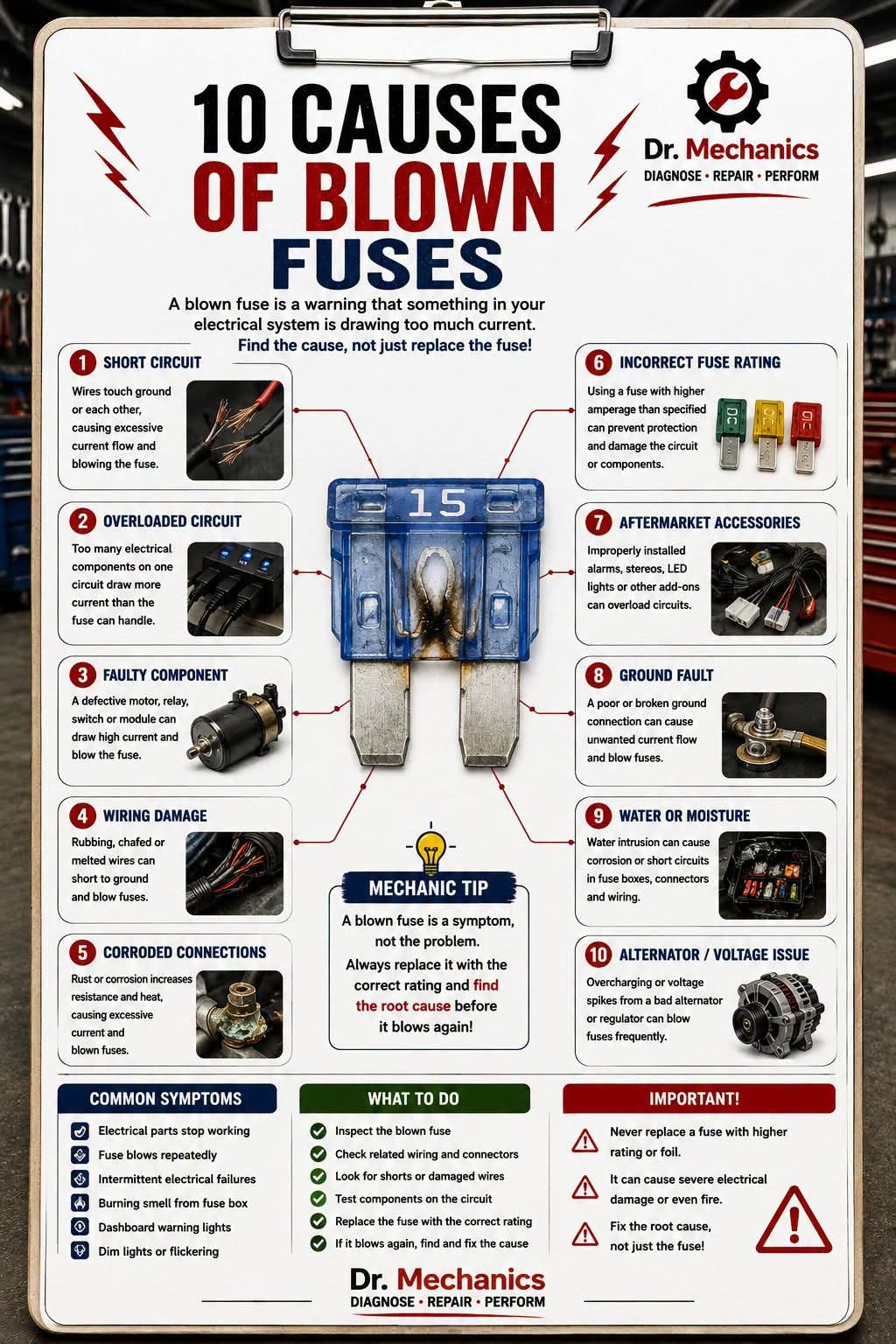
A blown fuse is not the problem—it is a warning that something in the electrical circuit is drawing too much current or has developed a fault. The fuse is designed to protect wiring, switches, relays, and electronic control units (ECUs) from overheating and potential fire. Simply replacing the fuse without finding the root cause will often result in the new fuse blowing again.
The most common cause is a short circuit, where a damaged wire touches the vehicle body or another wire, allowing excessive current to flow. Overloaded circuits are another frequent reason. Installing high-power accessories such as auxiliary lights, amplifiers, or additional electrical equipment on an existing circuit can exceed the fuse's current rating.
A faulty electrical component, such as a starter motor, cooling fan motor, fuel pump, relay, or solenoid, may develop an internal short and repeatedly blow the fuse. Damaged wiring caused by vibration, heat, rodents, or rubbing against sharp metal edges is another common issue.
Corroded battery terminals, ground connections, or fuse box contacts increase electrical resistance, creating excessive heat that can damage the circuit. Water entering the fuse box or electrical connectors can also create short circuits and corrosion.
Using the wrong fuse rating is dangerous. Installing a fuse with a higher amperage than specified may stop the fuse from blowing, but it can allow the wiring to overheat and even cause an electrical fire. Poorly installed aftermarket accessories, such as alarms, audio systems, LED lights, or dash cameras, can also overload circuits or create wiring faults.
Finally, a faulty alternator or voltage regulator can produce voltage spikes that repeatedly damage electrical components and blow fuses.
Common Symptoms
One or more electrical components stop working
Fuse blows repeatedly
Burning smell near the fuse box
Dashboard warning lights
Intermittent electrical faults
Lights flicker or operate abnormally
Mechanic Tip
Never replace a blown fuse with foil, wire, or a higher-rated fuse. Always install the correct fuse specified by the manufacturer. If the replacement fuse blows immediately, disconnect the affected component and inspect the wiring for shorts, damaged insulation, corrosion, or moisture. A multimeter or test light can help locate the fault safely.
Remember: A fuse sacrifices itself to protect the rest of the electrical system. Replacing the fuse may restore power temporarily, but unless the underlying electrical fault is repaired, the problem will return. Proper diagnosis not only prevents repeated fuse failures but also protects expensive electronic modules, wiring harnesses, and your vehicle from serious electrical damage.
#cars #carcare #mechanic #Nissan
A blown fuse is not the problem—it is a warning that something in the electrical circuit is drawing too much current or has developed a fault. The fuse is designed to protect wiring, switches, relays, and electronic control units (ECUs) from overheating and potential fire. Simply replacing the fuse without finding the root cause will often result in the new fuse blowing again.
The most common cause is a short circuit, where a damaged wire touches the vehicle body or another wire, allowing excessive current to flow. Overloaded circuits are another frequent reason. Installing high-power accessories such as auxiliary lights, amplifiers, or additional electrical equipment on an existing circuit can exceed the fuse's current rating.
A faulty electrical component, such as a starter motor, cooling fan motor, fuel pump, relay, or solenoid, may develop an internal short and repeatedly blow the fuse. Damaged wiring caused by vibration, heat, rodents, or rubbing against sharp metal edges is another common issue.
Corroded battery terminals, ground connections, or fuse box contacts increase electrical resistance, creating excessive heat that can damage the circuit. Water entering the fuse box or electrical connectors can also create short circuits and corrosion.
Using the wrong fuse rating is dangerous. Installing a fuse with a higher amperage than specified may stop the fuse from blowing, but it can allow the wiring to overheat and even cause an electrical fire. Poorly installed aftermarket accessories, such as alarms, audio systems, LED lights, or dash cameras, can also overload circuits or create wiring faults.
Finally, a faulty alternator or voltage regulator can produce voltage spikes that repeatedly damage electrical components and blow fuses.
Common Symptoms
One or more electrical components stop working
Fuse blows repeatedly
Burning smell near the fuse box
Dashboard warning lights
Intermittent electrical faults
Lights flicker or operate abnormally
Mechanic Tip
Never replace a blown fuse with foil, wire, or a higher-rated fuse. Always install the correct fuse specified by the manufacturer. If the replacement fuse blows immediately, disconnect the affected component and inspect the wiring for shorts, damaged insulation, corrosion, or moisture. A multimeter or test light can help locate the fault safely.
Remember: A fuse sacrifices itself to protect the rest of the electrical system. Replacing the fuse may restore power temporarily, but unless the underlying electrical fault is repaired, the problem will return. Proper diagnosis not only prevents repeated fuse failures but also protects expensive electronic modules, wiring harnesses, and your vehicle from serious electrical damage.
#cars #carcare #mechanic #Nissan
🔌 10 Causes of Blown Fuses
A blown fuse is not the problem—it is a warning that something in the electrical circuit is drawing too much current or has developed a fault. The fuse is designed to protect wiring, switches, relays, and electronic control units (ECUs) from overheating and potential fire. Simply replacing the fuse without finding the root cause will often result in the new fuse blowing again.
The most common cause is a short circuit, where a damaged wire touches the vehicle body or another wire, allowing excessive current to flow. Overloaded circuits are another frequent reason. Installing high-power accessories such as auxiliary lights, amplifiers, or additional electrical equipment on an existing circuit can exceed the fuse's current rating.
A faulty electrical component, such as a starter motor, cooling fan motor, fuel pump, relay, or solenoid, may develop an internal short and repeatedly blow the fuse. Damaged wiring caused by vibration, heat, rodents, or rubbing against sharp metal edges is another common issue.
Corroded battery terminals, ground connections, or fuse box contacts increase electrical resistance, creating excessive heat that can damage the circuit. Water entering the fuse box or electrical connectors can also create short circuits and corrosion.
Using the wrong fuse rating is dangerous. Installing a fuse with a higher amperage than specified may stop the fuse from blowing, but it can allow the wiring to overheat and even cause an electrical fire. Poorly installed aftermarket accessories, such as alarms, audio systems, LED lights, or dash cameras, can also overload circuits or create wiring faults.
Finally, a faulty alternator or voltage regulator can produce voltage spikes that repeatedly damage electrical components and blow fuses.
Common Symptoms
One or more electrical components stop working
Fuse blows repeatedly
Burning smell near the fuse box
Dashboard warning lights
Intermittent electrical faults
Lights flicker or operate abnormally
Mechanic Tip
Never replace a blown fuse with foil, wire, or a higher-rated fuse. Always install the correct fuse specified by the manufacturer. If the replacement fuse blows immediately, disconnect the affected component and inspect the wiring for shorts, damaged insulation, corrosion, or moisture. A multimeter or test light can help locate the fault safely.
Remember: A fuse sacrifices itself to protect the rest of the electrical system. Replacing the fuse may restore power temporarily, but unless the underlying electrical fault is repaired, the problem will return. Proper diagnosis not only prevents repeated fuse failures but also protects expensive electronic modules, wiring harnesses, and your vehicle from serious electrical damage.
#cars #carcare #mechanic #Nissan
0 Comments
0 Shares
186 Views

 Arabic
 French
 Spanish
 Portuguese
 Deutsch
 Turkish
 Dutch
Dutch
 Italiano
 Russian
 Romaian
 Portuguese (Brazil)
 Greek
Greek