• A Mexican truck driver was caught on camera repeatedly leaving the steering wheel while his truck continued moving down the highway.

    The driver eventually moved toward the sleeping area of the cab, leaving the vehicle without proper control. Moments later, the truck drifted off course and crashed.

    The footage, reportedly recorded in Veracruz, Mexico, has gone viral online, sparking criticism over the driver's dangerous behavior.

    - The driver survived the crash.

    Follow For More

    #RoadSafety #TruckCrash #DangerousDriving #ViralVideo #Veracruz
    A Mexican truck driver was caught on camera repeatedly leaving the steering wheel while his truck continued moving down the highway. The driver eventually moved toward the sleeping area of the cab, leaving the vehicle without proper control. Moments later, the truck drifted off course and crashed. The footage, reportedly recorded in Veracruz, Mexico, has gone viral online, sparking criticism over the driver's dangerous behavior. - The driver survived the crash. Follow For More #RoadSafety #TruckCrash #DangerousDriving #ViralVideo #Veracruz
    0 Kommentare 0 Geteilt 1KB Ansichten 1
  • A Mexican truck driver was caught on camera repeatedly leaving the steering wheel while his truck continued moving down the highway.

    The driver eventually moved toward the sleeping area of the cab, leaving the vehicle without proper control. Moments later, the truck drifted off course and crashed.

    The footage, reportedly recorded in Veracruz, Mexico, has gone viral online, sparking criticism over the driver's dangerous behavior.

    - The driver survived the crash.

    Follow For More

    #RoadSafety #TruckCrash #DangerousDriving #ViralVideo #Veracruz
    A Mexican truck driver was caught on camera repeatedly leaving the steering wheel while his truck continued moving down the highway. The driver eventually moved toward the sleeping area of the cab, leaving the vehicle without proper control. Moments later, the truck drifted off course and crashed. The footage, reportedly recorded in Veracruz, Mexico, has gone viral online, sparking criticism over the driver's dangerous behavior. - The driver survived the crash. Follow For More #RoadSafety #TruckCrash #DangerousDriving #ViralVideo #Veracruz
    0 Kommentare 0 Geteilt 1KB Ansichten 1
  • HOW TO MAKE A SURVIVAL BED IN THE FOREST

    A survival bed keeps your body off the cold, damp ground, helping conserve warmth, energy, and comfort during an overnight stay in the wilderness.

    1. CHOOSE A SAFE SPOT

    Find level, dry ground away from dead trees, rocks, steep slopes, and flood-prone areas.

    2. CLEAR THE GROUND

    Remove sharp branches, rocks, debris, and anything that could make the sleeping area uncomfortable or unsafe.

    3. BUILD THE FRAME

    Use sturdy logs or branches to create a raised frame. Keep it several inches above the ground.

    4. ADD SUPPORT SLATS

    Place smaller branches across the frame to create a stable and even sleeping surface.

    5. ADD INSULATION

    Cover the frame with a thick layer of dry leaves, grass, pine needles, or evergreen branches.

    6. ADD A SOFT TOP LAYER

    Add more dry natural material to improve comfort and help retain body heat.

    7. PROTECT FROM THE ELEMENTS

    Combine the bed with natural cover or a simple shelter to protect yourself from rain, wind, and cold.

    8. CHECK BEFORE SLEEPING

    Test the structure for stability and make sure it is dry, comfortable, and free from hazards.

    WILDERNESS TIPS

    Keep your sleeping area away from rivers and drainage paths.

    Check natural materials for insects before using them.

    Keep your clothing and survival gear dry.

    Add extra insulation when temperatures drop.

    Avoid building beneath unstable or dead trees.

    Build your sleeping system before darkness arrives.

    BONUS TIP

    A GOOD NIGHT'S REST CAN SAVE YOUR LIFE.

    Cold, moisture, and exhaustion can quickly reduce your ability to make good decisions. A warm, dry, elevated sleeping bed helps conserve energy so you can stay stronger and more alert the next day.

    SURVIVAL SECRETS

    Prepare. Survive. Thrive.

    #SurvivalBed #WildernessSurvival #SurvivalSkills #SurvivalTips #Bushcraft #OutdoorSurvival #WildernessSkills #EmergencyShelter #BushcraftSkills #CampingSkills #BackcountrySurvival #OutdoorSkills #SurvivalGuide #Preparedness #SelfReliance #SurvivalSecrets #PrepareSurviveThrive #LearnSurvival #ForestSurvival #WildernessLiving
    🏕️ HOW TO MAKE A SURVIVAL BED IN THE FOREST A survival bed keeps your body off the cold, damp ground, helping conserve warmth, energy, and comfort during an overnight stay in the wilderness. 1. CHOOSE A SAFE SPOT Find level, dry ground away from dead trees, rocks, steep slopes, and flood-prone areas. 2. CLEAR THE GROUND Remove sharp branches, rocks, debris, and anything that could make the sleeping area uncomfortable or unsafe. 3. BUILD THE FRAME Use sturdy logs or branches to create a raised frame. Keep it several inches above the ground. 4. ADD SUPPORT SLATS Place smaller branches across the frame to create a stable and even sleeping surface. 5. ADD INSULATION Cover the frame with a thick layer of dry leaves, grass, pine needles, or evergreen branches. 6. ADD A SOFT TOP LAYER Add more dry natural material to improve comfort and help retain body heat. 7. PROTECT FROM THE ELEMENTS Combine the bed with natural cover or a simple shelter to protect yourself from rain, wind, and cold. 8. CHECK BEFORE SLEEPING Test the structure for stability and make sure it is dry, comfortable, and free from hazards. 🌲 WILDERNESS TIPS Keep your sleeping area away from rivers and drainage paths. Check natural materials for insects before using them. Keep your clothing and survival gear dry. Add extra insulation when temperatures drop. Avoid building beneath unstable or dead trees. Build your sleeping system before darkness arrives. ⚡ BONUS TIP A GOOD NIGHT'S REST CAN SAVE YOUR LIFE. Cold, moisture, and exhaustion can quickly reduce your ability to make good decisions. A warm, dry, elevated sleeping bed helps conserve energy so you can stay stronger and more alert the next day. 🏕️ SURVIVAL SECRETS Prepare. Survive. Thrive. #SurvivalBed #WildernessSurvival #SurvivalSkills #SurvivalTips #Bushcraft #OutdoorSurvival #WildernessSkills #EmergencyShelter #BushcraftSkills #CampingSkills #BackcountrySurvival #OutdoorSkills #SurvivalGuide #Preparedness #SelfReliance #SurvivalSecrets #PrepareSurviveThrive #LearnSurvival #ForestSurvival #WildernessLiving
    0 Kommentare 0 Geteilt 3KB Ansichten
  • FOR PEAK MASCULINITY :

    - Train like a beast.
    - Sleep like a baby.
    - Eat like a king.
    - Focus like a sniper.
    - Dress like a gentleman.
    - Speak like a leader.
    - Think like a strategist.
    - Move like a soldier.
    - Act like a man.

    These are the non negotiables.
    FOR PEAK MASCULINITY : - Train like a beast. - Sleep like a baby. - Eat like a king. - Focus like a sniper. - Dress like a gentleman. - Speak like a leader. - Think like a strategist. - Move like a soldier. - Act like a man. These are the non negotiables.♟️
    0 Kommentare 0 Geteilt 497 Ansichten
  • Haiti Has Nothing

    By: Michael Elijah Muhammad Clare

    They said Haiti has nothing.

    No riches.
    No future.
    No hidden power.

    They were wrong.

    They have been wrong for centuries.

    Beneath Haiti’s mountains, valleys, coastlines, and forgotten villages lies one of the most ignored treasure zones in the Caribbean — possibly in the world.

    And almost nobody is talking about it.

    Until now.

    The Sleeping Treasure of Haiti

    Haiti is sitting on a buried fortune that few nations of its size can match.

    Not rumors.
    Not myths.
    Not dreams.

    Real materials.
    Real value.
    Real money.

    Hidden underground.

    Waiting.

    Estimated Untapped Wealth (USD)

    Gold: $3 Billion
    Silver: $900 Million
    Copper: $12 Billion
    Bauxite (Aluminum Ore): $500 Million
    Manganese: $300 Million
    Limestone, Marble, Cement Minerals: $800 Million
    Gypsum & Industrial Minerals: $150 Million
    Lignite Coal: $600 Million
    Oil & Gas (Offshore & Onshore Potential): $10+ Billion
    Rare & Precious Metals: $50 Million

    Total Potential Value: $28+ Billion USD

    And this does NOT include agriculture.

    This is only what is buried.

    Millions of Tons Under Haitian Soil

    Geological surveys and historical reports point to:

    Tens of millions of tons of copper-bearing rock
    Millions of tons of bauxite
    Massive limestone formations
    Extensive mineral belts in northern and central regions
    Offshore energy basins still largely unexplored

    Haiti is not empty.

    Haiti is locked.

    And the key has never been used properly.

    The Forgotten Agricultural Empire

    Long before modern nations existed, Haiti fed empires.

    And it still can.

    Haiti’s Natural Gold Above Ground

    Sugarcane — $800 Million per year
    Cocoa — $250 Million per year
    Coffee — $100 Million per year
    Chocolate-grade cacao — $150 Million per year
    Tropical fruits — $200 Million per year
    Spices — $50 Million per year
    Essential oils — $30 Million per year
    Timber — $100 Million per year
    Medicinal plants — $20 Million per year

    Historically, Haiti was one of the world’s largest producers of sugar and coffee.

    Cocoa from Haitian soil has flavor profiles that rival the best in Africa and South America.

    Chocolate companies already know this.

    They just don’t want Haitians to know it.

    Why You Were Never Told This

    Ask yourself:

    Why isn’t this taught in schools?
    Why isn’t this on the news?
    Why isn’t this in global investment reports?

    Because poor countries with rich resources are easier to control.

    If Haitians believe “we have nothing,”
    they won’t defend what they own.

    If they feel small,
    others will feel entitled.

    History proves this.

    The Psychology of Being Told You Are Worthless

    For decades, Haitians have been trained to believe:

    “We are poor.”
    “We are weak.”
    “We have no options.”
    “We must leave.”

    That belief is more powerful than any weapon.

    It keeps minds locked.

    It keeps ambition small.

    It keeps opportunity invisible.

    Meanwhile, outsiders study the land quietly.

    They map it.
    They analyze it.
    They wait.

    A Gold Rush Waiting to Happen

    Imagine this:

    Modern mining.
    Local ownership.
    Processing plants.
    Export hubs.
    Agricultural cooperatives.
    Global branding.

    Haitian gold.
    Haitian chocolate.
    Haitian copper.
    Haitian stone.
    Haitian energy.

    Made. Owned. Marketed by Haitians.

    Not exported cheap.
    Not stolen.
    Not forgotten.

    Sold at full value.

    The Diaspora Advantage

    Haitians abroad hold the missing piece.

    Education.
    Capital.
    Networks.
    Technology.
    Global access.

    The land is in Haiti.

    The skills are worldwide.

    When those connect, everything changes.

    This is how nations rise.

    What Happens If Haitians Don’t Act

    History is clear.

    If locals don’t organize:

    Others will.

    If Haitians don’t invest:

    Foreign corporations will.

    If Haitians don’t claim:

    Someone else will.

    And when that happens, the wealth will leave again.

    With little left behind.

    The Opportunity of a Lifetime

    Few countries on Earth sit on:

    Billions in minerals
    Billions in agriculture
    Strategic Caribbean location
    Massive diaspora
    Global attention

    Haiti does.

    Right now.

    In this generation.

    This is not about politics.
    Not about parties.
    Not about promises.

    This is about ownership.

    Haiti Has Nothing? No.

    Haiti has:

    Gold in its ground.
    Power in its soil.
    Wealth in its climate.
    Strength in its people.

    What it lacks is organization.

    And that can be fixed.

    A Message to Haitians Everywhere

    Wherever you live:

    America.
    Canada.
    France.
    Chile.
    Brazil.
    Bahamas.
    Africa.
    Europe.

    Remember this:

    You come from valuable land.

    You come from strategic ground.

    You come from a nation that was rich before it was made poor.

    And it can be rich again.

    With you.

    Or without you.

    The choice is yours.

    Final Word

    They said:

    “Haiti has nothing.”

    That lie has lasted too long.

    The truth is rising.

    The treasure is waiting.

    And history is watching who claims it first.

    Potential Yearly GDP Haiti Could Earn from Resources

    Minerals + Agriculture combined at high estimates (realistically achievable):
    Mineral production (10% of high-end underground wealth per year): $1,500,000,000–$2,830,000,000
    Agriculture exports (high-end annual): $1,000,000,000–$1,700,000,000

    Total High-End Potential Annual GDP (minerals + agriculture): $2,500,000,000–$4,530,000,000 per year

    Tourism Potential GDP

    If Haiti’s tourism sector operated like the Bahamas’ Ministry of Tourism model, scaled for Haiti’s size and diaspora, a realistic high-end estimate could generate $20–30 billion per year.

    Combined Potential Annual GDP with Tourism, Minerals, and Agriculture for Haiti:

    $22,500,000,000–$34,530,000,000 billion per year.

    ---------

    In my own country the Bahamas our yearly GDP is currently at: $14,000,000,000 billion per year. And this includes markets I didn't include in my assessment of Haiti because it would be too many things that make money in other regular functioning countries, such as real estate sales and Customs duties yearly collections plus Vat tax in other markets of our nation.

    If Haiti had a working government such as the Bahamas, Jamaica and or especially Barbados, these estimates above for Haiti would easily double or even triple for Haiti's annual GDP figures!

    Lord have mercy, too much potential...
    Haiti Has Nothing By: Michael Elijah Muhammad Clare They said Haiti has nothing. No riches. No future. No hidden power. They were wrong. They have been wrong for centuries. Beneath Haiti’s mountains, valleys, coastlines, and forgotten villages lies one of the most ignored treasure zones in the Caribbean — possibly in the world. And almost nobody is talking about it. Until now. The Sleeping Treasure of Haiti Haiti is sitting on a buried fortune that few nations of its size can match. Not rumors. Not myths. Not dreams. Real materials. Real value. Real money. Hidden underground. Waiting. Estimated Untapped Wealth (USD) Gold: $3 Billion Silver: $900 Million Copper: $12 Billion Bauxite (Aluminum Ore): $500 Million Manganese: $300 Million Limestone, Marble, Cement Minerals: $800 Million Gypsum & Industrial Minerals: $150 Million Lignite Coal: $600 Million Oil & Gas (Offshore & Onshore Potential): $10+ Billion Rare & Precious Metals: $50 Million Total Potential Value: $28+ Billion USD And this does NOT include agriculture. This is only what is buried. Millions of Tons Under Haitian Soil Geological surveys and historical reports point to: Tens of millions of tons of copper-bearing rock Millions of tons of bauxite Massive limestone formations Extensive mineral belts in northern and central regions Offshore energy basins still largely unexplored Haiti is not empty. Haiti is locked. And the key has never been used properly. The Forgotten Agricultural Empire Long before modern nations existed, Haiti fed empires. And it still can. Haiti’s Natural Gold Above Ground Sugarcane — $800 Million per year Cocoa — $250 Million per year Coffee — $100 Million per year Chocolate-grade cacao — $150 Million per year Tropical fruits — $200 Million per year Spices — $50 Million per year Essential oils — $30 Million per year Timber — $100 Million per year Medicinal plants — $20 Million per year Historically, Haiti was one of the world’s largest producers of sugar and coffee. Cocoa from Haitian soil has flavor profiles that rival the best in Africa and South America. Chocolate companies already know this. They just don’t want Haitians to know it. Why You Were Never Told This Ask yourself: Why isn’t this taught in schools? Why isn’t this on the news? Why isn’t this in global investment reports? Because poor countries with rich resources are easier to control. If Haitians believe “we have nothing,” they won’t defend what they own. If they feel small, others will feel entitled. History proves this. The Psychology of Being Told You Are Worthless For decades, Haitians have been trained to believe: “We are poor.” “We are weak.” “We have no options.” “We must leave.” That belief is more powerful than any weapon. It keeps minds locked. It keeps ambition small. It keeps opportunity invisible. Meanwhile, outsiders study the land quietly. They map it. They analyze it. They wait. A Gold Rush Waiting to Happen Imagine this: Modern mining. Local ownership. Processing plants. Export hubs. Agricultural cooperatives. Global branding. Haitian gold. Haitian chocolate. Haitian copper. Haitian stone. Haitian energy. Made. Owned. Marketed by Haitians. Not exported cheap. Not stolen. Not forgotten. Sold at full value. The Diaspora Advantage Haitians abroad hold the missing piece. Education. Capital. Networks. Technology. Global access. The land is in Haiti. The skills are worldwide. When those connect, everything changes. This is how nations rise. What Happens If Haitians Don’t Act History is clear. If locals don’t organize: Others will. If Haitians don’t invest: Foreign corporations will. If Haitians don’t claim: Someone else will. And when that happens, the wealth will leave again. With little left behind. The Opportunity of a Lifetime Few countries on Earth sit on: Billions in minerals Billions in agriculture Strategic Caribbean location Massive diaspora Global attention Haiti does. Right now. In this generation. This is not about politics. Not about parties. Not about promises. This is about ownership. Haiti Has Nothing? No. Haiti has: Gold in its ground. Power in its soil. Wealth in its climate. Strength in its people. What it lacks is organization. And that can be fixed. A Message to Haitians Everywhere Wherever you live: America. Canada. France. Chile. Brazil. Bahamas. Africa. Europe. Remember this: You come from valuable land. You come from strategic ground. You come from a nation that was rich before it was made poor. And it can be rich again. With you. Or without you. The choice is yours. Final Word They said: “Haiti has nothing.” That lie has lasted too long. The truth is rising. The treasure is waiting. And history is watching who claims it first. Potential Yearly GDP Haiti Could Earn from Resources Minerals + Agriculture combined at high estimates (realistically achievable): Mineral production (10% of high-end underground wealth per year): $1,500,000,000–$2,830,000,000 Agriculture exports (high-end annual): $1,000,000,000–$1,700,000,000 Total High-End Potential Annual GDP (minerals + agriculture): $2,500,000,000–$4,530,000,000 per year Tourism Potential GDP If Haiti’s tourism sector operated like the Bahamas’ Ministry of Tourism model, scaled for Haiti’s size and diaspora, a realistic high-end estimate could generate $20–30 billion per year. Combined Potential Annual GDP with Tourism, Minerals, and Agriculture for Haiti: $22,500,000,000–$34,530,000,000 billion per year. --------- In my own country the Bahamas our yearly GDP is currently at: $14,000,000,000 billion per year. And this includes markets I didn't include in my assessment of Haiti because it would be too many things that make money in other regular functioning countries, such as real estate sales and Customs duties yearly collections plus Vat tax in other markets of our nation. If Haiti had a working government such as the Bahamas, Jamaica and or especially Barbados, these estimates above for Haiti would easily double or even triple for Haiti's annual GDP figures! Lord have mercy, 🌞 too much potential...
    0 Kommentare 0 Geteilt 8KB Ansichten
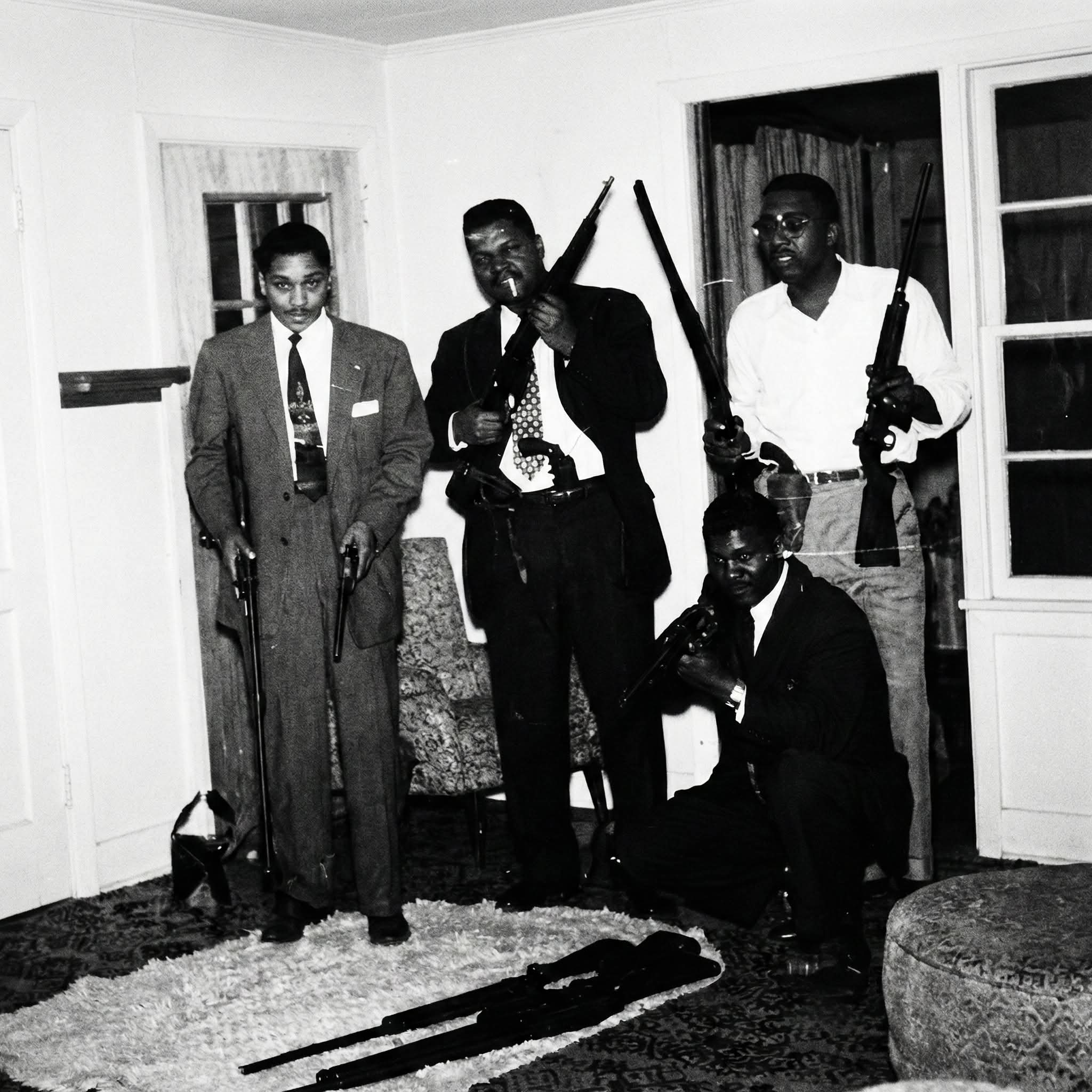
  • In the mid-1960s, there were towns in Louisiana where fear was not a rumor.
    It was a schedule.

    Night riders, threats, and intimidation were not distant headlines for Black families.
    They were the background noise of daily life in places where the Ku Klux Klan still worked openly.

    In Jonesboro, Louisiana, a group of Black men reached a point where prayer and patience alone could not be the only plan.
    They had families to get home to, and children who deserved to sleep without listening for trouble.

    So they made a decision that did not ask for permission.
    They organized.

    In 1964, they formed the Deacons for Defense and Justice.
    Their purpose was simple and serious: protect Black communities and civil rights workers when the state would not.

    A lot of the men who joined had already lived through combat.
    Many were veterans of World War II and the Korean War, men who understood both danger and discipline.

    That detail matters, because it tells you what kind of protection they believed in.
    They were not looking for chaos, and they were not pretending violence did not exist.

    The Deacons supported the civil rights movement, even as many public narratives focused only on strict nonviolence.
    They believed that defending Black life was not a contradiction, it was a responsibility.

    They did not form to attack anyone.
    They formed to prevent attacks, to stand guard, to escort people safely, and to make the Klan think twice.

    History often celebrates the front-facing moments, the speeches and marches that the cameras could capture.
    But some of the heaviest choices in the freedom struggle happened quietly, in rooms where men spoke in low voices about what it would take to keep everyone alive.

    You can imagine the kind of meetings they held.
    Not dramatic, not theatrical, just practical.

    Who needs an escort tonight.
    Which road is safest.

    Who is getting threatened for trying to register to vote.
    Who is sitting at home pretending they are not afraid.

    The Deacons existed because Black people were not asking for special treatment.
    They were asking for basic rights in a country that often refused to protect them while they did it.

    Their presence spread beyond Jonesboro as the need spread.
    Chapters and affiliated groups appeared in Louisiana and beyond, including a well-known chapter formed in Bogalusa in 1965, with growth into other Southern states.

    This is part of Black history that can make people uncomfortable, because it refuses the simplest version of the movement.
    It reminds us that courage came in more than one form, and that survival sometimes required more than a song.

    And still, the emotional truth stays steady.
    Black communities kept building life even under threat, and they did it with dignity that was never granted, only claimed.

    The Deacons for Defense and Justice also sit in an important place on the timeline.
    They formed years before the Black Panther Party was founded in Oakland in October 1966, and their example is often discussed as part of the wider story of Black self-defense in that era.

    That does not reduce the brilliance of any later movement.
    It expands the map and shows how many people were already thinking hard about protection, strategy, and community power.

    When we talk about Black resilience, we should not make it sound like Black people simply endured.
    Black people planned, organized, adapted, and defended what was precious.

    The Deacons were one chapter in that long tradition of looking after our own when institutions failed.
    They were proof that protecting the community can be an act of love as much as an act of resistance.

    This is why we have to keep teaching Black history, especially the stories that get skipped because they are complicated or unfamiliar.
    Our story is deeper than the version many of us were handed, and the deeper you go, the more you see how determined our people were to survive and to win.

    Looking back, the Deacons remind us that freedom work was not only public.
    It was also the quiet decision to stand watch so someone else could live one more day with hope.

    And looking forward, their story asks something gentle but firm of us.
    Learn it, tell it, and pass it on, so the next generation grows up knowing how wide, how brave, and how complete our history really is.

    #BlackHistory #Louisiana #CivilRightsHistory

    In the mid-1960s, there were towns in Louisiana where fear was not a rumor. It was a schedule. Night riders, threats, and intimidation were not distant headlines for Black families. They were the background noise of daily life in places where the Ku Klux Klan still worked openly. In Jonesboro, Louisiana, a group of Black men reached a point where prayer and patience alone could not be the only plan. They had families to get home to, and children who deserved to sleep without listening for trouble. So they made a decision that did not ask for permission. They organized. In 1964, they formed the Deacons for Defense and Justice. Their purpose was simple and serious: protect Black communities and civil rights workers when the state would not. A lot of the men who joined had already lived through combat. Many were veterans of World War II and the Korean War, men who understood both danger and discipline. That detail matters, because it tells you what kind of protection they believed in. They were not looking for chaos, and they were not pretending violence did not exist. The Deacons supported the civil rights movement, even as many public narratives focused only on strict nonviolence. They believed that defending Black life was not a contradiction, it was a responsibility. They did not form to attack anyone. They formed to prevent attacks, to stand guard, to escort people safely, and to make the Klan think twice. History often celebrates the front-facing moments, the speeches and marches that the cameras could capture. But some of the heaviest choices in the freedom struggle happened quietly, in rooms where men spoke in low voices about what it would take to keep everyone alive. You can imagine the kind of meetings they held. Not dramatic, not theatrical, just practical. Who needs an escort tonight. Which road is safest. Who is getting threatened for trying to register to vote. Who is sitting at home pretending they are not afraid. The Deacons existed because Black people were not asking for special treatment. They were asking for basic rights in a country that often refused to protect them while they did it. Their presence spread beyond Jonesboro as the need spread. Chapters and affiliated groups appeared in Louisiana and beyond, including a well-known chapter formed in Bogalusa in 1965, with growth into other Southern states. This is part of Black history that can make people uncomfortable, because it refuses the simplest version of the movement. It reminds us that courage came in more than one form, and that survival sometimes required more than a song. And still, the emotional truth stays steady. Black communities kept building life even under threat, and they did it with dignity that was never granted, only claimed. The Deacons for Defense and Justice also sit in an important place on the timeline. They formed years before the Black Panther Party was founded in Oakland in October 1966, and their example is often discussed as part of the wider story of Black self-defense in that era. That does not reduce the brilliance of any later movement. It expands the map and shows how many people were already thinking hard about protection, strategy, and community power. When we talk about Black resilience, we should not make it sound like Black people simply endured. Black people planned, organized, adapted, and defended what was precious. The Deacons were one chapter in that long tradition of looking after our own when institutions failed. They were proof that protecting the community can be an act of love as much as an act of resistance. This is why we have to keep teaching Black history, especially the stories that get skipped because they are complicated or unfamiliar. Our story is deeper than the version many of us were handed, and the deeper you go, the more you see how determined our people were to survive and to win. Looking back, the Deacons remind us that freedom work was not only public. It was also the quiet decision to stand watch so someone else could live one more day with hope. And looking forward, their story asks something gentle but firm of us. Learn it, tell it, and pass it on, so the next generation grows up knowing how wide, how brave, and how complete our history really is. #BlackHistory #Louisiana #CivilRightsHistory

    0 Kommentare 0 Geteilt 6KB Ansichten
  • "Dope Don't Sell Itself" is the 7th studio album by #Atlanta based rapper #2Chainz.
    It was released through T.R.U. and #DefJam Recordings on February 4, 2022.
    The album features guest appearances from #MoneybaggYo, BeatKing, #LilBaby, #RoddyRicch, #42Dugg, #YoungBoyNeverBrokeAgain, #LilDurk, Sleepy Rose, Swae Lee, #StoveGodCooks, #Symba, Major Myjah, and Jacquees.
    Producers, with major contributions from #BuddahBless, #HitBoy, #MannieFresh, LilJuMadeDaBeat, WomaticTracks, and #BeatKing. Other key producers included FKi 1st, G. Ry, Smash David, and Turn Me Up Josh.
    "Dope Don't Sell Itself" is the 7th studio album by #Atlanta based rapper #2Chainz. ▪️It was released through T.R.U. and #DefJam Recordings on February 4, 2022. ▪️The album features guest appearances from #MoneybaggYo, BeatKing, #LilBaby, #RoddyRicch, #42Dugg, #YoungBoyNeverBrokeAgain, #LilDurk, Sleepy Rose, Swae Lee, #StoveGodCooks, #Symba, Major Myjah, and Jacquees. ▪️Producers, with major contributions from #BuddahBless, #HitBoy, #MannieFresh, LilJuMadeDaBeat, WomaticTracks, and #BeatKing. Other key producers included FKi 1st, G. Ry, Smash David, and Turn Me Up Josh.
    0 Kommentare 0 Geteilt 16KB Ansichten
  • What underrated energy idea people are sleeping on today?
    What underrated energy idea people are sleeping on today?
    0 Kommentare 0 Geteilt 566 Ansichten
  • Lighting temperature isn’t just about brightness—it’s about mood, comfort, and even productivity. Warm white light (2700K–3000K) mimics the cozy glow of early evening, making it perfect for bedrooms and living rooms. Natural white (around 4000K) strikes a neutral tone ideal for kitchens, offices, and bathrooms where balance is key. Cool white (5000K–6500K) is crisp and energizing, often used in commercial settings or places needing focused attention, like hospitals and garages.

    Higher Kelvin values mean cooler (bluer) light, while lower values lean toward warm (yellow/orange) hues. Choosing the right color temperature can improve sleep, reduce eye strain, and even affect your mood. It's not just about seeing better—it's about living better.

    #LightingDesign #ColorTemperature #KelvinScale #InteriorDesignTips #WarmWhite
    Lighting temperature isn’t just about brightness—it’s about mood, comfort, and even productivity. Warm white light (2700K–3000K) mimics the cozy glow of early evening, making it perfect for bedrooms and living rooms. Natural white (around 4000K) strikes a neutral tone ideal for kitchens, offices, and bathrooms where balance is key. Cool white (5000K–6500K) is crisp and energizing, often used in commercial settings or places needing focused attention, like hospitals and garages. Higher Kelvin values mean cooler (bluer) light, while lower values lean toward warm (yellow/orange) hues. Choosing the right color temperature can improve sleep, reduce eye strain, and even affect your mood. It's not just about seeing better—it's about living better. #LightingDesign #ColorTemperature #KelvinScale #InteriorDesignTips #WarmWhite
    0 Kommentare 0 Geteilt 5KB Ansichten
  • TLC was Jermaine Dupri's group at first. Left Eye lived/slept in his bedroom closet after she first moved from Philly to Atlanta. She was the inspiration behind the signature backwards clothing of Kris Kross. ⁣
    ⁣
    Lisa “Left Eye” Lopes came into his life as a solo artist from Philadelphia, who had nowhere to stay, so she used to sleep in his closet which had been transformed into a vocal booth. She moved with a small keyboard and $750 ($1,556 today), with hopes of joining a girl group. ⁣
    ⁣
    TLC was my group before they got signed to LaFace,” he said. “Left Eye was living at my house when I found Kris Kross. The backward clothes came after we started getting more and more songs. The backward clothes actually came from being around Left Eye. Cause Left Eye was around here trying to cut her sleeves off of every shirt and she had me— I shaved my whole eyebrow off. I only had one eyebrow and I was walking around doing wild ****. I had a nose ring. We was just doing whatever we could do to get somebody’s attention.”⁣
    ⁣
    He regrets not taking them on. “I regret not trying to do TLC at the same time as Kris Kross,” he said. “I was only 19 years old at the time and didn’t believe in myself as a person, as someone having the bandwidth to have both artists.”⁣
    ⁣
    He continued, “I was putting so much energy into Kris Kross, and I was only giving TLC maybe 30 to 40 percent, not even 50 percent. I felt I was spreading myself thin by trying to provide both of these groups what they needed to become the success they eventually both grew to become. So I eliminated myself from TLC being a group that I actually introduced to the world.”⁣
    ⁣
    Although he wasn’t quite ready to sign TLC in the early 90’s, he continued to play a big role in their sound, producing on their first three studio albums.⁣ @jermainedupri
    TLC was Jermaine Dupri's group at first. Left Eye lived/slept in his bedroom closet after she first moved from Philly to Atlanta. She was the inspiration behind the signature backwards clothing of Kris Kross. ⁣ ⁣ Lisa “Left Eye” Lopes came into his life as a solo artist from Philadelphia, who had nowhere to stay, so she used to sleep in his closet which had been transformed into a vocal booth. She moved with a small keyboard and $750 ($1,556 today), with hopes of joining a girl group. ⁣ ⁣ TLC was my group before they got signed to LaFace,” he said. “Left Eye was living at my house when I found Kris Kross. The backward clothes came after we started getting more and more songs. The backward clothes actually came from being around Left Eye. Cause Left Eye was around here trying to cut her sleeves off of every shirt and she had me— I shaved my whole eyebrow off. I only had one eyebrow and I was walking around doing wild shit. I had a nose ring. We was just doing whatever we could do to get somebody’s attention.”⁣ ⁣ He regrets not taking them on. “I regret not trying to do TLC at the same time as Kris Kross,” he said. “I was only 19 years old at the time and didn’t believe in myself as a person, as someone having the bandwidth to have both artists.”⁣ ⁣ He continued, “I was putting so much energy into Kris Kross, and I was only giving TLC maybe 30 to 40 percent, not even 50 percent. I felt I was spreading myself thin by trying to provide both of these groups what they needed to become the success they eventually both grew to become. So I eliminated myself from TLC being a group that I actually introduced to the world.”⁣ ⁣ Although he wasn’t quite ready to sign TLC in the early 90’s, he continued to play a big role in their sound, producing on their first three studio albums.⁣ @jermainedupri 🖤
    0 Kommentare 0 Geteilt 5KB Ansichten
Weitere Ergebnisse