


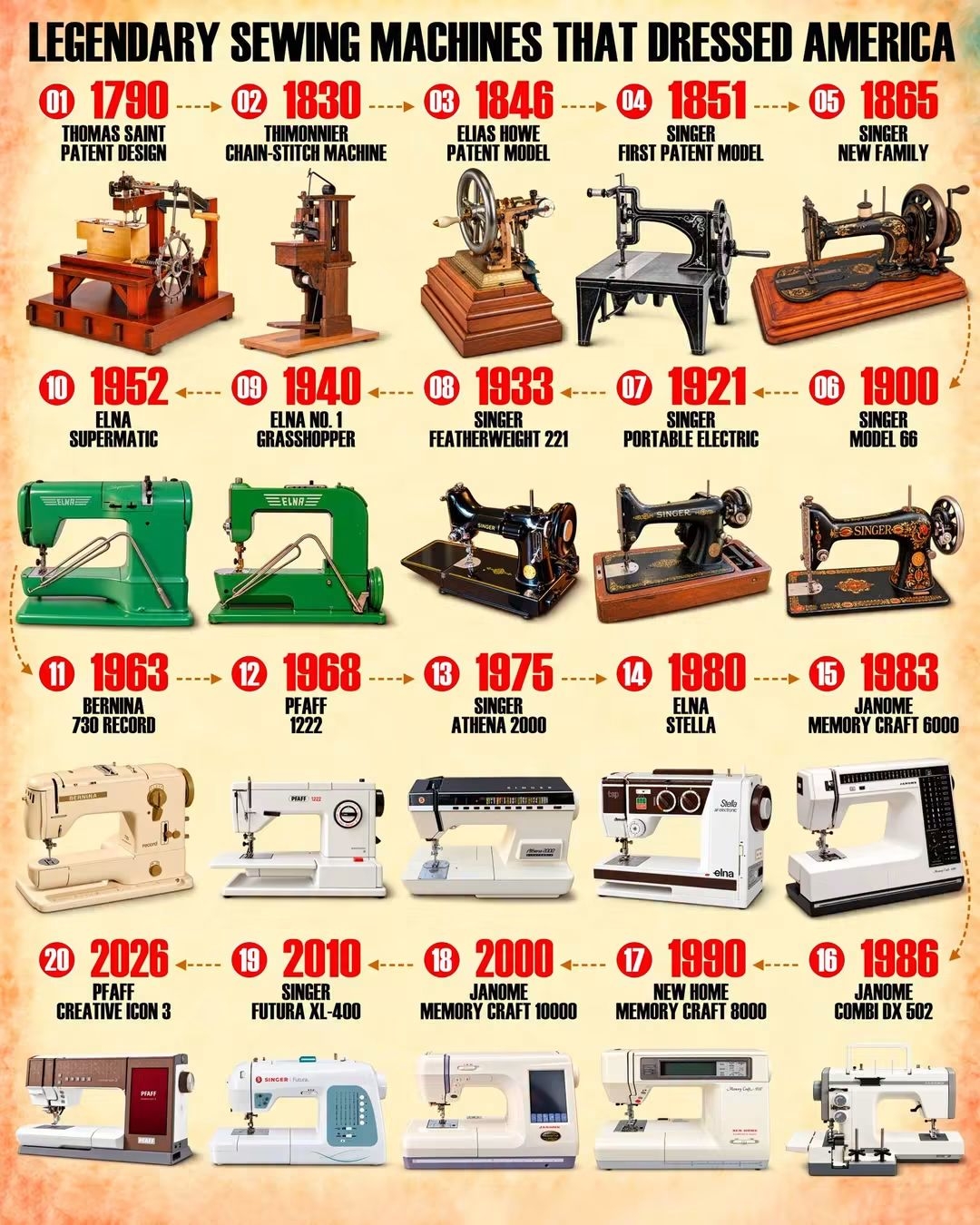
• Elias Howe's machine outsewed five hand sewers known for their speed in a Boston clothing factory, and still nobody wanted to buy one.

    Many tailors feared the machine would take away their livelihood. Hoping England might offer a warmer welcome, Howe crossed the Atlantic. He returned nearly penniless to an America buying machines that used his invention.

    Leading the sales pitch was Isaac Singer, once a stage actor, who said his machine had taken 11 days to build. Howe won their patent fight, and the royalties that followed turned his invention into a fortune.

    But Singer knew how to reach the customers Howe had missed. Instead of demanding the full price upfront, his company offered one of America's earliest installment plans. Families could bring a machine home and pay gradually, making it a fixture in the parlor.

    That place in the household lasted for generations. Singer introduced the Athena 2000, the first electronic sewing machine, in 1975, yet affection for the small black Featherweight 221 endured. Unveiled at Chicago's 1933 World's Fair and weighing about 11 pounds, it still accompanies quilters to classes today.

    #AmericanHistory #AmericanNostalgia #SingerSewingMachine #VintageSewingMachines #Quilting
    Elias Howe's machine outsewed five hand sewers known for their speed in a Boston clothing factory, and still nobody wanted to buy one. 🧵 Many tailors feared the machine would take away their livelihood. Hoping England might offer a warmer welcome, Howe crossed the Atlantic. He returned nearly penniless to an America buying machines that used his invention. Leading the sales pitch was Isaac Singer, once a stage actor, who said his machine had taken 11 days to build. ⚖️ Howe won their patent fight, and the royalties that followed turned his invention into a fortune. But Singer knew how to reach the customers Howe had missed. Instead of demanding the full price upfront, his company offered one of America's earliest installment plans. Families could bring a machine home and pay gradually, making it a fixture in the parlor. 🏡 That place in the household lasted for generations. Singer introduced the Athena 2000, the first electronic sewing machine, in 1975, yet affection for the small black Featherweight 221 endured. Unveiled at Chicago's 1933 World's Fair and weighing about 11 pounds, it still accompanies quilters to classes today. 🪡 #AmericanHistory #AmericanNostalgia #SingerSewingMachine #VintageSewingMachines #Quilting
    0 Reacties 0 aandelen 963 Views
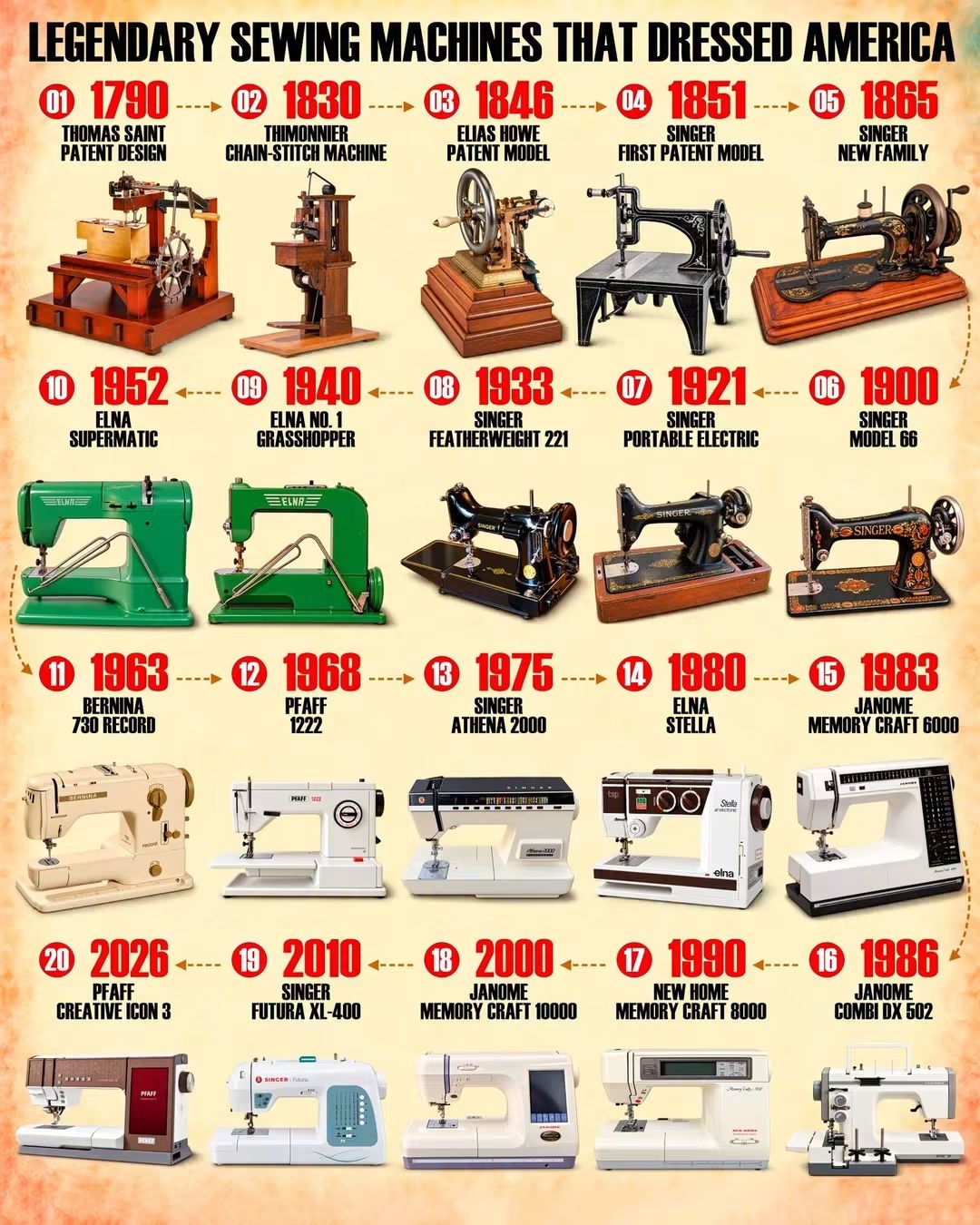
  • Elias Howe's machine outsewed five hand sewers known for their speed in a Boston clothing factory, and still nobody wanted to buy one.

    Many tailors feared the machine would take away their livelihood. Hoping England might offer a warmer welcome, Howe crossed the Atlantic. He returned nearly penniless to an America buying machines that used his invention.

    Leading the sales pitch was Isaac Singer, once a stage actor, who said his machine had taken 11 days to build. Howe won their patent fight, and the royalties that followed turned his invention into a fortune.

    But Singer knew how to reach the customers Howe had missed. Instead of demanding the full price upfront, his company offered one of America's earliest installment plans. Families could bring a machine home and pay gradually, making it a fixture in the parlor.

    That place in the household lasted for generations. Singer introduced the Athena 2000, the first electronic sewing machine, in 1975, yet affection for the small black Featherweight 221 endured. Unveiled at Chicago's 1933 World's Fair and weighing about 11 pounds, it still accompanies quilters to classes today.

    #AmericanHistory #AmericanNostalgia #SingerSewingMachine #VintageSewingMachines #Quilting
    Elias Howe's machine outsewed five hand sewers known for their speed in a Boston clothing factory, and still nobody wanted to buy one. 🧵 Many tailors feared the machine would take away their livelihood. Hoping England might offer a warmer welcome, Howe crossed the Atlantic. He returned nearly penniless to an America buying machines that used his invention. Leading the sales pitch was Isaac Singer, once a stage actor, who said his machine had taken 11 days to build. ⚖️ Howe won their patent fight, and the royalties that followed turned his invention into a fortune. But Singer knew how to reach the customers Howe had missed. Instead of demanding the full price upfront, his company offered one of America's earliest installment plans. Families could bring a machine home and pay gradually, making it a fixture in the parlor. 🏡 That place in the household lasted for generations. Singer introduced the Athena 2000, the first electronic sewing machine, in 1975, yet affection for the small black Featherweight 221 endured. Unveiled at Chicago's 1933 World's Fair and weighing about 11 pounds, it still accompanies quilters to classes today. 🪡 #AmericanHistory #AmericanNostalgia #SingerSewingMachine #VintageSewingMachines #Quilting
    0 Reacties 0 aandelen 674 Views
  • Why did highly trained US Combat Engineers intentionally violently spray raw, unlit gasoline directly at the enemy instead of lighting it on fire?
    Concrete pillboxes were incredibly tough, heavily armored fortresses.
    If an ordinary soldier fired a fully lit flamethrower directly at the front door, it was a fluid-dynamic failure! Fire is a rapidly expanding gas! When the roaring 2,000-degree flame hit the thick concrete, it violently expanded outward! It entirely bounced off the exterior wall, splashing harmlessly into the open sky! The enemy defenders sitting safely inside the concrete room barely felt the heat!
    Veteran US Combat Engineers deployed absolute psychological and chemical terror: The Cold Shot!
    They aggressively turned the igniter completely off! The incredibly brave engineer stepped right up to the bunker window! He pulled the trigger and violently blasted a massive, heavy stream of raw, completely unlit liquid Napalm directly into the room! The physics were utterly terrifying! Because the heavy liquid wasn't burning, it didn't expand! It flawlessly, seamlessly ricocheted off the walls, utterly flooding the entire enclosed space and completely physically soaking the terrified enemy defenders in incredibly sticky, highly volatile fuel! The engineer simply waited exactly three seconds, stepped back, and fired a single tiny spark! The entire fully-soaked room instantly, violently, and catastrophically erupted into a completely inescapable 2,000-degree internal vapor explosion, utterly neutralizing the bunker!
    Harmless bouncing flames or a genius utterly devastating liquid soaking?
    #SurvivalTactics #Strategy #WW2History #PhysicsFacts #USArmy #CombatEngineering #TacticalGear #Thermodynamics #MilitaryTech #CrossSection #EngineeringMarvel #HistoryGeek #WorldWar2 #UrbanWarfare #USMC #AmericanHistory #WW2USA #AmericanEngineering #USHistory #MilitaryHistoryUSA
    Why did highly trained US Combat Engineers intentionally violently spray raw, unlit gasoline directly at the enemy instead of lighting it on fire? 🔥🧱 Concrete pillboxes were incredibly tough, heavily armored fortresses. If an ordinary soldier fired a fully lit flamethrower directly at the front door, it was a fluid-dynamic failure! Fire is a rapidly expanding gas! When the roaring 2,000-degree flame hit the thick concrete, it violently expanded outward! It entirely bounced off the exterior wall, splashing harmlessly into the open sky! The enemy defenders sitting safely inside the concrete room barely felt the heat! Veteran US Combat Engineers deployed absolute psychological and chemical terror: The Cold Shot! They aggressively turned the igniter completely off! The incredibly brave engineer stepped right up to the bunker window! He pulled the trigger and violently blasted a massive, heavy stream of raw, completely unlit liquid Napalm directly into the room! The physics were utterly terrifying! Because the heavy liquid wasn't burning, it didn't expand! It flawlessly, seamlessly ricocheted off the walls, utterly flooding the entire enclosed space and completely physically soaking the terrified enemy defenders in incredibly sticky, highly volatile fuel! The engineer simply waited exactly three seconds, stepped back, and fired a single tiny spark! The entire fully-soaked room instantly, violently, and catastrophically erupted into a completely inescapable 2,000-degree internal vapor explosion, utterly neutralizing the bunker! Harmless bouncing flames or a genius utterly devastating liquid soaking? 👇 #SurvivalTactics #Strategy #WW2History #PhysicsFacts #USArmy #CombatEngineering #TacticalGear #Thermodynamics #MilitaryTech #CrossSection #EngineeringMarvel #HistoryGeek #WorldWar2 #UrbanWarfare #USMC #AmericanHistory #WW2USA #AmericanEngineering #USHistory #MilitaryHistoryUSA
    0 Reacties 0 aandelen 6K Views