



In the mid-1960s, there were towns in Louisiana where fear was not a rumor.
It was a schedule.
Night riders, threats, and intimidation were not distant headlines for Black families.
They were the background noise of daily life in places where the Ku Klux Klan still worked openly.
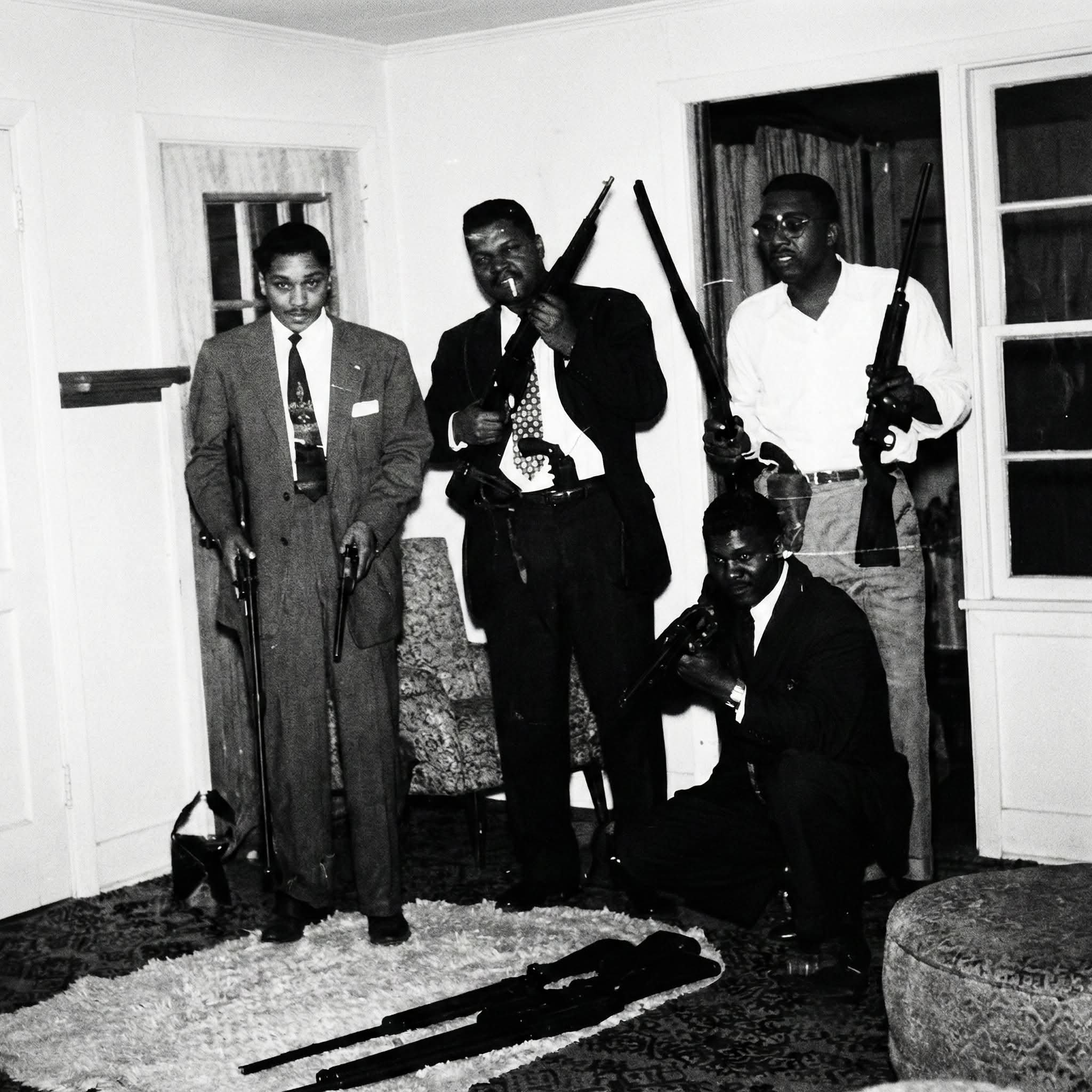
In Jonesboro, Louisiana, a group of Black men reached a point where prayer and patience alone could not be the only plan.
They had families to get home to, and children who deserved to sleep without listening for trouble.
So they made a decision that did not ask for permission.
They organized.
In 1964, they formed the Deacons for Defense and Justice.
Their purpose was simple and serious: protect Black communities and civil rights workers when the state would not.
A lot of the men who joined had already lived through combat.
Many were veterans of World War II and the Korean War, men who understood both danger and discipline.
That detail matters, because it tells you what kind of protection they believed in.
They were not looking for chaos, and they were not pretending violence did not exist.
The Deacons supported the civil rights movement, even as many public narratives focused only on strict nonviolence.
They believed that defending Black life was not a contradiction, it was a responsibility.
They did not form to attack anyone.
They formed to prevent attacks, to stand guard, to escort people safely, and to make the Klan think twice.
History often celebrates the front-facing moments, the speeches and marches that the cameras could capture.
But some of the heaviest choices in the freedom struggle happened quietly, in rooms where men spoke in low voices about what it would take to keep everyone alive.
You can imagine the kind of meetings they held.
Not dramatic, not theatrical, just practical.
Who needs an escort tonight.
Which road is safest.
Who is getting threatened for trying to register to vote.
Who is sitting at home pretending they are not afraid.
The Deacons existed because Black people were not asking for special treatment.
They were asking for basic rights in a country that often refused to protect them while they did it.
Their presence spread beyond Jonesboro as the need spread.
Chapters and affiliated groups appeared in Louisiana and beyond, including a well-known chapter formed in Bogalusa in 1965, with growth into other Southern states.
This is part of Black history that can make people uncomfortable, because it refuses the simplest version of the movement.
It reminds us that courage came in more than one form, and that survival sometimes required more than a song.
And still, the emotional truth stays steady.
Black communities kept building life even under threat, and they did it with dignity that was never granted, only claimed.
The Deacons for Defense and Justice also sit in an important place on the timeline.
They formed years before the Black Panther Party was founded in Oakland in October 1966, and their example is often discussed as part of the wider story of Black self-defense in that era.
That does not reduce the brilliance of any later movement.
It expands the map and shows how many people were already thinking hard about protection, strategy, and community power.
When we talk about Black resilience, we should not make it sound like Black people simply endured.
Black people planned, organized, adapted, and defended what was precious.
The Deacons were one chapter in that long tradition of looking after our own when institutions failed.
They were proof that protecting the community can be an act of love as much as an act of resistance.
This is why we have to keep teaching Black history, especially the stories that get skipped because they are complicated or unfamiliar.
Our story is deeper than the version many of us were handed, and the deeper you go, the more you see how determined our people were to survive and to win.
Looking back, the Deacons remind us that freedom work was not only public.
It was also the quiet decision to stand watch so someone else could live one more day with hope.
And looking forward, their story asks something gentle but firm of us.
Learn it, tell it, and pass it on, so the next generation grows up knowing how wide, how brave, and how complete our history really is.
#BlackHistory #Louisiana #CivilRightsHistory
It was a schedule.
Night riders, threats, and intimidation were not distant headlines for Black families.
They were the background noise of daily life in places where the Ku Klux Klan still worked openly.
In Jonesboro, Louisiana, a group of Black men reached a point where prayer and patience alone could not be the only plan.
They had families to get home to, and children who deserved to sleep without listening for trouble.
So they made a decision that did not ask for permission.
They organized.
In 1964, they formed the Deacons for Defense and Justice.
Their purpose was simple and serious: protect Black communities and civil rights workers when the state would not.
A lot of the men who joined had already lived through combat.
Many were veterans of World War II and the Korean War, men who understood both danger and discipline.
That detail matters, because it tells you what kind of protection they believed in.
They were not looking for chaos, and they were not pretending violence did not exist.
The Deacons supported the civil rights movement, even as many public narratives focused only on strict nonviolence.
They believed that defending Black life was not a contradiction, it was a responsibility.
They did not form to attack anyone.
They formed to prevent attacks, to stand guard, to escort people safely, and to make the Klan think twice.
History often celebrates the front-facing moments, the speeches and marches that the cameras could capture.
But some of the heaviest choices in the freedom struggle happened quietly, in rooms where men spoke in low voices about what it would take to keep everyone alive.
You can imagine the kind of meetings they held.
Not dramatic, not theatrical, just practical.
Who needs an escort tonight.
Which road is safest.
Who is getting threatened for trying to register to vote.
Who is sitting at home pretending they are not afraid.
The Deacons existed because Black people were not asking for special treatment.
They were asking for basic rights in a country that often refused to protect them while they did it.
Their presence spread beyond Jonesboro as the need spread.
Chapters and affiliated groups appeared in Louisiana and beyond, including a well-known chapter formed in Bogalusa in 1965, with growth into other Southern states.
This is part of Black history that can make people uncomfortable, because it refuses the simplest version of the movement.
It reminds us that courage came in more than one form, and that survival sometimes required more than a song.
And still, the emotional truth stays steady.
Black communities kept building life even under threat, and they did it with dignity that was never granted, only claimed.
The Deacons for Defense and Justice also sit in an important place on the timeline.
They formed years before the Black Panther Party was founded in Oakland in October 1966, and their example is often discussed as part of the wider story of Black self-defense in that era.
That does not reduce the brilliance of any later movement.
It expands the map and shows how many people were already thinking hard about protection, strategy, and community power.
When we talk about Black resilience, we should not make it sound like Black people simply endured.
Black people planned, organized, adapted, and defended what was precious.
The Deacons were one chapter in that long tradition of looking after our own when institutions failed.
They were proof that protecting the community can be an act of love as much as an act of resistance.
This is why we have to keep teaching Black history, especially the stories that get skipped because they are complicated or unfamiliar.
Our story is deeper than the version many of us were handed, and the deeper you go, the more you see how determined our people were to survive and to win.
Looking back, the Deacons remind us that freedom work was not only public.
It was also the quiet decision to stand watch so someone else could live one more day with hope.
And looking forward, their story asks something gentle but firm of us.
Learn it, tell it, and pass it on, so the next generation grows up knowing how wide, how brave, and how complete our history really is.
#BlackHistory #Louisiana #CivilRightsHistory
In the mid-1960s, there were towns in Louisiana where fear was not a rumor.
It was a schedule.
Night riders, threats, and intimidation were not distant headlines for Black families.
They were the background noise of daily life in places where the Ku Klux Klan still worked openly.
In Jonesboro, Louisiana, a group of Black men reached a point where prayer and patience alone could not be the only plan.
They had families to get home to, and children who deserved to sleep without listening for trouble.
So they made a decision that did not ask for permission.
They organized.
In 1964, they formed the Deacons for Defense and Justice.
Their purpose was simple and serious: protect Black communities and civil rights workers when the state would not.
A lot of the men who joined had already lived through combat.
Many were veterans of World War II and the Korean War, men who understood both danger and discipline.
That detail matters, because it tells you what kind of protection they believed in.
They were not looking for chaos, and they were not pretending violence did not exist.
The Deacons supported the civil rights movement, even as many public narratives focused only on strict nonviolence.
They believed that defending Black life was not a contradiction, it was a responsibility.
They did not form to attack anyone.
They formed to prevent attacks, to stand guard, to escort people safely, and to make the Klan think twice.
History often celebrates the front-facing moments, the speeches and marches that the cameras could capture.
But some of the heaviest choices in the freedom struggle happened quietly, in rooms where men spoke in low voices about what it would take to keep everyone alive.
You can imagine the kind of meetings they held.
Not dramatic, not theatrical, just practical.
Who needs an escort tonight.
Which road is safest.
Who is getting threatened for trying to register to vote.
Who is sitting at home pretending they are not afraid.
The Deacons existed because Black people were not asking for special treatment.
They were asking for basic rights in a country that often refused to protect them while they did it.
Their presence spread beyond Jonesboro as the need spread.
Chapters and affiliated groups appeared in Louisiana and beyond, including a well-known chapter formed in Bogalusa in 1965, with growth into other Southern states.
This is part of Black history that can make people uncomfortable, because it refuses the simplest version of the movement.
It reminds us that courage came in more than one form, and that survival sometimes required more than a song.
And still, the emotional truth stays steady.
Black communities kept building life even under threat, and they did it with dignity that was never granted, only claimed.
The Deacons for Defense and Justice also sit in an important place on the timeline.
They formed years before the Black Panther Party was founded in Oakland in October 1966, and their example is often discussed as part of the wider story of Black self-defense in that era.
That does not reduce the brilliance of any later movement.
It expands the map and shows how many people were already thinking hard about protection, strategy, and community power.
When we talk about Black resilience, we should not make it sound like Black people simply endured.
Black people planned, organized, adapted, and defended what was precious.
The Deacons were one chapter in that long tradition of looking after our own when institutions failed.
They were proof that protecting the community can be an act of love as much as an act of resistance.
This is why we have to keep teaching Black history, especially the stories that get skipped because they are complicated or unfamiliar.
Our story is deeper than the version many of us were handed, and the deeper you go, the more you see how determined our people were to survive and to win.
Looking back, the Deacons remind us that freedom work was not only public.
It was also the quiet decision to stand watch so someone else could live one more day with hope.
And looking forward, their story asks something gentle but firm of us.
Learn it, tell it, and pass it on, so the next generation grows up knowing how wide, how brave, and how complete our history really is.
#BlackHistory #Louisiana #CivilRightsHistory
0 Commenti
0 condivisioni
246 Views

 English
 Arabic
 French
 Spanish
 Portuguese
 Deutsch
 Turkish
 Dutch
Dutch
 Russian
 Romaian
 Portuguese (Brazil)
 Greek
Greek