• In the mid-1960s, there were towns in Louisiana where fear was not a rumor.
    It was a schedule.

    Night riders, threats, and intimidation were not distant headlines for Black families.
    They were the background noise of daily life in places where the Ku Klux Klan still worked openly.

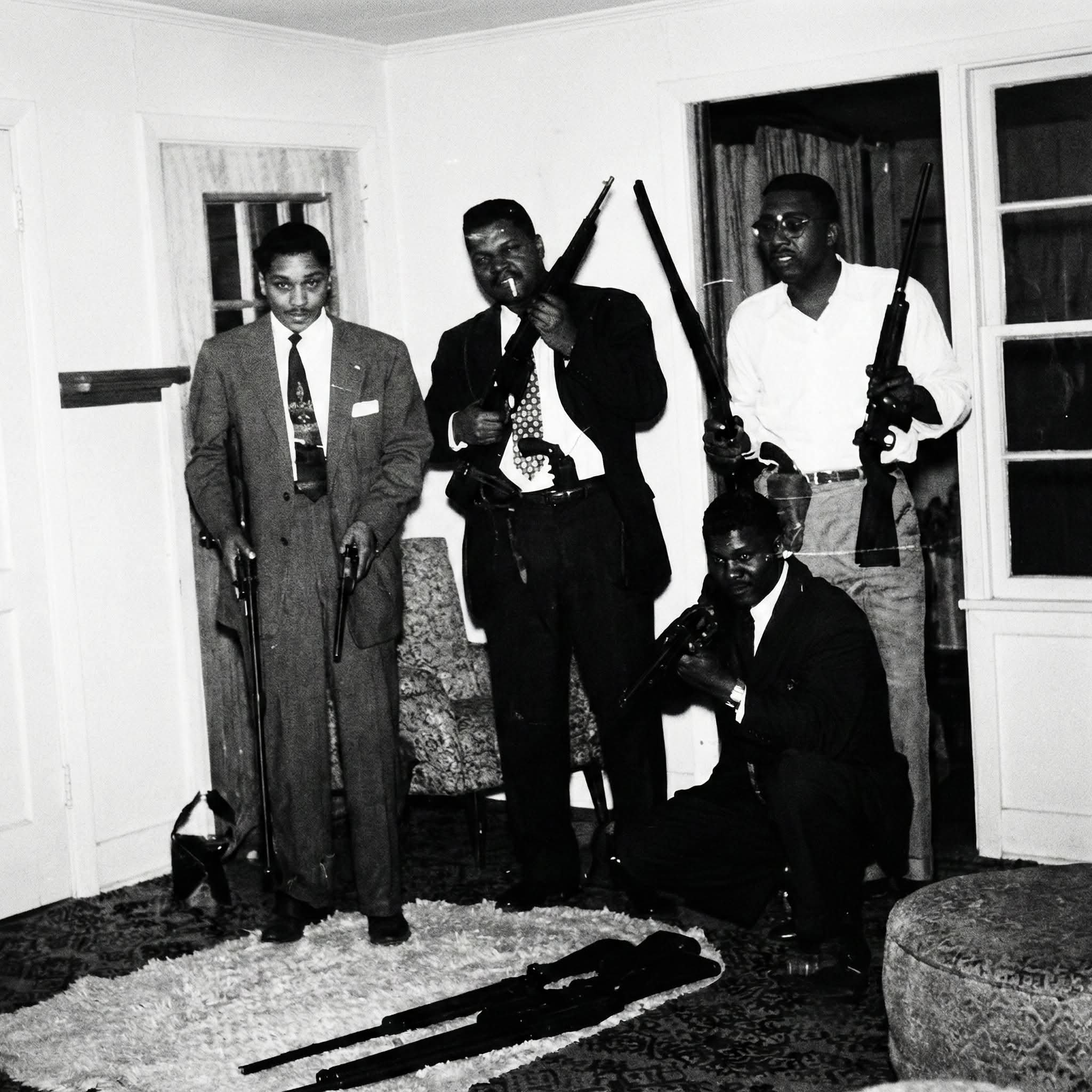
    In Jonesboro, Louisiana, a group of Black men reached a point where prayer and patience alone could not be the only plan.
    They had families to get home to, and children who deserved to sleep without listening for trouble.

    So they made a decision that did not ask for permission.
    They organized.

    In 1964, they formed the Deacons for Defense and Justice.
    Their purpose was simple and serious: protect Black communities and civil rights workers when the state would not.

    A lot of the men who joined had already lived through combat.
    Many were veterans of World War II and the Korean War, men who understood both danger and discipline.

    That detail matters, because it tells you what kind of protection they believed in.
    They were not looking for chaos, and they were not pretending violence did not exist.

    The Deacons supported the civil rights movement, even as many public narratives focused only on strict nonviolence.
    They believed that defending Black life was not a contradiction, it was a responsibility.

    They did not form to attack anyone.
    They formed to prevent attacks, to stand guard, to escort people safely, and to make the Klan think twice.

    History often celebrates the front-facing moments, the speeches and marches that the cameras could capture.
    But some of the heaviest choices in the freedom struggle happened quietly, in rooms where men spoke in low voices about what it would take to keep everyone alive.

    You can imagine the kind of meetings they held.
    Not dramatic, not theatrical, just practical.

    Who needs an escort tonight.
    Which road is safest.

    Who is getting threatened for trying to register to vote.
    Who is sitting at home pretending they are not afraid.

    The Deacons existed because Black people were not asking for special treatment.
    They were asking for basic rights in a country that often refused to protect them while they did it.

    Their presence spread beyond Jonesboro as the need spread.
    Chapters and affiliated groups appeared in Louisiana and beyond, including a well-known chapter formed in Bogalusa in 1965, with growth into other Southern states.

    This is part of Black history that can make people uncomfortable, because it refuses the simplest version of the movement.
    It reminds us that courage came in more than one form, and that survival sometimes required more than a song.

    And still, the emotional truth stays steady.
    Black communities kept building life even under threat, and they did it with dignity that was never granted, only claimed.

    The Deacons for Defense and Justice also sit in an important place on the timeline.
    They formed years before the Black Panther Party was founded in Oakland in October 1966, and their example is often discussed as part of the wider story of Black self-defense in that era.

    That does not reduce the brilliance of any later movement.
    It expands the map and shows how many people were already thinking hard about protection, strategy, and community power.

    When we talk about Black resilience, we should not make it sound like Black people simply endured.
    Black people planned, organized, adapted, and defended what was precious.

    The Deacons were one chapter in that long tradition of looking after our own when institutions failed.
    They were proof that protecting the community can be an act of love as much as an act of resistance.

    This is why we have to keep teaching Black history, especially the stories that get skipped because they are complicated or unfamiliar.
    Our story is deeper than the version many of us were handed, and the deeper you go, the more you see how determined our people were to survive and to win.

    Looking back, the Deacons remind us that freedom work was not only public.
    It was also the quiet decision to stand watch so someone else could live one more day with hope.

    And looking forward, their story asks something gentle but firm of us.
    Learn it, tell it, and pass it on, so the next generation grows up knowing how wide, how brave, and how complete our history really is.

    #BlackHistory #Louisiana #CivilRightsHistory

    In the mid-1960s, there were towns in Louisiana where fear was not a rumor. It was a schedule. Night riders, threats, and intimidation were not distant headlines for Black families. They were the background noise of daily life in places where the Ku Klux Klan still worked openly. In Jonesboro, Louisiana, a group of Black men reached a point where prayer and patience alone could not be the only plan. They had families to get home to, and children who deserved to sleep without listening for trouble. So they made a decision that did not ask for permission. They organized. In 1964, they formed the Deacons for Defense and Justice. Their purpose was simple and serious: protect Black communities and civil rights workers when the state would not. A lot of the men who joined had already lived through combat. Many were veterans of World War II and the Korean War, men who understood both danger and discipline. That detail matters, because it tells you what kind of protection they believed in. They were not looking for chaos, and they were not pretending violence did not exist. The Deacons supported the civil rights movement, even as many public narratives focused only on strict nonviolence. They believed that defending Black life was not a contradiction, it was a responsibility. They did not form to attack anyone. They formed to prevent attacks, to stand guard, to escort people safely, and to make the Klan think twice. History often celebrates the front-facing moments, the speeches and marches that the cameras could capture. But some of the heaviest choices in the freedom struggle happened quietly, in rooms where men spoke in low voices about what it would take to keep everyone alive. You can imagine the kind of meetings they held. Not dramatic, not theatrical, just practical. Who needs an escort tonight. Which road is safest. Who is getting threatened for trying to register to vote. Who is sitting at home pretending they are not afraid. The Deacons existed because Black people were not asking for special treatment. They were asking for basic rights in a country that often refused to protect them while they did it. Their presence spread beyond Jonesboro as the need spread. Chapters and affiliated groups appeared in Louisiana and beyond, including a well-known chapter formed in Bogalusa in 1965, with growth into other Southern states. This is part of Black history that can make people uncomfortable, because it refuses the simplest version of the movement. It reminds us that courage came in more than one form, and that survival sometimes required more than a song. And still, the emotional truth stays steady. Black communities kept building life even under threat, and they did it with dignity that was never granted, only claimed. The Deacons for Defense and Justice also sit in an important place on the timeline. They formed years before the Black Panther Party was founded in Oakland in October 1966, and their example is often discussed as part of the wider story of Black self-defense in that era. That does not reduce the brilliance of any later movement. It expands the map and shows how many people were already thinking hard about protection, strategy, and community power. When we talk about Black resilience, we should not make it sound like Black people simply endured. Black people planned, organized, adapted, and defended what was precious. The Deacons were one chapter in that long tradition of looking after our own when institutions failed. They were proof that protecting the community can be an act of love as much as an act of resistance. This is why we have to keep teaching Black history, especially the stories that get skipped because they are complicated or unfamiliar. Our story is deeper than the version many of us were handed, and the deeper you go, the more you see how determined our people were to survive and to win. Looking back, the Deacons remind us that freedom work was not only public. It was also the quiet decision to stand watch so someone else could live one more day with hope. And looking forward, their story asks something gentle but firm of us. Learn it, tell it, and pass it on, so the next generation grows up knowing how wide, how brave, and how complete our history really is. #BlackHistory #Louisiana #CivilRightsHistory

    0 Commentarii 0 Distribuiri 218 Views
  • https://www.travelandtourworld.com/news/article/mississippi-and-tennessee-join-louisiana-texas-kentucky-georgia-north-carolina-and-others-in-launching-their-own-tourism-campaigns-to-boost-tourism-growth-with-unique-music-and-culinary-experienc/
    https://www.travelandtourworld.com/news/article/mississippi-and-tennessee-join-louisiana-texas-kentucky-georgia-north-carolina-and-others-in-launching-their-own-tourism-campaigns-to-boost-tourism-growth-with-unique-music-and-culinary-experienc/
    WWW.TRAVELANDTOURWORLD.COM
    Mississippi and Tennessee Join Louisiana, Texas, Kentucky, Georgia, North Carolina, and Others in Launching Their Own Tourism Campaigns to Boost Tourism Growth with Unique Music and Culinary Experiences Across the US
    Mississippi and Tennessee join Louisiana, Texas, Kentucky, Georgia, North Carolina, and others in launching unique tourism campaigns, boosting growth with music and culinary experiences across the U.S.
    0 Commentarii 0 Distribuiri 42 Views
  • https://www.wafb.com/2026/02/05/louisianas-largest-ever-unclaimed-property-check-issued-shreveport-native/
    https://www.wafb.com/2026/02/05/louisianas-largest-ever-unclaimed-property-check-issued-shreveport-native/
    WWW.WAFB.COM
    Louisiana’s largest-ever unclaimed property check issued to Shreveport native
    Louisiana’s largest-ever unclaimed property check was just issued to a man from Shreveport.
    0 Commentarii 0 Distribuiri 155 Views
  • https://www.wafb.com/2026/02/02/heart-louisiana-whiskey-bottle/
    https://www.wafb.com/2026/02/02/heart-louisiana-whiskey-bottle/
    WWW.WAFB.COM
    HEART OF LOUISIANA: Whiskey Bottle
    In the southwest Louisiana town of Geuydan, one of the community’s oldest homes is temporarily serving as the museum.
    0 Commentarii 0 Distribuiri 140 Views
  • https://www.worldatlas.com/places/the-4-most-alligator-filled-swamps-in-louisiana.html
    https://www.worldatlas.com/places/the-4-most-alligator-filled-swamps-in-louisiana.html
    WWW.WORLDATLAS.COM
    The 4 Most Alligator-Filled Swamps In Louisiana
    Explore Louisiana’s most alligator-filled swamps, from the Atchafalaya Basin to Barataria Preserve, and discover where these iconic reptiles thrive.
    0 Commentarii 0 Distribuiri 195 Views
  • Creole languages can be categorized by their base language, such as French-based (e.g., Haitian Creole, Louisiana Creole), English-based (e.g., Jamaican Patois, Gullah), Portuguese-based (e.g., Papiamento, Cape Verdean Creole), and others that have a mixed or non-European base (e.g., Sango, Saramacca). They are found worldwide, with large concentrations in the Caribbean, Africa, and the Indian Ocean.
    By base language

    French-based: These languages developed from contact between French and other languages. Examples include Haitian Creole, Louisiana Creole, Mauritian Creole, and Dominican Creole French.

    English-based: These are creoles where English is the primary base. Examples include Jamaican Patois, Guyanese Creole, Gullah (spoken in the southeastern U.S.), and Tok Pisin (in Papua New Guinea).

    Portuguese-based: These languages have Portuguese as their main foundation. Papiamento (spoken in Aruba, Bonaire, and Curaçao) and Cape Verdean Creole are prominent examples.

    Mixed or non-European based: Some creoles are based on contact between multiple European languages or primarily non-European languages.

    Sango: Based on the Ngbandi language in the Central African Republic.

    Saramacca: Based on English but heavily influenced by Portuguese, spoken in Suriname.

    Papiamentu: Though based on Portuguese, it has significant Spanish and Dutch influence.

    By external history

    Plantation creoles: Developed on plantations, such as many French-based creoles in the Caribbean.

    Fort creoles: Developed around forts, often involving trade and administration.

    Maroon creoles: Developed by communities of formerly enslaved people who escaped to form their own settlements.

    Creolized pidgins: Languages that evolved from pidgins into more complex, stable languages.

    By region

    Caribbean: Haitian Creole, Jamaican Patois, Papiamento (Aruba, Bonaire, Curaçao), and various French-based creoles in the French West Indies are examples.

    Africa: Nigerian Pidgin, Sango, and Kikongo-Kituba are spoken in various countries.

    Indian Ocean: Mauritian Creole, Seychellois Creole, and Reunion Creole are spoken in this region.

    Americas: Besides the Caribbean and Louisiana creoles, there are also Liberian Creole and Belizean Kriol.
    Creole languages can be categorized by their base language, such as French-based (e.g., Haitian Creole, Louisiana Creole), English-based (e.g., Jamaican Patois, Gullah), Portuguese-based (e.g., Papiamento, Cape Verdean Creole), and others that have a mixed or non-European base (e.g., Sango, Saramacca). They are found worldwide, with large concentrations in the Caribbean, Africa, and the Indian Ocean. By base language French-based: These languages developed from contact between French and other languages. Examples include Haitian Creole, Louisiana Creole, Mauritian Creole, and Dominican Creole French. English-based: These are creoles where English is the primary base. Examples include Jamaican Patois, Guyanese Creole, Gullah (spoken in the southeastern U.S.), and Tok Pisin (in Papua New Guinea). Portuguese-based: These languages have Portuguese as their main foundation. Papiamento (spoken in Aruba, Bonaire, and Curaçao) and Cape Verdean Creole are prominent examples. Mixed or non-European based: Some creoles are based on contact between multiple European languages or primarily non-European languages. Sango: Based on the Ngbandi language in the Central African Republic. Saramacca: Based on English but heavily influenced by Portuguese, spoken in Suriname. Papiamentu: Though based on Portuguese, it has significant Spanish and Dutch influence. By external history Plantation creoles: Developed on plantations, such as many French-based creoles in the Caribbean. Fort creoles: Developed around forts, often involving trade and administration. Maroon creoles: Developed by communities of formerly enslaved people who escaped to form their own settlements. Creolized pidgins: Languages that evolved from pidgins into more complex, stable languages. By region Caribbean: Haitian Creole, Jamaican Patois, Papiamento (Aruba, Bonaire, Curaçao), and various French-based creoles in the French West Indies are examples. Africa: Nigerian Pidgin, Sango, and Kikongo-Kituba are spoken in various countries. Indian Ocean: Mauritian Creole, Seychellois Creole, and Reunion Creole are spoken in this region. Americas: Besides the Caribbean and Louisiana creoles, there are also Liberian Creole and Belizean Kriol.
    0 Commentarii 0 Distribuiri 2892 Views
  • Louisiana Purchase

    #LouisianaPurchase
    Louisiana Purchase #LouisianaPurchase
    0 Commentarii 0 Distribuiri 560 Views
  • https://rockchasing.com/louisiana-rocks-minerals-gems/?utm_source=Facebook&utm_medium=Display&utm_campaign=valuabe_rocks_la&fbclid=Iwb21leANWNilleHRuA2FlbQEwAGFkaWQBqyQN95tiogEe5OENIRJ4snCK2IYmN9gQL3VY7rg_qL8LA-WOyA979iSN25JiRVWLJxOywlI_aem_xt3E3nt6ETJMCrdh3MEZdA&campaign_id=120209776492770578&ad_id=120229457358400578&utm_id=120209776492770578&utm_content=120229457358400578&utm_term=120229457238460578
    https://rockchasing.com/louisiana-rocks-minerals-gems/?utm_source=Facebook&utm_medium=Display&utm_campaign=valuabe_rocks_la&fbclid=Iwb21leANWNilleHRuA2FlbQEwAGFkaWQBqyQN95tiogEe5OENIRJ4snCK2IYmN9gQL3VY7rg_qL8LA-WOyA979iSN25JiRVWLJxOywlI_aem_xt3E3nt6ETJMCrdh3MEZdA&campaign_id=120209776492770578&ad_id=120229457358400578&utm_id=120209776492770578&utm_content=120229457358400578&utm_term=120229457238460578
    ROCKCHASING.COM
    The Rocks, Minerals, and Gems of Louisiana You Can Find
    Discover the types of rocks found in Louisiana, their locations, and the unique gems and minerals in this comprehensive guide.
    0 Commentarii 0 Distribuiri 361 Views
  • Native American tribes who originally inhabited the Texas region, including the meaning of their names and their history.

    1. Apache
    • Meaning of the Name: Generally believed to derive from the Pueblo-Zuni word "Apachu," meaning "enemy." However, the Apache people call themselves "Inde," "Tinde," or "Tinneh," all meaning "the people."
    • History and Culture:
    • Originally from the north, they migrated to the American Southwest and Plains regions between the 12th and 16th centuries.
    • They were nomadic hunter-gatherers, roaming vast territories to hunt buffalo and forage for food.
    • After acquiring horses from the Spanish in the 17th century, they became a powerful mounted nation. The Lipan Apache were prominent in the Texas region.

    2. Comanche
    • Meaning of the Name: Derived from a Ute word meaning "anyone who wants to fight me all the time." The people refer to themselves as "Nʉmʉnʉʉ" (NUH-MUH-NUH), meaning "The People."
    • History and Culture:
    • Dominated the Southern Plains of Texas in the 18th and 19th centuries and were known as the "Lords of the Plains."
    • They were originally part of the Shoshone tribe from Wyoming and moved south.
    • They were exceptionally skilled at breeding and using horses, and their horseback fighting ability was unique and unmatched by other tribes of the time.
    • Buffalo products were the core of their economy and way of life.

    3. Kiowa
    • Meaning of the Name: Derived from "Ka'I gwu" or "Ka'I gua" in their own language, meaning "principal people" or "leading people."
    • History and Culture:
    • Originally from western Montana, they migrated to the Yellowstone River and Black Hills, becoming skilled horsemen and buffalo hunters.
    • They gradually moved south into the northern Texas and Oklahoma regions in the early 18th century.
    • They were known for unique cultural practices like their Sun Dance ceremony.
    • They had a prestigious warrior society known as the "Principal Dogs" or "Ten Bravest."

    4. Jumano and Eastern Pueblos

    Meaning of the Name: The term "Jumano" referred to at least three distinct groups in the Southwest and Southern Plains between 1500 and 1700. They were called "rayado" (striped or marked people) due to the distinctive horizontal striped patterns tattooed or painted on their faces.
    • History and Culture:
    • They were primarily buffalo hunters and traders, playing a crucial role as middlemen between the Spanish colonies and various Indigenous groups.
    • Their main territory was in Central Texas, between the lower Pecos River and the Colorado River.
    • "Eastern Pueblos" may refer to people living in villages like the "Humanas pueblos" in eastern New Mexico, with whom the Jumano were associated.

    5. Coahuilteco and Carrizo Tribes
    • Meaning of the Name:
    • Coahuilteco: Not an original name for a single tribe, but an umbrella term created by Mexican linguists to group many bands and clans speaking various dialects in Northern Mexico and South Texas.
    • Carrizo: A Spanish word meaning "reed," applied to many Coahuiltecan groups along the Rio Grande. (For example, the Comecrudo tribe, whose Spanish name means "eats raw meat," was also called Carrizo).
    • History and Culture:
    • They were nomadic hunter-gatherers who lived along the Rio Grande and throughout South Texas.
    • They established villages near rivers and water sources.
    • Due to disease and conflict with European settlers, their population was decimated. Many sought refuge in Spanish missions, where they adopted European farming techniques.

    6. Karankawa
    • Meaning of the Name: Generally believed to mean "dog-lovers" or "dog-raisers" in their own language, as they were known to keep dogs described as a fox-like or coyote-like breed.
    • History and Culture:
    • A coastal people who lived along the Texas Coast from Galveston Island to south of Corpus Christi.
    • Their encounter with the Spanish explorer Álvar Núñez Cabeza de Vaca in 1528 marks the earliest recorded contact between Europeans and the First Peoples of Texas.
    • They were nomadic, using dugout canoes to travel the shallow coastal waterways.
    • They were known for tattooing their bodies.

    7. Tonkawa
    • Meaning of the Name: Comes from the Waco language, meaning "they all stay together." They called themselves "Titska Watitch," which means "the most human of people."
    • History and Culture:
    • A nomadic hunting tribe originally from eastern and central Texas and Oklahoma, hunting buffalo, deer, and other game.
    • They lived in about 20 independent wandering bands.
    • Historically, they were often at war with neighboring tribes like the Apache and Comanche.
    • They faced forced relocations and population decline due to violence in the 19th century.

    8. Bidai
    • Meaning of the Name: A Caddo word for "brushwood," named after the local geography along Bedias Creek where they lived. They referred to themselves as "Quasmigdo."
    • History and Culture:
    • Settled in East Texas, between the Brazos and Neches Rivers.
    • Some historical records suggest they may be one of the oldest tribes in Texas.
    • They practiced agriculture (maize), hunting (bison, deer), and fishing.
    • They were allied with Caddo and Atakapan tribes.

    9. Caddo
    • Meaning of the Name: Derived from the French abbreviation of "Kadohadacho," a Caddo word meaning "real chief" or "real Caddo."
    • History and Culture:
    • A confederacy of about 25 affiliated groups centered around the Red River in Texas, Arkansas, Louisiana, and Oklahoma.
    • They were sedentary agriculturalists, focusing on farming.
    • They developed complex social and political systems, centered around the construction and use of earthen temple and burial mounds.
    • Their leadership hierarchy included the xinesi (spiritual leader), caddi (principal headman), and canahas (subordinate headmen). The name of the state, Texas, comes from the Caddo word taysha, meaning "friend" or "ally."

    10. Wichita
    • Meaning of the Name: The origin is unknown, but they called themselves "Kitikiti'sh," meaning "the people" or "the preeminent people." French traders called them "Pani Piqué" (Tattooed Pawnee), referring to their distinctive tattoos.
    • History and Culture:
    • A confederacy of subtribes (including Taovaya, Tawakoni, Waco, and Kichai) who mainly lived in Northern Texas and South-Central Kansas.
    • They combined agriculture (corn, beans) with hunting (buffalo, deer).
    • They lived in distinctive conical, haystack-shaped houses made of grass and matting.
    • Their society was matrilocal (married couples lived with the wife's family) and matrilineal (descent was traced through the mother's line).

    11. Tawakoni & Kitsai
    • Tawakoni:
    • Meaning of the Name: Believed to mean "river bend among red sand hills." The French also referred to them as "Three Canes."
    • History: A Caddoan tribe and member of the Wichita Confederacy, they settled along the Brazos and Trinity Rivers in Texas in the 18th century. They shared similar agricultural and housing methods with the Wichita.
    • Kitsai:
    • A subtribe of the Wichita Confederacy. Notably, the Kitsai were the only group within the Wichita Confederacy to speak a distinct Caddoan language.

    Note : Most descendants of these historic Texas tribes were forcibly relocated to reservations, primarily in Oklahoma, during the 19th century. However, as noted in the follow-up, three federally recognized tribes and numerous descendants of the original tribes continue to reside in Texas today.

    Native American tribes who originally inhabited the Texas region, including the meaning of their names and their history. 1. Apache • Meaning of the Name: Generally believed to derive from the Pueblo-Zuni word "Apachu," meaning "enemy." However, the Apache people call themselves "Inde," "Tinde," or "Tinneh," all meaning "the people." • History and Culture: • Originally from the north, they migrated to the American Southwest and Plains regions between the 12th and 16th centuries. • They were nomadic hunter-gatherers, roaming vast territories to hunt buffalo and forage for food. • After acquiring horses from the Spanish in the 17th century, they became a powerful mounted nation. The Lipan Apache were prominent in the Texas region. 2. Comanche • Meaning of the Name: Derived from a Ute word meaning "anyone who wants to fight me all the time." The people refer to themselves as "Nʉmʉnʉʉ" (NUH-MUH-NUH), meaning "The People." • History and Culture: • Dominated the Southern Plains of Texas in the 18th and 19th centuries and were known as the "Lords of the Plains." • They were originally part of the Shoshone tribe from Wyoming and moved south. • They were exceptionally skilled at breeding and using horses, and their horseback fighting ability was unique and unmatched by other tribes of the time. • Buffalo products were the core of their economy and way of life. 3. Kiowa • Meaning of the Name: Derived from "Ka'I gwu" or "Ka'I gua" in their own language, meaning "principal people" or "leading people." • History and Culture: • Originally from western Montana, they migrated to the Yellowstone River and Black Hills, becoming skilled horsemen and buffalo hunters. • They gradually moved south into the northern Texas and Oklahoma regions in the early 18th century. • They were known for unique cultural practices like their Sun Dance ceremony. • They had a prestigious warrior society known as the "Principal Dogs" or "Ten Bravest." 4. Jumano and Eastern Pueblos Meaning of the Name: The term "Jumano" referred to at least three distinct groups in the Southwest and Southern Plains between 1500 and 1700. They were called "rayado" (striped or marked people) due to the distinctive horizontal striped patterns tattooed or painted on their faces. • History and Culture: • They were primarily buffalo hunters and traders, playing a crucial role as middlemen between the Spanish colonies and various Indigenous groups. • Their main territory was in Central Texas, between the lower Pecos River and the Colorado River. • "Eastern Pueblos" may refer to people living in villages like the "Humanas pueblos" in eastern New Mexico, with whom the Jumano were associated. 5. Coahuilteco and Carrizo Tribes • Meaning of the Name: • Coahuilteco: Not an original name for a single tribe, but an umbrella term created by Mexican linguists to group many bands and clans speaking various dialects in Northern Mexico and South Texas. • Carrizo: A Spanish word meaning "reed," applied to many Coahuiltecan groups along the Rio Grande. (For example, the Comecrudo tribe, whose Spanish name means "eats raw meat," was also called Carrizo). • History and Culture: • They were nomadic hunter-gatherers who lived along the Rio Grande and throughout South Texas. • They established villages near rivers and water sources. • Due to disease and conflict with European settlers, their population was decimated. Many sought refuge in Spanish missions, where they adopted European farming techniques. 6. Karankawa • Meaning of the Name: Generally believed to mean "dog-lovers" or "dog-raisers" in their own language, as they were known to keep dogs described as a fox-like or coyote-like breed. • History and Culture: • A coastal people who lived along the Texas Coast from Galveston Island to south of Corpus Christi. • Their encounter with the Spanish explorer Álvar Núñez Cabeza de Vaca in 1528 marks the earliest recorded contact between Europeans and the First Peoples of Texas. • They were nomadic, using dugout canoes to travel the shallow coastal waterways. • They were known for tattooing their bodies. 7. Tonkawa • Meaning of the Name: Comes from the Waco language, meaning "they all stay together." They called themselves "Titska Watitch," which means "the most human of people." • History and Culture: • A nomadic hunting tribe originally from eastern and central Texas and Oklahoma, hunting buffalo, deer, and other game. • They lived in about 20 independent wandering bands. • Historically, they were often at war with neighboring tribes like the Apache and Comanche. • They faced forced relocations and population decline due to violence in the 19th century. 8. Bidai • Meaning of the Name: A Caddo word for "brushwood," named after the local geography along Bedias Creek where they lived. They referred to themselves as "Quasmigdo." • History and Culture: • Settled in East Texas, between the Brazos and Neches Rivers. • Some historical records suggest they may be one of the oldest tribes in Texas. • They practiced agriculture (maize), hunting (bison, deer), and fishing. • They were allied with Caddo and Atakapan tribes. 9. Caddo • Meaning of the Name: Derived from the French abbreviation of "Kadohadacho," a Caddo word meaning "real chief" or "real Caddo." • History and Culture: • A confederacy of about 25 affiliated groups centered around the Red River in Texas, Arkansas, Louisiana, and Oklahoma. • They were sedentary agriculturalists, focusing on farming. • They developed complex social and political systems, centered around the construction and use of earthen temple and burial mounds. • Their leadership hierarchy included the xinesi (spiritual leader), caddi (principal headman), and canahas (subordinate headmen). The name of the state, Texas, comes from the Caddo word taysha, meaning "friend" or "ally." 10. Wichita • Meaning of the Name: The origin is unknown, but they called themselves "Kitikiti'sh," meaning "the people" or "the preeminent people." French traders called them "Pani Piqué" (Tattooed Pawnee), referring to their distinctive tattoos. • History and Culture: • A confederacy of subtribes (including Taovaya, Tawakoni, Waco, and Kichai) who mainly lived in Northern Texas and South-Central Kansas. • They combined agriculture (corn, beans) with hunting (buffalo, deer). • They lived in distinctive conical, haystack-shaped houses made of grass and matting. • Their society was matrilocal (married couples lived with the wife's family) and matrilineal (descent was traced through the mother's line). 11. Tawakoni & Kitsai • Tawakoni: • Meaning of the Name: Believed to mean "river bend among red sand hills." The French also referred to them as "Three Canes." • History: A Caddoan tribe and member of the Wichita Confederacy, they settled along the Brazos and Trinity Rivers in Texas in the 18th century. They shared similar agricultural and housing methods with the Wichita. • Kitsai: • A subtribe of the Wichita Confederacy. Notably, the Kitsai were the only group within the Wichita Confederacy to speak a distinct Caddoan language. Note : Most descendants of these historic Texas tribes were forcibly relocated to reservations, primarily in Oklahoma, during the 19th century. However, as noted in the follow-up, three federally recognized tribes and numerous descendants of the original tribes continue to reside in Texas today.
    0 Commentarii 0 Distribuiri 5967 Views
  • In 1931, in a small Louisiana bayou, a Cajun couple named Marcel and Lisette discovered a method to farm crawfish using abandoned rice paddies. They dug shallow trenches and diverted water from nearby streams, creating ideal habitats for the crustaceans. The couple developed a network of local markets where families bartered smoked crawfish tails for vegetables and tools. Over time, their technique spread throughout the bayou region, forming the foundation of what would later become a thriving crawfish farming tradition in Louisiana.

    #1930sHistory #CajunCulture #BayouLife #AgriculturalInnovation #CommunityFarming
    In 1931, in a small Louisiana bayou, a Cajun couple named Marcel and Lisette discovered a method to farm crawfish using abandoned rice paddies. They dug shallow trenches and diverted water from nearby streams, creating ideal habitats for the crustaceans. The couple developed a network of local markets where families bartered smoked crawfish tails for vegetables and tools. Over time, their technique spread throughout the bayou region, forming the foundation of what would later become a thriving crawfish farming tradition in Louisiana. #1930sHistory #CajunCulture #BayouLife #AgriculturalInnovation #CommunityFarming
    0 Commentarii 0 Distribuiri 3914 Views
Sponsorizeaza Paginile