


• How to Clean Cast Iron the Right Way!

    Cast iron cookware can last for generations when you clean and care for it properly. A few simple habits—removing stuck-on food, drying thoroughly, and lightly oiling the surface—can help protect the seasoning and keep your skillet ready for the next meal.

    1. Scrape Away Food Use a wooden or suitable spatula to remove leftover food while the pan is still manageable to clean.

    2. Rinse With Warm Water Rinse away loose food and residue. Avoid leaving cast iron submerged in water for long periods.

    3. Scrub Stubborn Spots Coarse salt and a scrubber can help loosen stuck-on food without aggressively damaging the cooking surface.

    4. Rinse Thoroughly Remove any remaining food and cleaning residue with warm water.

    5. Wipe It Dry Dry the skillet thoroughly with a clean towel. Don't leave water sitting on the surface.

    6. Heat Briefly Place the pan over low to medium heat for a short time to evaporate any remaining moisture.

    7. Lightly Oil the Surface Apply a very thin layer of cooking oil and wipe away the excess to help protect the iron from moisture and rust.

    8. Don't Fear a Little Soap 🫧 Contrary to the old “never use soap” rule, a small amount of mild dish soap is generally fine on well-seasoned modern cast iron. The key is to avoid harsh scrubbing and prolonged soaking.

    Quick Tip: The biggest enemies of cast iron are excess moisture and neglect. Clean it after cooking, dry it completely, and maintain a light layer of seasoning-friendly oil when needed.

    Save this guide for your next cast-iron cooking session! A little care after every meal can keep your skillet performing beautifully for years.

    #castironcooking #kitchentips #cookingtips #KitchenHacks #CookwareCare #cookinghacks #homecooking #KitchenCare #foodhacks
    🍳 How to Clean Cast Iron the Right Way! πŸ₯˜βœ¨ Cast iron cookware can last for generations when you clean and care for it properly. A few simple habits—removing stuck-on food, drying thoroughly, and lightly oiling the surface—can help protect the seasoning and keep your skillet ready for the next meal. πŸ₯„ 1. Scrape Away Food 🍳 Use a wooden or suitable spatula to remove leftover food while the pan is still manageable to clean. πŸ’§ 2. Rinse With Warm Water 🚿 Rinse away loose food and residue. Avoid leaving cast iron submerged in water for long periods. πŸ§‚ 3. Scrub Stubborn Spots πŸ₯” Coarse salt and a scrubber can help loosen stuck-on food without aggressively damaging the cooking surface. 🚿 4. Rinse Thoroughly ✨ Remove any remaining food and cleaning residue with warm water. 🧺 5. Wipe It Dry 🧻 Dry the skillet thoroughly with a clean towel. Don't leave water sitting on the surface. πŸ”₯ 6. Heat Briefly πŸ”₯ Place the pan over low to medium heat for a short time to evaporate any remaining moisture. πŸ«’ 7. Lightly Oil the Surface ✨ Apply a very thin layer of cooking oil and wipe away the excess to help protect the iron from moisture and rust. 🧼 8. Don't Fear a Little Soap 🫧 Contrary to the old “never use soap” rule, a small amount of mild dish soap is generally fine on well-seasoned modern cast iron. The key is to avoid harsh scrubbing and prolonged soaking. πŸ’‘ Quick Tip: The biggest enemies of cast iron are excess moisture and neglect. Clean it after cooking, dry it completely, and maintain a light layer of seasoning-friendly oil when needed. πŸ“Œ Save this guide for your next cast-iron cooking session! A little care after every meal can keep your skillet performing beautifully for years. πŸ₯˜πŸ”₯ #castironcooking #kitchentips #cookingtips #KitchenHacks #CookwareCare #cookinghacks #homecooking #KitchenCare #foodhacks
    0 Comments 0 Shares 612 Views
  • HOW TO COLLECT AND STORE WILD WATER SAFELY

    Subtitle: Find safer water sources, collect cleanly, treat thoroughly, and store water to prevent recontamination.

    6 KEY POINTS

    01 — CHOOSE A SAFER SOURCE
    Prefer flowing water upstream, away from camps, livestock, sewage, and obvious pollution.

    02 — COLLECT CAREFULLY
    Use a clean container and avoid stirring up sediment from the bottom.

    03 — FILTER FIRST
    Remove dirt and sediment with a clean cloth or suitable pre-filter before treatment.

    04 — TREAT BEFORE DRINKING
    Boil water when possible, or use a reliable water-treatment method according to its instructions.

    05 — STORE SEALED
    Keep treated water in a clean, covered container protected from dirt, insects, and hands.

    06 — PREVENT RECONTAMINATION
    Keep untreated and treated water separate. Never pour treated water back into a dirty container.

    CALLOUT LABELS

    SAFER WATER SOURCE

    UPSTREAM COLLECTION

    CLEAN CONTAINER

    PRE-FILTER

    BOILING / WATER TREATMENT

    SEALED WATER STORAGE

    UNTREATED WATER

    TREATED WATER

    WILDERNESS TIPS

    Clear-looking water is not automatically safe.

    Avoid water with unusual color, odor, or visible contamination.

    Collect upstream from camps and animal activity.

    Let sediment settle before filtering when necessary.

    Keep storage containers covered and clean.

    When uncertain, treat the water before drinking.

    BONUS TIP

    Treat the water, not just the appearance.
    A clear mountain stream can still contain microorganisms that cause illness.

    #SurvivalSkills #WildWater #WaterSafety #WildernessSurvival #SurvivalTips #OutdoorSkills #Bushcraft #CampingSafety #EmergencyPreparedness #WaterPurification #SurvivalSecrets #OutdoorSurvival #BePrepared #WildernessSkills
    HOW TO COLLECT AND STORE WILD WATER SAFELY Subtitle: Find safer water sources, collect cleanly, treat thoroughly, and store water to prevent recontamination. 6 KEY POINTS 01 — CHOOSE A SAFER SOURCE Prefer flowing water upstream, away from camps, livestock, sewage, and obvious pollution. 02 — COLLECT CAREFULLY Use a clean container and avoid stirring up sediment from the bottom. 03 — FILTER FIRST Remove dirt and sediment with a clean cloth or suitable pre-filter before treatment. 04 — TREAT BEFORE DRINKING Boil water when possible, or use a reliable water-treatment method according to its instructions. 05 — STORE SEALED Keep treated water in a clean, covered container protected from dirt, insects, and hands. 06 — PREVENT RECONTAMINATION Keep untreated and treated water separate. Never pour treated water back into a dirty container. CALLOUT LABELS SAFER WATER SOURCE UPSTREAM COLLECTION CLEAN CONTAINER PRE-FILTER BOILING / WATER TREATMENT SEALED WATER STORAGE UNTREATED WATER TREATED WATER WILDERNESS TIPS Clear-looking water is not automatically safe. Avoid water with unusual color, odor, or visible contamination. Collect upstream from camps and animal activity. Let sediment settle before filtering when necessary. Keep storage containers covered and clean. When uncertain, treat the water before drinking. BONUS TIP Treat the water, not just the appearance. A clear mountain stream can still contain microorganisms that cause illness. #SurvivalSkills #WildWater #WaterSafety #WildernessSurvival #SurvivalTips #OutdoorSkills #Bushcraft #CampingSafety #EmergencyPreparedness #WaterPurification #SurvivalSecrets #OutdoorSurvival #BePrepared #WildernessSkills
    0 Comments 0 Shares 1K Views
  • A thin mix does not automatically need more sub. Thickness often comes from low-mid support and phase coherence.

    The goal is not to memorize rules. Understand what you are hearing so you can make a deliberate move.

    Save this for your next session.
    A thin mix does not automatically need more sub. Thickness often comes from low-mid support and phase coherence. The goal is not to memorize rules. Understand what you are hearing so you can make a deliberate move. Save this for your next session. πŸŽ›οΈ
    0 Comments 0 Shares 142 Views
  • A thin mix does not automatically need more sub. Thickness often comes from low-mid support and phase coherence.

    The goal is not to memorize rules. Understand what you are hearing so you can make a deliberate move.

    Save this for your next session.
    A thin mix does not automatically need more sub. Thickness often comes from low-mid support and phase coherence. The goal is not to memorize rules. Understand what you are hearing so you can make a deliberate move. Save this for your next session. πŸŽ›οΈ
    0 Comments 0 Shares 159 Views
  • A telephone shaped like a football. A telephone shaped like a doughnut. A telephone you could see straight through, circuits and all. Before the phone lived in your pocket, it lived in your kitchen, and America had a lot of fun with it.
    β €
    It began as furniture. In 1882 the Blake wall telephone was a wooden cabinet you cranked by hand, and you leaned in close to be heard. The elegant candlestick phones that followed had no dial at all. You lifted the receiver and a real human operator asked who you wanted to reach. In 1919, Bell System introduced dial service, allowing many Americans to place calls without speaking to an operator.
    β €
    Then came the phone that practically raised a generation: the Model 500 of 1949. Solid, heavy, nearly indestructible, it stayed in production for decades and sat in more American homes than any phone before or since. Its coiled cord got stretched around corners and into closets by teenagers hunting for a little privacy.
    β €
    In 1959 the Princess phone charmed the country with the slogan “It’s little, it’s lovely, it lights.” It was actually so lightweight that engineers had to add extra weight inside so it would not slide across the nightstand while you dialed.
    β €
    The 1960s pushed buttons, literally. Touch-tone dialing debuted in 1963, the Trimline tucked the dial right into the handset in 1965, and suddenly phones came in avocado green, harvest gold, and cherry red to match the kitchen. By the 1970s and 80s the phone became a toy for grown-ups: the doughnut-shaped Sculptura, the famous football phone that arrived as a magazine subscription gift, the transparent phone that flashed with every ring.
    β €
    Then the cord disappeared. Cordless handsets roamed the backyard in the late 80s and 90s, and by 2010 the home phone had learned to link up with the very cell phone that would soon take its place.
    β €
    One number for the whole family. One ring that echoed through every room. And everyone racing to answer, because you never knew who it was until you picked up.

    #AmericanNostalgia #VintageAmerica #VintageTelephones #RetroTechnology #RememberWhen
    A telephone shaped like a football. 🏈 A telephone shaped like a doughnut. A telephone you could see straight through, circuits and all. Before the phone lived in your pocket, it lived in your kitchen, and America had a lot of fun with it. β € It began as furniture. In 1882 the Blake wall telephone was a wooden cabinet you cranked by hand, and you leaned in close to be heard. ☎️ The elegant candlestick phones that followed had no dial at all. You lifted the receiver and a real human operator asked who you wanted to reach. In 1919, Bell System introduced dial service, allowing many Americans to place calls without speaking to an operator. β € Then came the phone that practically raised a generation: the Model 500 of 1949. Solid, heavy, nearly indestructible, it stayed in production for decades and sat in more American homes than any phone before or since. Its coiled cord got stretched around corners and into closets by teenagers hunting for a little privacy. πŸ˜„ β € In 1959 the Princess phone charmed the country with the slogan “It’s little, it’s lovely, it lights.” It was actually so lightweight that engineers had to add extra weight inside so it would not slide across the nightstand while you dialed. πŸ’— β € The 1960s pushed buttons, literally. Touch-tone dialing debuted in 1963, the Trimline tucked the dial right into the handset in 1965, and suddenly phones came in avocado green, harvest gold, and cherry red to match the kitchen. By the 1970s and 80s the phone became a toy for grown-ups: the doughnut-shaped Sculptura, the famous football phone that arrived as a magazine subscription gift, the transparent phone that flashed with every ring. ✨ β € Then the cord disappeared. Cordless handsets roamed the backyard in the late 80s and 90s, and by 2010 the home phone had learned to link up with the very cell phone that would soon take its place. πŸ“± β € One number for the whole family. One ring that echoed through every room. And everyone racing to answer, because you never knew who it was until you picked up. #AmericanNostalgia #VintageAmerica #VintageTelephones #RetroTechnology #RememberWhen
    0 Comments 0 Shares 2K Views
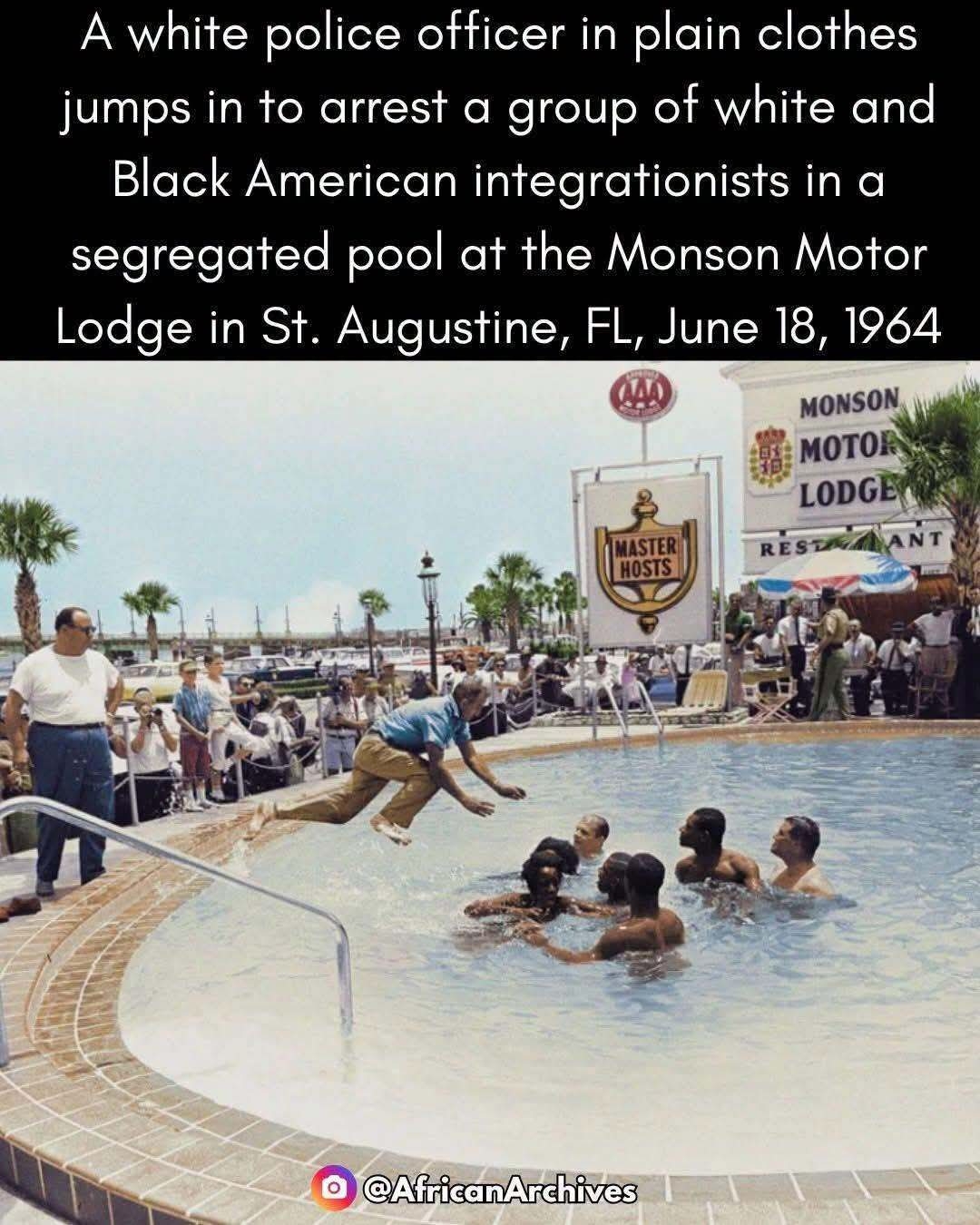
  • Throughout the racial demonstrations in St. Augustine, SCLC employed a variety of tactics that were designed to gain national press coverage and thus to ensure the attention of the American public. In addition to the nightly marches, the most innovative and dramatic tactic was the use of wade-ins and swim-ins to desegregate the beaches and swimming pools. The protests exposed the pervasiveness of segregation, touching as it did on every aspect of life in St. Augustine from schools and neighborhoods to public beaches. What other Americans could not understand was how a public beach could be subdivided into black and white sections.
    To assure press coverage of its demonstrations, SCLC would often notify reporters in advance. Hosea Williams, special adviser to Marin Luther King, was particularly adept at developing new tactics and at mobilizing the press. One of his most effective was the swim-in at the Monson Motor Lodge on June 18th, 1964. Reporters stayed at Monson’s during the St. Augustine campaign, and as a consequence, SCLC often conducted its demonstrations there. The first of these was led by a group of rabbis who distracted owner James Brock while a group of black and white protesters jumped into the motel’s swimming pool. Brock yelled at two of the white demonstrators, “You’re not putting these people in my pool.” “These are our guests,” came the reply. In a fury, Brock ran into his office and returned with a two gallon container of muriatic acid that he dumped into the water. A group of whites, led by police officer James Hewitt, gathered nearby, not knowing exactly what to do. Finally, Hewitt jumped into the pool to arrest the protesters.
    Throughout the racial demonstrations in St. Augustine, SCLC employed a variety of tactics that were designed to gain national press coverage and thus to ensure the attention of the American public. In addition to the nightly marches, the most innovative and dramatic tactic was the use of wade-ins and swim-ins to desegregate the beaches and swimming pools. The protests exposed the pervasiveness of segregation, touching as it did on every aspect of life in St. Augustine from schools and neighborhoods to public beaches. What other Americans could not understand was how a public beach could be subdivided into black and white sections. To assure press coverage of its demonstrations, SCLC would often notify reporters in advance. Hosea Williams, special adviser to Marin Luther King, was particularly adept at developing new tactics and at mobilizing the press. One of his most effective was the swim-in at the Monson Motor Lodge on June 18th, 1964. Reporters stayed at Monson’s during the St. Augustine campaign, and as a consequence, SCLC often conducted its demonstrations there. The first of these was led by a group of rabbis who distracted owner James Brock while a group of black and white protesters jumped into the motel’s swimming pool. Brock yelled at two of the white demonstrators, “You’re not putting these people in my pool.” “These are our guests,” came the reply. In a fury, Brock ran into his office and returned with a two gallon container of muriatic acid that he dumped into the water. A group of whites, led by police officer James Hewitt, gathered nearby, not knowing exactly what to do. Finally, Hewitt jumped into the pool to arrest the protesters.
    0 Comments 0 Shares 421 Views
  • Real growth is subtle. You stop feeling the need to explain yourself to everyone. You react less, listen more, and put your energy into becoming the kind of person who doesn't need to prove anything.
    Real growth is subtle. You stop feeling the need to explain yourself to everyone. You react less, listen more, and put your energy into becoming the kind of person who doesn't need to prove anything.
    0 Comments 0 Shares 303 Views
  • The masculine energy this generation needs isn't toxic aggression or passive weakness, it's grounded strength.

    The ability to be present without being reactive.

    To lead without dominating.

    To protect without controlling.

    To feel deeply without being ruled by emotions.

    Real men aren't emotionless robots. They're integrated humans who can access the full spectrum of emotion while maintaining self-control.

    They can be tender with their children and fierce against injustice.

    They can cry over loss and stand firm in conviction.

    Strength and sensitivity aren't opposites, they're partners.

    Stop performing masculinity based on what wounded culture taught you and start embodying it based on how God designed you.

    Jesus wept. Jesus overturned tables. Jesus served. Jesus led.

    He was the fullest expression of masculinity because He was the fullest expression of humanity submitted to divinity.
    The masculine energy this generation needs isn't toxic aggression or passive weakness, it's grounded strength. The ability to be present without being reactive. To lead without dominating. To protect without controlling. To feel deeply without being ruled by emotions. Real men aren't emotionless robots. They're integrated humans who can access the full spectrum of emotion while maintaining self-control. They can be tender with their children and fierce against injustice. They can cry over loss and stand firm in conviction. Strength and sensitivity aren't opposites, they're partners. Stop performing masculinity based on what wounded culture taught you and start embodying it based on how God designed you. Jesus wept. Jesus overturned tables. Jesus served. Jesus led. He was the fullest expression of masculinity because He was the fullest expression of humanity submitted to divinity.
    0 Comments 0 Shares 690 Views
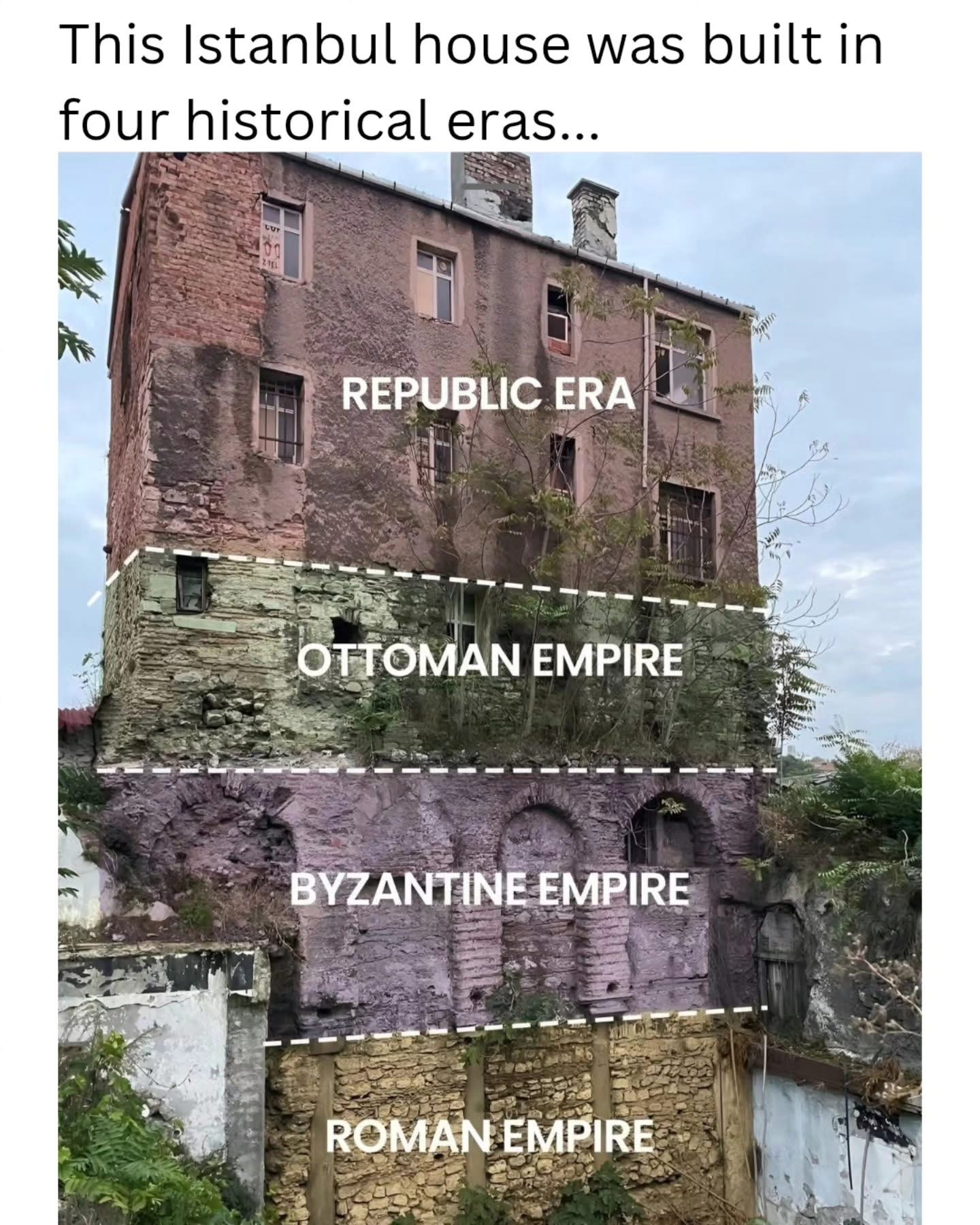
  • This modest building, now a small landmark in Istanbul’s urban fabric, exposes the city’s long memory through stone and brick.

    The Roman cistern at its foundation likely formed part of the city’s late antique water system, engineered to secure Constantinople against siege and drought, and its survival beneath later construction reflects both Roman durability and centuries of accidental preservation.

    When the city became the Byzantine capital, the space above was reorganized with brick arches and vaults, elements typical of commercial or storage structures tied to nearby forums and ports, where goods, taxes, and people circulated through the imperial economy.

    After the Ottoman conquest, the structure was not erased but adapted. Walls were repaired, openings reshaped, and materials reused in a practical continuity that valued function over monumentality. Subtle changes in masonry and mortar reveal these interventions, while early Republican era fixes introduced modern materials and techniques, prioritizing stability rather than historical purity. Each layer reflects a different relationship with the past: Roman ambition, Byzantine administration, Ottoman pragmatism, and modern necessity.
    This modest building, now a small landmark in Istanbul’s urban fabric, exposes the city’s long memory through stone and brick. The Roman cistern at its foundation likely formed part of the city’s late antique water system, engineered to secure Constantinople against siege and drought, and its survival beneath later construction reflects both Roman durability and centuries of accidental preservation. When the city became the Byzantine capital, the space above was reorganized with brick arches and vaults, elements typical of commercial or storage structures tied to nearby forums and ports, where goods, taxes, and people circulated through the imperial economy. After the Ottoman conquest, the structure was not erased but adapted. Walls were repaired, openings reshaped, and materials reused in a practical continuity that valued function over monumentality. Subtle changes in masonry and mortar reveal these interventions, while early Republican era fixes introduced modern materials and techniques, prioritizing stability rather than historical purity. Each layer reflects a different relationship with the past: Roman ambition, Byzantine administration, Ottoman pragmatism, and modern necessity.
    0 Comments 0 Shares 2K Views
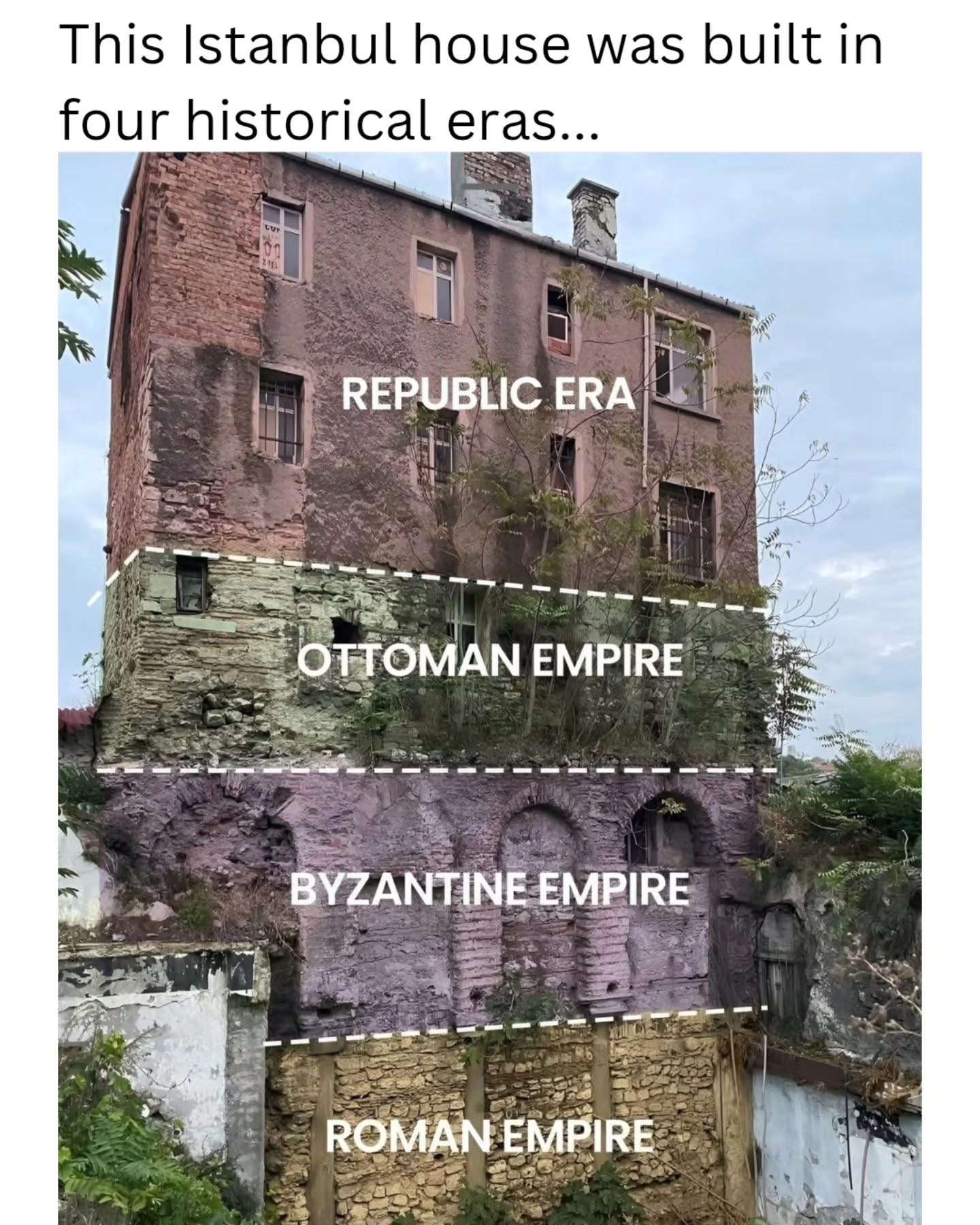
  • This modest building, now a small landmark in Istanbul’s urban fabric, exposes the city’s long memory through stone and brick.

    The Roman cistern at its foundation likely formed part of the city’s late antique water system, engineered to secure Constantinople against siege and drought, and its survival beneath later construction reflects both Roman durability and centuries of accidental preservation.

    When the city became the Byzantine capital, the space above was reorganized with brick arches and vaults, elements typical of commercial or storage structures tied to nearby forums and ports, where goods, taxes, and people circulated through the imperial economy.

    After the Ottoman conquest, the structure was not erased but adapted. Walls were repaired, openings reshaped, and materials reused in a practical continuity that valued function over monumentality. Subtle changes in masonry and mortar reveal these interventions, while early Republican era fixes introduced modern materials and techniques, prioritizing stability rather than historical purity. Each layer reflects a different relationship with the past: Roman ambition, Byzantine administration, Ottoman pragmatism, and modern necessity.
    This modest building, now a small landmark in Istanbul’s urban fabric, exposes the city’s long memory through stone and brick. The Roman cistern at its foundation likely formed part of the city’s late antique water system, engineered to secure Constantinople against siege and drought, and its survival beneath later construction reflects both Roman durability and centuries of accidental preservation. When the city became the Byzantine capital, the space above was reorganized with brick arches and vaults, elements typical of commercial or storage structures tied to nearby forums and ports, where goods, taxes, and people circulated through the imperial economy. After the Ottoman conquest, the structure was not erased but adapted. Walls were repaired, openings reshaped, and materials reused in a practical continuity that valued function over monumentality. Subtle changes in masonry and mortar reveal these interventions, while early Republican era fixes introduced modern materials and techniques, prioritizing stability rather than historical purity. Each layer reflects a different relationship with the past: Roman ambition, Byzantine administration, Ottoman pragmatism, and modern necessity.
    0 Comments 0 Shares 1K Views
More Results