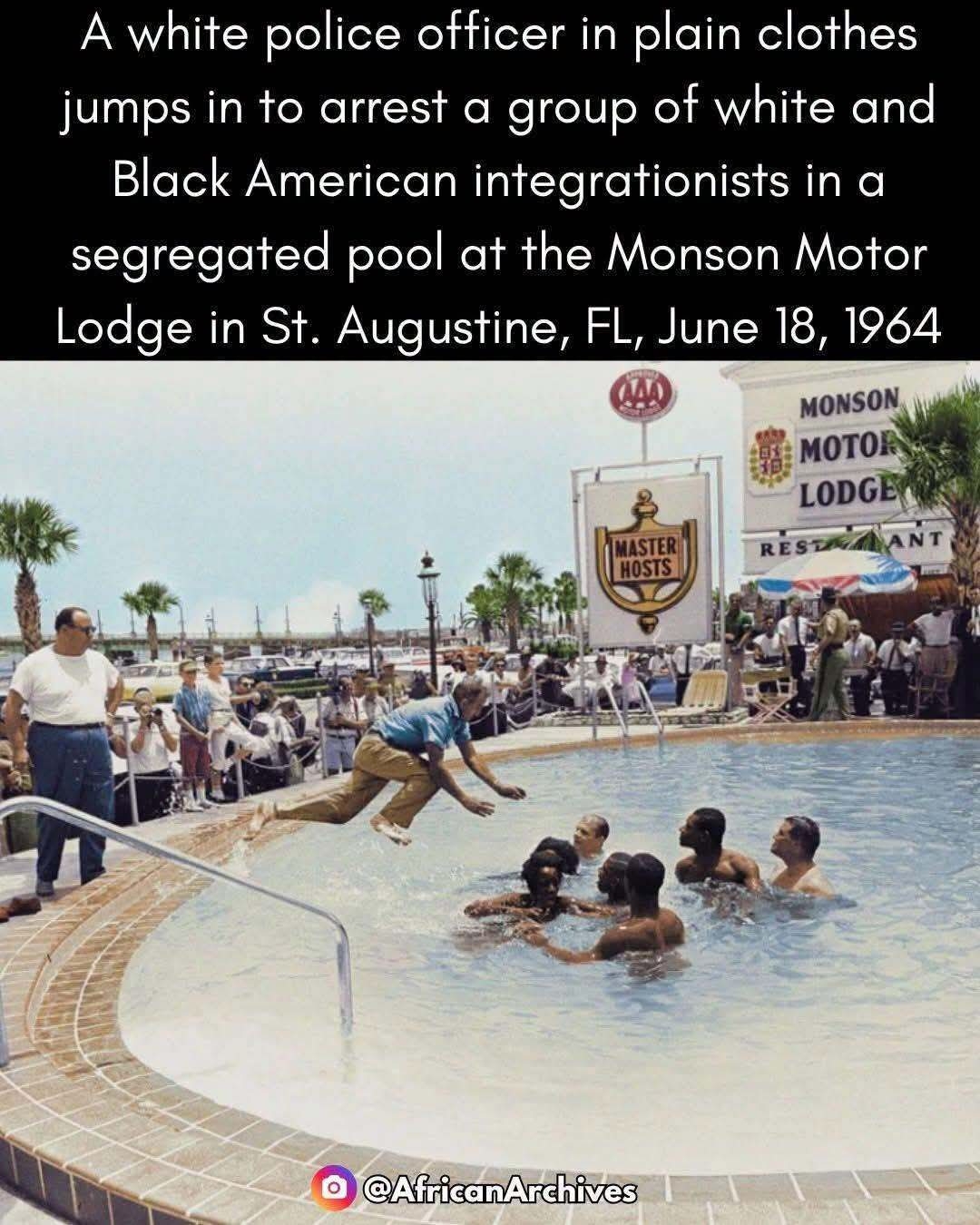
• Throughout the racial demonstrations in St. Augustine, SCLC employed a variety of tactics that were designed to gain national press coverage and thus to ensure the attention of the American public. In addition to the nightly marches, the most innovative and dramatic tactic was the use of wade-ins and swim-ins to desegregate the beaches and swimming pools. The protests exposed the pervasiveness of segregation, touching as it did on every aspect of life in St. Augustine from schools and neighborhoods to public beaches. What other Americans could not understand was how a public beach could be subdivided into black and white sections.
    To assure press coverage of its demonstrations, SCLC would often notify reporters in advance. Hosea Williams, special adviser to Marin Luther King, was particularly adept at developing new tactics and at mobilizing the press. One of his most effective was the swim-in at the Monson Motor Lodge on June 18th, 1964. Reporters stayed at Monson’s during the St. Augustine campaign, and as a consequence, SCLC often conducted its demonstrations there. The first of these was led by a group of rabbis who distracted owner James Brock while a group of black and white protesters jumped into the motel’s swimming pool. Brock yelled at two of the white demonstrators, “You’re not putting these people in my pool.” “These are our guests,” came the reply. In a fury, Brock ran into his office and returned with a two gallon container of muriatic acid that he dumped into the water. A group of whites, led by police officer James Hewitt, gathered nearby, not knowing exactly what to do. Finally, Hewitt jumped into the pool to arrest the protesters.
    Throughout the racial demonstrations in St. Augustine, SCLC employed a variety of tactics that were designed to gain national press coverage and thus to ensure the attention of the American public. In addition to the nightly marches, the most innovative and dramatic tactic was the use of wade-ins and swim-ins to desegregate the beaches and swimming pools. The protests exposed the pervasiveness of segregation, touching as it did on every aspect of life in St. Augustine from schools and neighborhoods to public beaches. What other Americans could not understand was how a public beach could be subdivided into black and white sections. To assure press coverage of its demonstrations, SCLC would often notify reporters in advance. Hosea Williams, special adviser to Marin Luther King, was particularly adept at developing new tactics and at mobilizing the press. One of his most effective was the swim-in at the Monson Motor Lodge on June 18th, 1964. Reporters stayed at Monson’s during the St. Augustine campaign, and as a consequence, SCLC often conducted its demonstrations there. The first of these was led by a group of rabbis who distracted owner James Brock while a group of black and white protesters jumped into the motel’s swimming pool. Brock yelled at two of the white demonstrators, “You’re not putting these people in my pool.” “These are our guests,” came the reply. In a fury, Brock ran into his office and returned with a two gallon container of muriatic acid that he dumped into the water. A group of whites, led by police officer James Hewitt, gathered nearby, not knowing exactly what to do. Finally, Hewitt jumped into the pool to arrest the protesters.
    0 Commentarii 0 Distribuiri 121 Views
  • https://www.architecturaldesigns.com/house-plans/hill-country-house-plan-with-split-bedrooms-and-outdoor-kitchen-54047lk
    https://www.architecturaldesigns.com/house-plans/hill-country-house-plan-with-split-bedrooms-and-outdoor-kitchen-54047lk
    WWW.ARCHITECTURALDESIGNS.COM
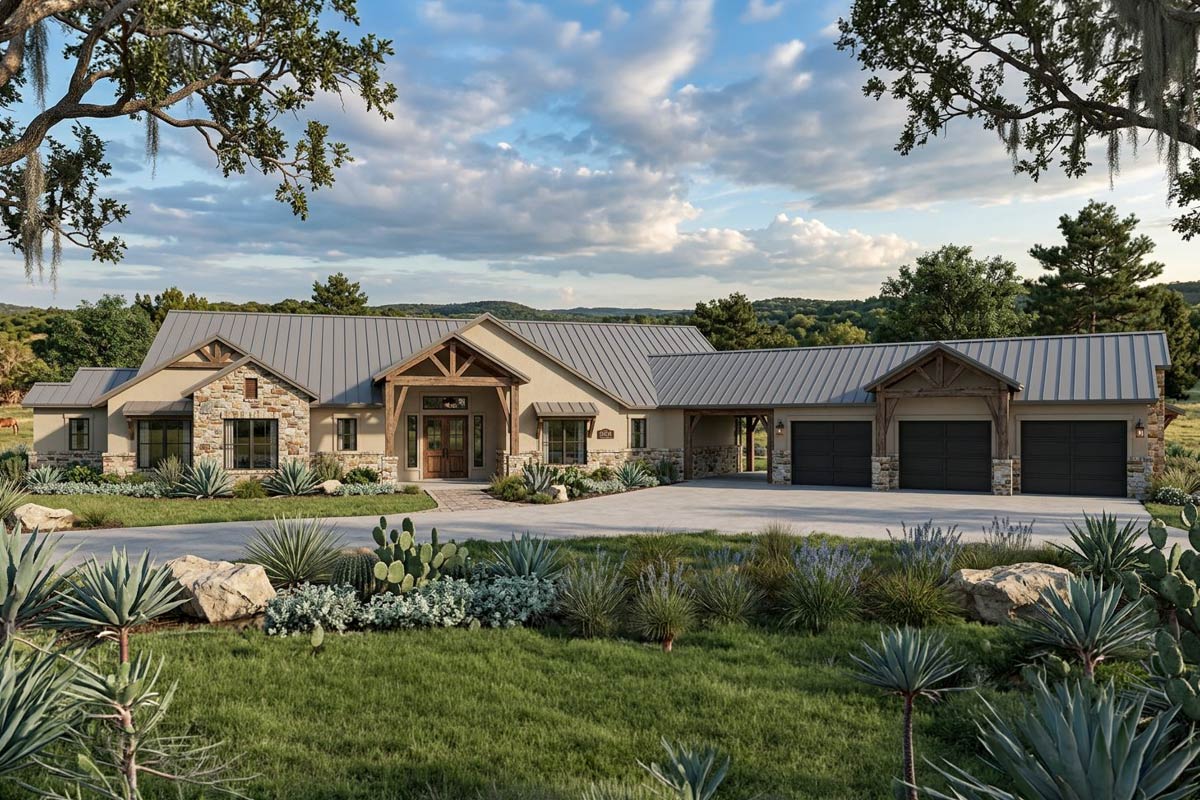
    Plan 54047LK: Hill Country House Plan with Split Bedrooms and Outdoor Kitchen
    Encompassing 4,788 finished sq ft, this sprawling single-story Hill Country Modern Farmhouse features 4 bedrooms, 4 full baths, 2 half baths, and a 1,367 sq ft, 3-car attached garage.Approach via a grand courtyard entry and porte cochere, leading to an inviting main entrance that ushers you into a thoughtfully designed layout featuring a dedicated home office and mudroom.The main living area boasts 10-foot ceilings and an open flow, connecting prominent spaces ideal for gathering, complemented by a convenient butler walk-in pantry and wet bar for effortless entertaining.The luxurious master suite, located on the first floor, offers a private retreat with direct laundry access, while secondary bedrooms are thoughtfully split for enhanced privacy.A dedicated game/rec room provides an ideal space for recreation and entertainment, catering to diverse family activities.Generous outdoor living spaces, including 860 sq ft of combined porches, feature an outdoor kitchen and a cozy outdoor fireplace, perfect for alfresco dining and relaxation.
    0 Commentarii 0 Distribuiri 98 Views
  • https://www.homesandgardens.com/house-design/la-home-designed-for-quiet-moments
    https://www.homesandgardens.com/house-design/la-home-designed-for-quiet-moments
    WWW.HOMESANDGARDENS.COM
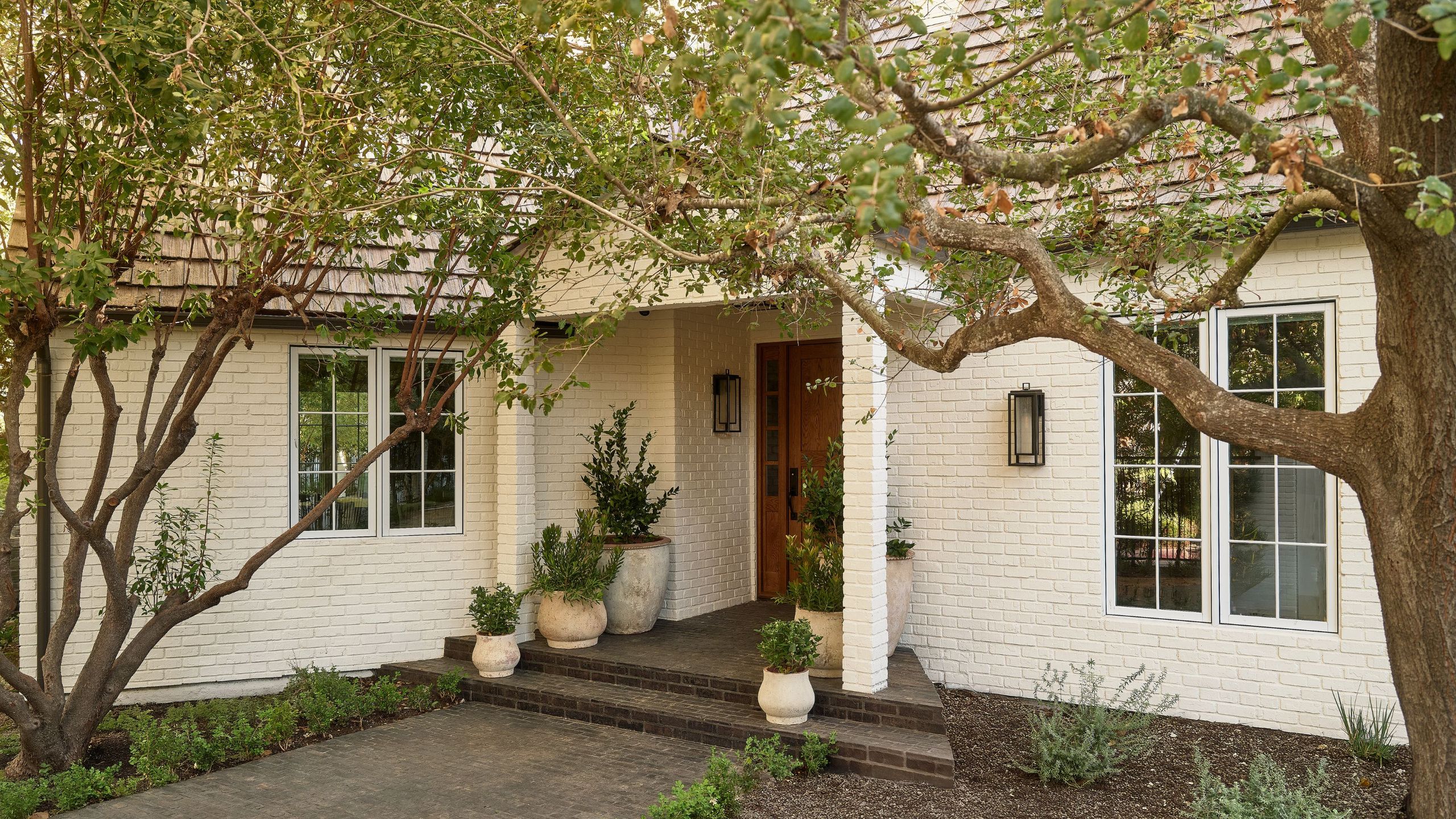
    This LA Home Unfolds Like a Boutique Hotel – But it’s the ‘Anti-Open-Plan Open-Plan’ and 3 Paint Color Rule That Make it Feel Like Home
    In Studio City, designer Gianpiero Gaglione has reimagined a once ‘country’ house with a calm, tonal palette and spaces designed for quiet moments
    0 Commentarii 0 Distribuiri 184 Views
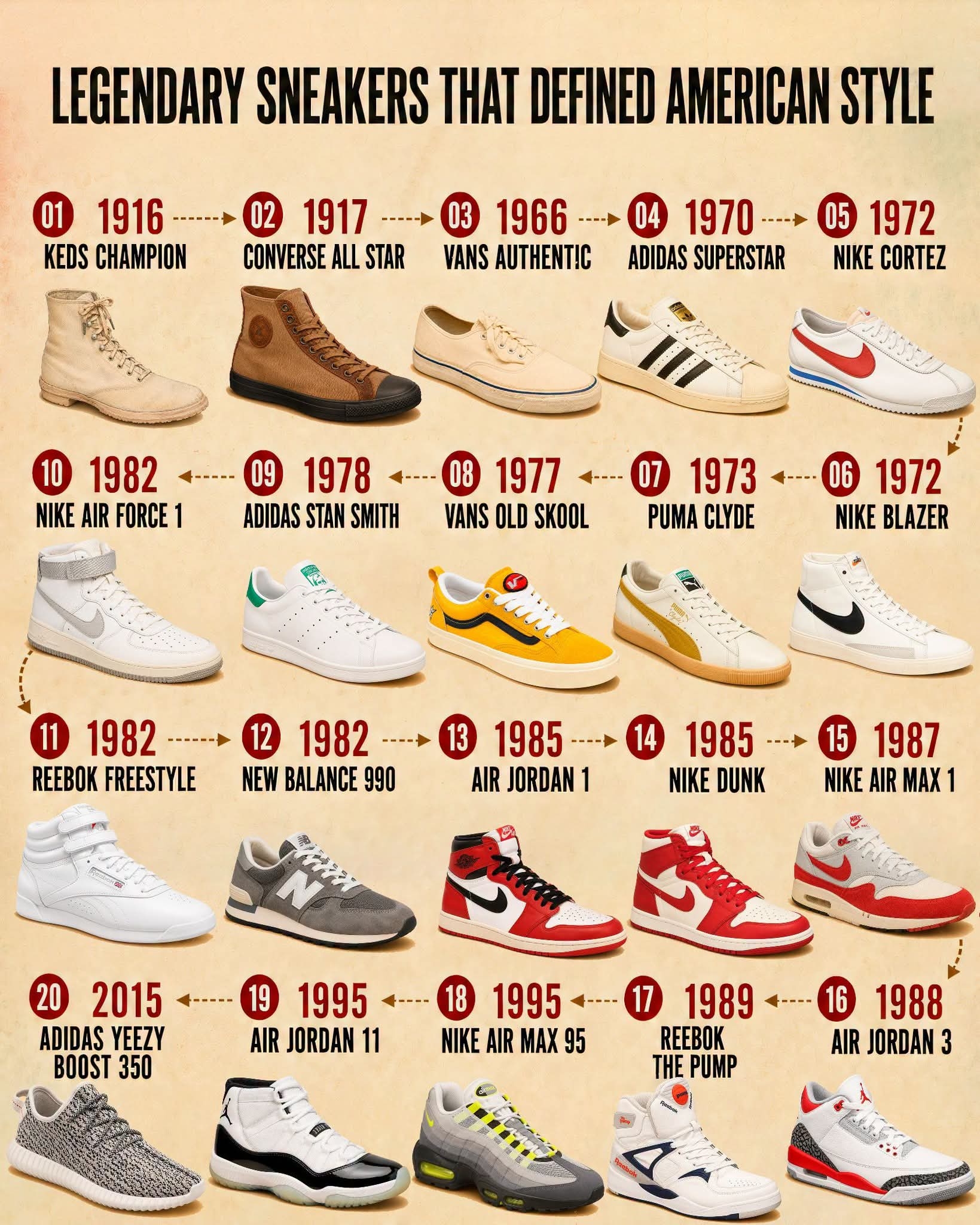
  • Rubber soles were so quiet that people started calling them sneakers, because a person could walk right up behind you and never be heard. That one small detail turned athletic equipment into the most personal thing Americans wear.

    Keds Champion came first in 1916: canvas over rubber, nothing more. A year later Converse released a basketball shoe most people today would not even recognize, because the early All Star was brown canvas, not the white icon everyone pictures.

    Then the shoe left the court. A small shop in Anaheim started selling the Vans Authentic in 1966, and customers could walk in with their own fabric and pick up finished shoes the same afternoon. Skateboarders found the waffle sole soon after and never let go.

    Adidas gave basketball its first leather low top with a rubber shell toe in 1970, and the Superstar ended up spending more time on sidewalks and stages than on hardwood. Nike answered with the Cortez in 1972, built by a track coach who simply wanted more cushioning under distance runners. The Blazer took its name from a Portland team that same year. In 1973 Puma made the Clyde for one man, Walt Frazier, whose taste for style made suede feel like tailoring.

    The eighties arrived like a wave. Air Force 1 put air cushioning into a basketball shoe in 1982, was quietly retired, and came back only because shops kept demanding it. Reebok Freestyle, released the same year, was the first athletic shoe designed for women, and it walked straight out of the gym into daily life. New Balance 990 asked nearly a hundred dollars when most running shoes cost half that, and people paid it. Air Jordan 1 turned a league uniform rule into the loudest advertising campaign of the decade, and the Dunk quietly borrowed college team colors before skaters claimed it.

    In 1987 Tinker Hatfield cut a window into the midsole of the Air Max 1 so you could actually see the air, an idea he took from a Paris building that wears its pipes on the outside. A year later the Air Jordan 3 introduced the Jumpman and that elephant print. Reebok put a tiny basketball on the tongue of the Pump in 1989 and let you inflate your own fit. The Air Max 95 borrowed the layered look of the human body and made bright neon normal, while the Air Jordan 11 wrapped patent leather around a basketball shoe so it could be worn with a suit.

    By 2015 the Yeezy Boost 350 had turned a release date into a worldwide event, with lines forming before sunrise. The quiet shoe had become the loudest thing in the room.

    #SneakerHistory #AmericanSneakerCulture #ClassicSneakers #SneakerCollectors #AmericanPopCulture
    Rubber soles were so quiet that people started calling them sneakers, because a person could walk right up behind you and never be heard. 👟 That one small detail turned athletic equipment into the most personal thing Americans wear. Keds Champion came first in 1916: canvas over rubber, nothing more. A year later Converse released a basketball shoe most people today would not even recognize, because the early All Star was brown canvas, not the white icon everyone pictures. 🏀 Then the shoe left the court. A small shop in Anaheim started selling the Vans Authentic in 1966, and customers could walk in with their own fabric and pick up finished shoes the same afternoon. Skateboarders found the waffle sole soon after and never let go. 🛹 Adidas gave basketball its first leather low top with a rubber shell toe in 1970, and the Superstar ended up spending more time on sidewalks and stages than on hardwood. Nike answered with the Cortez in 1972, built by a track coach who simply wanted more cushioning under distance runners. The Blazer took its name from a Portland team that same year. In 1973 Puma made the Clyde for one man, Walt Frazier, whose taste for style made suede feel like tailoring. The eighties arrived like a wave. 💥 Air Force 1 put air cushioning into a basketball shoe in 1982, was quietly retired, and came back only because shops kept demanding it. Reebok Freestyle, released the same year, was the first athletic shoe designed for women, and it walked straight out of the gym into daily life. New Balance 990 asked nearly a hundred dollars when most running shoes cost half that, and people paid it. Air Jordan 1 turned a league uniform rule into the loudest advertising campaign of the decade, and the Dunk quietly borrowed college team colors before skaters claimed it. 🎨 In 1987 Tinker Hatfield cut a window into the midsole of the Air Max 1 so you could actually see the air, an idea he took from a Paris building that wears its pipes on the outside. 🏛️ A year later the Air Jordan 3 introduced the Jumpman and that elephant print. Reebok put a tiny basketball on the tongue of the Pump in 1989 and let you inflate your own fit. The Air Max 95 borrowed the layered look of the human body and made bright neon normal, while the Air Jordan 11 wrapped patent leather around a basketball shoe so it could be worn with a suit. ✨ By 2015 the Yeezy Boost 350 had turned a release date into a worldwide event, with lines forming before sunrise. The quiet shoe had become the loudest thing in the room. #SneakerHistory #AmericanSneakerCulture #ClassicSneakers #SneakerCollectors #AmericanPopCulture
    0 Commentarii 0 Distribuiri 1617 Views
  • There is a clothing store in America older than the state of Illinois.

    Brooks Brothers opened its doors in New York in April 1818. Illinois joined the Union eight months later. One of them is a state, the other is a shop, and both are still here.

    That is the quiet magic of American retail. Some of these places outlived the horse and buggy, the telegraph, and even the shopping mall, and they are open for business right now while you read this.

    Macy’s stamps a red star on everything it sells because founder Rowland Macy reportedly carried one as a tattoo from his years aboard a Nantucket whaling ship. It became his personal mark and eventually one of the most recognizable retail symbols in the country.

    Barney Kroger was so focused on quality in 1883 Cincinnati that he began baking bread inside his own grocery store, helping pioneer the idea of producing food under the same roof where it was sold.

    Then there is the little store in Kemmerer, Wyoming, a town of barely a thousand people. James Cash Penney named it The Golden Rule and built the business around treating customers fairly. Years later, a young man named Sam Walton worked behind a JCPenney counter, learned the retail trade from the inside, and opened his first Walmart store in Rogers, Arkansas, in 1962.

    Leon Bean sold 100 pairs of his new hunting boots in 1912. Most were returned after the leather separated from the rubber bottoms. He refunded every customer, redesigned the boot, and built a Maine institution around that commitment to quality.

    Piggly Wiggly changed everyday shopping more than almost any name here. Before 1916, customers usually handed a list to a clerk, who gathered the groceries from behind a counter. The Memphis store is widely credited with introducing the modern self-service grocery model, allowing shoppers to walk the aisles and choose products for themselves.

    Best Buy was originally called Sound of Music. After a tornado damaged one of its largest stores in 1981, the company held a major sale to clear the surviving inventory and promoted some of the “best buys” in town. The success of that event helped inspire the Best Buy name, which the company adopted in 1983.

    Home Depot’s first Atlanta stores were so short on inventory that the founders reportedly stacked empty boxes on the upper shelves to make the aisles appear fuller.

    One remarkable year, 1962, gave America both Walmart and Target within nine weeks of each other.

    Every name here started with one store, one idea, and someone willing to risk everything on it.

    #AmericanRetail #RetailHistory #AmericanBrands #USHistory #VintageAmerica
    There is a clothing store in America older than the state of Illinois. 🧵 Brooks Brothers opened its doors in New York in April 1818. Illinois joined the Union eight months later. One of them is a state, the other is a shop, and both are still here. That is the quiet magic of American retail. Some of these places outlived the horse and buggy, the telegraph, and even the shopping mall, and they are open for business right now while you read this. 🛒 Macy’s stamps a red star on everything it sells because founder Rowland Macy reportedly carried one as a tattoo from his years aboard a Nantucket whaling ship. It became his personal mark and eventually one of the most recognizable retail symbols in the country. ⭐ Barney Kroger was so focused on quality in 1883 Cincinnati that he began baking bread inside his own grocery store, helping pioneer the idea of producing food under the same roof where it was sold. 🍞 Then there is the little store in Kemmerer, Wyoming, a town of barely a thousand people. James Cash Penney named it The Golden Rule and built the business around treating customers fairly. Years later, a young man named Sam Walton worked behind a JCPenney counter, learned the retail trade from the inside, and opened his first Walmart store in Rogers, Arkansas, in 1962. 👔 Leon Bean sold 100 pairs of his new hunting boots in 1912. Most were returned after the leather separated from the rubber bottoms. He refunded every customer, redesigned the boot, and built a Maine institution around that commitment to quality. 🥾 Piggly Wiggly changed everyday shopping more than almost any name here. Before 1916, customers usually handed a list to a clerk, who gathered the groceries from behind a counter. The Memphis store is widely credited with introducing the modern self-service grocery model, allowing shoppers to walk the aisles and choose products for themselves. 🐷 Best Buy was originally called Sound of Music. After a tornado damaged one of its largest stores in 1981, the company held a major sale to clear the surviving inventory and promoted some of the “best buys” in town. The success of that event helped inspire the Best Buy name, which the company adopted in 1983. 🎵 Home Depot’s first Atlanta stores were so short on inventory that the founders reportedly stacked empty boxes on the upper shelves to make the aisles appear fuller. 📦 One remarkable year, 1962, gave America both Walmart and Target within nine weeks of each other. Every name here started with one store, one idea, and someone willing to risk everything on it. 💡 #AmericanRetail #RetailHistory #AmericanBrands #USHistory #VintageAmerica
    0 Commentarii 0 Distribuiri 1267 Views
  • https://www.countryliving.com/home-design/decorating-ideas/a71078399/bedroom-things-to-get-rid-of/
    https://www.countryliving.com/home-design/decorating-ideas/a71078399/bedroom-things-to-get-rid-of/
    WWW.COUNTRYLIVING.COM
    6 Things You Should Get Rid of in Your Bedroom This Spring, Designers Say
    You’ll be surprised how much better your bedroom feels without these.
    0 Commentarii 0 Distribuiri 290 Views
  • The masculine energy this generation needs isn't toxic aggression or passive weakness, it's grounded strength.

    The ability to be present without being reactive.

    To lead without dominating.

    To protect without controlling.

    To feel deeply without being ruled by emotions.

    Real men aren't emotionless robots. They're integrated humans who can access the full spectrum of emotion while maintaining self-control.

    They can be tender with their children and fierce against injustice.

    They can cry over loss and stand firm in conviction.

    Strength and sensitivity aren't opposites, they're partners.

    Stop performing masculinity based on what wounded culture taught you and start embodying it based on how God designed you.

    Jesus wept. Jesus overturned tables. Jesus served. Jesus led.

    He was the fullest expression of masculinity because He was the fullest expression of humanity submitted to divinity.
    The masculine energy this generation needs isn't toxic aggression or passive weakness, it's grounded strength. The ability to be present without being reactive. To lead without dominating. To protect without controlling. To feel deeply without being ruled by emotions. Real men aren't emotionless robots. They're integrated humans who can access the full spectrum of emotion while maintaining self-control. They can be tender with their children and fierce against injustice. They can cry over loss and stand firm in conviction. Strength and sensitivity aren't opposites, they're partners. Stop performing masculinity based on what wounded culture taught you and start embodying it based on how God designed you. Jesus wept. Jesus overturned tables. Jesus served. Jesus led. He was the fullest expression of masculinity because He was the fullest expression of humanity submitted to divinity.
    0 Commentarii 0 Distribuiri 565 Views
  • Automobile tires have undergone a remarkable transformation over the last century, evolving from simple rubber coverings into highly engineered components critical for safety, comfort, performance, and efficiency. This evolution reflects changes in vehicle design, road conditions, driving speeds, and advances in material science.

    In the early 1900s and 1920s, tires were narrow, tall, and often mounted on spoked wheels. These early tyres were made from natural rubber with cotton fabric plies and had smooth or lightly grooved surfaces. They were designed mainly to cope with rough, unpaved roads and low vehicle speeds. Durability was limited, punctures were common, and ride comfort was basic. Bias-ply construction dominated this era, where fabric layers were laid diagonally across each other, making tires stiff and prone to heat buildup.

    By the 1930s and 1940s, tire designs became slightly wider and stronger. Rubber compounds improved, and tread patterns became more defined to enhance grip on wet and muddy roads. During this period, vehicles grew heavier and faster, especially due to wartime engineering advances, pushing tire manufacturers to focus more on load capacity and reliability.

    The 1950s marked a major visual and technical shift with the introduction of whitewall tyres, symbolizing style and luxury. More importantly, tire construction continued to improve, offering better comfort and longer life. In the late 1940s and 1950s, radial tire technology was developed, though it gained widespread adoption slightly later. Radial tires used steel belts laid perpendicular to the direction of travel, significantly improving grip, fuel efficiency, and tread life.

    During the 1960s and 1970s, radial tires became mainstream globally. Tires grew wider, and tread designs became more aggressive to support higher speeds and better cornering. Performance-oriented tires emerged alongside off-road and all-terrain tires, reflecting the rise of sports cars and utility vehicles. Safety, heat resistance, and handling became central design goals.

    By the 1980s and 1990s, tire technology advanced rapidly. Low-profile tyres paired with alloy wheels became popular, improving handling and aesthetics. Rubber compounds were enhanced using synthetic materials, silica, and carbon black to balance grip, durability, and rolling resistance. Specialized tires such as winter tires, high-performance summer tires, and touring tires became common, each designed for specific driving conditions.

    From the 2000s onward, tires evolved into highly specialized, technology-driven products. Modern tires feature advanced tread patterns for noise reduction, water dispersion, and improved braking. Run-flat tires allow limited driving even after punctures, while tubeless designs became standard for safety and convenience. Sensors for tire pressure monitoring systems (TPMS) were integrated to enhance safety.

    Today, tires are engineered with sustainability and efficiency in mind. There are eco-friendly tires designed to reduce rolling resistance and improve electric vehicle range, ultra-high-performance tires for sports cars, all-season tires for everyday use, off-road and mud-terrain tires for extreme conditions, and smart tires being developed with embedded sensors to monitor wear, temperature, and road conditions in real time.

    From simple rubber rings to intelligent, high-performance components, tire evolution mirrors the progress of the automobile itself focused on safety, efficiency, comfort, and innovation.

    #TireEvolution #AutomobileHistory #CarTechnology #RadialTires #VehicleSafety #AutomotiveEngineering #ModernTires #MobilityInnovation #Cars #Tire

    Automobile tires have undergone a remarkable transformation over the last century, evolving from simple rubber coverings into highly engineered components critical for safety, comfort, performance, and efficiency. This evolution reflects changes in vehicle design, road conditions, driving speeds, and advances in material science. In the early 1900s and 1920s, tires were narrow, tall, and often mounted on spoked wheels. These early tyres were made from natural rubber with cotton fabric plies and had smooth or lightly grooved surfaces. They were designed mainly to cope with rough, unpaved roads and low vehicle speeds. Durability was limited, punctures were common, and ride comfort was basic. Bias-ply construction dominated this era, where fabric layers were laid diagonally across each other, making tires stiff and prone to heat buildup. By the 1930s and 1940s, tire designs became slightly wider and stronger. Rubber compounds improved, and tread patterns became more defined to enhance grip on wet and muddy roads. During this period, vehicles grew heavier and faster, especially due to wartime engineering advances, pushing tire manufacturers to focus more on load capacity and reliability. The 1950s marked a major visual and technical shift with the introduction of whitewall tyres, symbolizing style and luxury. More importantly, tire construction continued to improve, offering better comfort and longer life. In the late 1940s and 1950s, radial tire technology was developed, though it gained widespread adoption slightly later. Radial tires used steel belts laid perpendicular to the direction of travel, significantly improving grip, fuel efficiency, and tread life. During the 1960s and 1970s, radial tires became mainstream globally. Tires grew wider, and tread designs became more aggressive to support higher speeds and better cornering. Performance-oriented tires emerged alongside off-road and all-terrain tires, reflecting the rise of sports cars and utility vehicles. Safety, heat resistance, and handling became central design goals. By the 1980s and 1990s, tire technology advanced rapidly. Low-profile tyres paired with alloy wheels became popular, improving handling and aesthetics. Rubber compounds were enhanced using synthetic materials, silica, and carbon black to balance grip, durability, and rolling resistance. Specialized tires such as winter tires, high-performance summer tires, and touring tires became common, each designed for specific driving conditions. From the 2000s onward, tires evolved into highly specialized, technology-driven products. Modern tires feature advanced tread patterns for noise reduction, water dispersion, and improved braking. Run-flat tires allow limited driving even after punctures, while tubeless designs became standard for safety and convenience. Sensors for tire pressure monitoring systems (TPMS) were integrated to enhance safety. Today, tires are engineered with sustainability and efficiency in mind. There are eco-friendly tires designed to reduce rolling resistance and improve electric vehicle range, ultra-high-performance tires for sports cars, all-season tires for everyday use, off-road and mud-terrain tires for extreme conditions, and smart tires being developed with embedded sensors to monitor wear, temperature, and road conditions in real time. From simple rubber rings to intelligent, high-performance components, tire evolution mirrors the progress of the automobile itself focused on safety, efficiency, comfort, and innovation. #TireEvolution #AutomobileHistory #CarTechnology #RadialTires #VehicleSafety #AutomotiveEngineering #ModernTires #MobilityInnovation #Cars #Tire

    0 Commentarii 0 Distribuiri 13937 Views
  • The evolution of American 7.62 mm rifles represents a journey from classic wood-stock service rifles to the high-tech, modular precision systems of today. These firearms have served as the backbone for marksmen, snipers, and special forces, proving the enduring power of the .308 caliber.

    A Legacy of American Firepower:

    • M14 (1957): The classic battle rifle that bridged the gap between the M1 Garand and modern platforms.

    • ArmaLite AR-10 (1956): The innovative design that set the stage for the modular rifles we use today.

    • Remington Model 700 (1962): A legendary bolt-action platform synonymous with precision and reliability.

    • M21 (1969) & M25 (1990) Snipers: Specialized evolutions of the M14 designed specifically for the needs of designated marksmen.

    • SR-25 (1990) & M110 SASS (2008): Modern semi-automatic sniper systems that offer rapid follow-up shots with bolt-action accuracy.

    • DPMS Panther (2000) & Ruger SR-762 (2013): Modern sporting and tactical rifles that bring 7.62 mm power to a wider range of missions.
    🇺🇸The evolution of American 7.62 mm rifles represents a journey from classic wood-stock service rifles to the high-tech, modular precision systems of today. These firearms have served as the backbone for marksmen, snipers, and special forces, proving the enduring power of the .308 caliber. A Legacy of American Firepower: • M14 (1957): The classic battle rifle that bridged the gap between the M1 Garand and modern platforms. • ArmaLite AR-10 (1956): The innovative design that set the stage for the modular rifles we use today. • Remington Model 700 (1962): A legendary bolt-action platform synonymous with precision and reliability. • M21 (1969) & M25 (1990) Snipers: Specialized evolutions of the M14 designed specifically for the needs of designated marksmen. • SR-25 (1990) & M110 SASS (2008): Modern semi-automatic sniper systems that offer rapid follow-up shots with bolt-action accuracy. • DPMS Panther (2000) & Ruger SR-762 (2013): Modern sporting and tactical rifles that bring 7.62 mm power to a wider range of missions.
    0 Commentarii 0 Distribuiri 2766 Views
  • https://www.architecturaldesigns.com/house-plans/sleek-northwest-modern-house-plan-with-4-beds-and-upstairs-master-suite-623600dj
    https://www.architecturaldesigns.com/house-plans/sleek-northwest-modern-house-plan-with-4-beds-and-upstairs-master-suite-623600dj
    WWW.ARCHITECTURALDESIGNS.COM
    Plan 623600DJ: Sleek Northwest Modern House Plan with 4 Beds and Upstairs Master Suite
    This 2,190 sq. ft. contemporary Northwest Modern House Plan features 4 bedrooms, 2.5 bathrooms, and an integrated 533 sq. ft. two-car garage, all wrapped in a striking facade of natural wood and stone.Upon entering, guests are welcomed into a bright foyer with a soaring two-story window, leading directly into an expansive open-concept living area designed for both intimate gatherings and lively entertaining.The main floor seamlessly connects a gourmet kitchen, complete with a convenient butler's walk-in pantry, to the dining area and a spacious great room, fostering an effortless flow for daily living and social events.Upstairs, the luxurious master suite serves as a private retreat, featuring ample space and privacy, while three additional clustered bedrooms and an upstairs laundry room provide practical living for family or guests.A practical mudroom, located conveniently off the garage entry, offers an organized transition space, keeping daily clutter at bay.
    0 Commentarii 0 Distribuiri 459 Views
Sponsorizeaza Paginile