• Did you know that Cuba had a policy to "Whiten" the African population? This is a very deep article that deals with 5 Countries that deliberately brought Europeans into their country to lighten the complexion of the people in many cases. Many of us don't know this aspect of history.

    "After the trans-Atlantic slave trade was officially abolished toward the end of the 19th century, many whites felt threatened and feared free Blacks would become a menacing element in society. The elites spent a great dealing of time mulling over how best to solve the so-called Negro problem. A popular solution that emerged during this period was the ideology of racial whitening or “whitening"."

    "Supporters of the “whitening” ideology believed that if a “superior” white population was encouraged to mix with an “inferior” Black population, Blacks would advance culturally, genetically or even disappear totally, within several generations. Some also believed that an influx of immigrants from Europe would be necessary to successfully carry out the process."

    Although both ideologies were driven by racism and white supremacy, whitening was in contrast to some countries that opted for segregation rather than miscegenation, ultimately outlawing the mixing of the races. This, however, was just a different means to the same end as these nations also imported more Europeans while slaughtering and oppressing the Black population.

    SOURCE:

    https://atlantablackstar.com/2014/03/10/5-black-nations-that-imported-europeans-to-whiten-the-population/

    #Africa #AfricanHistory #Cuba #Slavery #TheAHNShow #BlackHistoryMonth #BlackHistory
    Did you know that Cuba had a policy to "Whiten" the African population? This is a very deep article that deals with 5 Countries that deliberately brought Europeans into their country to lighten the complexion of the people in many cases. Many of us don't know this aspect of history. "After the trans-Atlantic slave trade was officially abolished toward the end of the 19th century, many whites felt threatened and feared free Blacks would become a menacing element in society. The elites spent a great dealing of time mulling over how best to solve the so-called Negro problem. A popular solution that emerged during this period was the ideology of racial whitening or “whitening"." "Supporters of the “whitening” ideology believed that if a “superior” white population was encouraged to mix with an “inferior” Black population, Blacks would advance culturally, genetically or even disappear totally, within several generations. Some also believed that an influx of immigrants from Europe would be necessary to successfully carry out the process." Although both ideologies were driven by racism and white supremacy, whitening was in contrast to some countries that opted for segregation rather than miscegenation, ultimately outlawing the mixing of the races. This, however, was just a different means to the same end as these nations also imported more Europeans while slaughtering and oppressing the Black population. SOURCE: https://atlantablackstar.com/2014/03/10/5-black-nations-that-imported-europeans-to-whiten-the-population/ #Africa #AfricanHistory #Cuba #Slavery #TheAHNShow #BlackHistoryMonth #BlackHistory
    0 Comments 0 Shares 393 Views
  • Few people know that Brazil has the largest population of black people outside of the African continent. In fact, it is the second largest “Black nation” after Nigeria, with over 100 million Black people.

    Yet, there is little information in the media outside of the country about this group, specifically, information about the history of Africans in the country that defined and continues to define the affairs of black people globally. For example, the country’s Malê Revolt in its province of Bahia in 1835 is not only considered the most important revolt in Brazillian history but it is believed to have been instrumental in bringing an end to the international slave trade in the country.

    Historians say that on the night of January 24 to 25, 1835, African-born slaves and freed-people in the northeastern Brazilian city of Salvador da Bahia carried out a rebellion to liberate themselves from slavery and create an Islamic homeland. The group of some six hundred Yoruba, Nupe, Kanuri and Hausa people from present-day Nigeria were led by Muslim leaders, having heard of and being inspired by the Haitian Revolution (1791−1804).

    SOURCE: Face2FaceAfrica

    https://face2faceafrica.com/article/how-enslaved-nigerians-in-brazil-helped-usher-in-the-end-of-international-slave-trade-in-1835

    #Brazil #Nigeria #African #AfricanHistory #Yoruba #Hausa #Slavery #Haiti #HaitiRevolution
    Few people know that Brazil has the largest population of black people outside of the African continent. In fact, it is the second largest “Black nation” after Nigeria, with over 100 million Black people. Yet, there is little information in the media outside of the country about this group, specifically, information about the history of Africans in the country that defined and continues to define the affairs of black people globally. For example, the country’s Malê Revolt in its province of Bahia in 1835 is not only considered the most important revolt in Brazillian history but it is believed to have been instrumental in bringing an end to the international slave trade in the country. Historians say that on the night of January 24 to 25, 1835, African-born slaves and freed-people in the northeastern Brazilian city of Salvador da Bahia carried out a rebellion to liberate themselves from slavery and create an Islamic homeland. The group of some six hundred Yoruba, Nupe, Kanuri and Hausa people from present-day Nigeria were led by Muslim leaders, having heard of and being inspired by the Haitian Revolution (1791−1804). SOURCE: Face2FaceAfrica https://face2faceafrica.com/article/how-enslaved-nigerians-in-brazil-helped-usher-in-the-end-of-international-slave-trade-in-1835 #Brazil #Nigeria #African #AfricanHistory #Yoruba #Hausa #Slavery #Haiti #HaitiRevolution
    0 Comments 0 Shares 416 Views
  • The Los Angeles Pobladores, or “townspeople,” were a group of 44 settlers and four soldiers from Mexico who established the famed city in 1781 in what is now California. The settlers came from various Spanish castes, with over half of the group being of African descent.

    Governor of Las Californias, a Spanish-owned region, Felipe de Neve called on 11 families to help build the new city in the region by recruiting them from Sonora and Sinaloa, Mexico. According to a census record taken at the time, there were two persons of African ancestry, eight Spanish and Black persons, and nine American Indians. There was also one Spanish and Indian person, with the rest being Spaniards.

    According to the efforts of historian William M. Mason, the actual racial makeup of the pobladores was perhaps more racially balanced than not. Mason wrote that of the 44, only two were White, while 26 had some manner of African ancestry and that 16 of the group were “mestizos” or mixed Spanish and Indian people.

    SOURCE: Face2FaceAfrica

    https://face2faceafrica.com/article/los-angeles-pobladores

    #Mexico #LosAngeles #California #Mexican #AfroLatino #AfricanHistory #BlackHistory #TheAHNShow #Spain #AfricanDescent #Spanish
    The Los Angeles Pobladores, or “townspeople,” were a group of 44 settlers and four soldiers from Mexico who established the famed city in 1781 in what is now California. The settlers came from various Spanish castes, with over half of the group being of African descent. Governor of Las Californias, a Spanish-owned region, Felipe de Neve called on 11 families to help build the new city in the region by recruiting them from Sonora and Sinaloa, Mexico. According to a census record taken at the time, there were two persons of African ancestry, eight Spanish and Black persons, and nine American Indians. There was also one Spanish and Indian person, with the rest being Spaniards. According to the efforts of historian William M. Mason, the actual racial makeup of the pobladores was perhaps more racially balanced than not. Mason wrote that of the 44, only two were White, while 26 had some manner of African ancestry and that 16 of the group were “mestizos” or mixed Spanish and Indian people. SOURCE: Face2FaceAfrica https://face2faceafrica.com/article/los-angeles-pobladores #Mexico #LosAngeles #California #Mexican #AfroLatino #AfricanHistory #BlackHistory #TheAHNShow #Spain #AfricanDescent #Spanish
    0 Comments 0 Shares 2104 Views
  • Creole languages can be categorized by their base language, such as French-based (e.g., Haitian Creole, Louisiana Creole), English-based (e.g., Jamaican Patois, Gullah), Portuguese-based (e.g., Papiamento, Cape Verdean Creole), and others that have a mixed or non-European base (e.g., Sango, Saramacca). They are found worldwide, with large concentrations in the Caribbean, Africa, and the Indian Ocean.
    By base language

    French-based: These languages developed from contact between French and other languages. Examples include Haitian Creole, Louisiana Creole, Mauritian Creole, and Dominican Creole French.

    English-based: These are creoles where English is the primary base. Examples include Jamaican Patois, Guyanese Creole, Gullah (spoken in the southeastern U.S.), and Tok Pisin (in Papua New Guinea).

    Portuguese-based: These languages have Portuguese as their main foundation. Papiamento (spoken in Aruba, Bonaire, and Curaçao) and Cape Verdean Creole are prominent examples.

    Mixed or non-European based: Some creoles are based on contact between multiple European languages or primarily non-European languages.

    Sango: Based on the Ngbandi language in the Central African Republic.

    Saramacca: Based on English but heavily influenced by Portuguese, spoken in Suriname.

    Papiamentu: Though based on Portuguese, it has significant Spanish and Dutch influence.

    By external history

    Plantation creoles: Developed on plantations, such as many French-based creoles in the Caribbean.

    Fort creoles: Developed around forts, often involving trade and administration.

    Maroon creoles: Developed by communities of formerly enslaved people who escaped to form their own settlements.

    Creolized pidgins: Languages that evolved from pidgins into more complex, stable languages.

    By region

    Caribbean: Haitian Creole, Jamaican Patois, Papiamento (Aruba, Bonaire, Curaçao), and various French-based creoles in the French West Indies are examples.

    Africa: Nigerian Pidgin, Sango, and Kikongo-Kituba are spoken in various countries.

    Indian Ocean: Mauritian Creole, Seychellois Creole, and Reunion Creole are spoken in this region.

    Americas: Besides the Caribbean and Louisiana creoles, there are also Liberian Creole and Belizean Kriol.

    Creole languages can be categorized by their base language, such as French-based (e.g., Haitian Creole, Louisiana Creole), English-based (e.g., Jamaican Patois, Gullah), Portuguese-based (e.g., Papiamento, Cape Verdean Creole), and others that have a mixed or non-European base (e.g., Sango, Saramacca). They are found worldwide, with large concentrations in the Caribbean, Africa, and the Indian Ocean. By base language French-based: These languages developed from contact between French and other languages. Examples include Haitian Creole, Louisiana Creole, Mauritian Creole, and Dominican Creole French. English-based: These are creoles where English is the primary base. Examples include Jamaican Patois, Guyanese Creole, Gullah (spoken in the southeastern U.S.), and Tok Pisin (in Papua New Guinea). Portuguese-based: These languages have Portuguese as their main foundation. Papiamento (spoken in Aruba, Bonaire, and Curaçao) and Cape Verdean Creole are prominent examples. Mixed or non-European based: Some creoles are based on contact between multiple European languages or primarily non-European languages. Sango: Based on the Ngbandi language in the Central African Republic. Saramacca: Based on English but heavily influenced by Portuguese, spoken in Suriname. Papiamentu: Though based on Portuguese, it has significant Spanish and Dutch influence. By external history Plantation creoles: Developed on plantations, such as many French-based creoles in the Caribbean. Fort creoles: Developed around forts, often involving trade and administration. Maroon creoles: Developed by communities of formerly enslaved people who escaped to form their own settlements. Creolized pidgins: Languages that evolved from pidgins into more complex, stable languages. By region Caribbean: Haitian Creole, Jamaican Patois, Papiamento (Aruba, Bonaire, Curaçao), and various French-based creoles in the French West Indies are examples. Africa: Nigerian Pidgin, Sango, and Kikongo-Kituba are spoken in various countries. Indian Ocean: Mauritian Creole, Seychellois Creole, and Reunion Creole are spoken in this region. Americas: Besides the Caribbean and Louisiana creoles, there are also Liberian Creole and Belizean Kriol.

    0 Comments 0 Shares 2947 Views
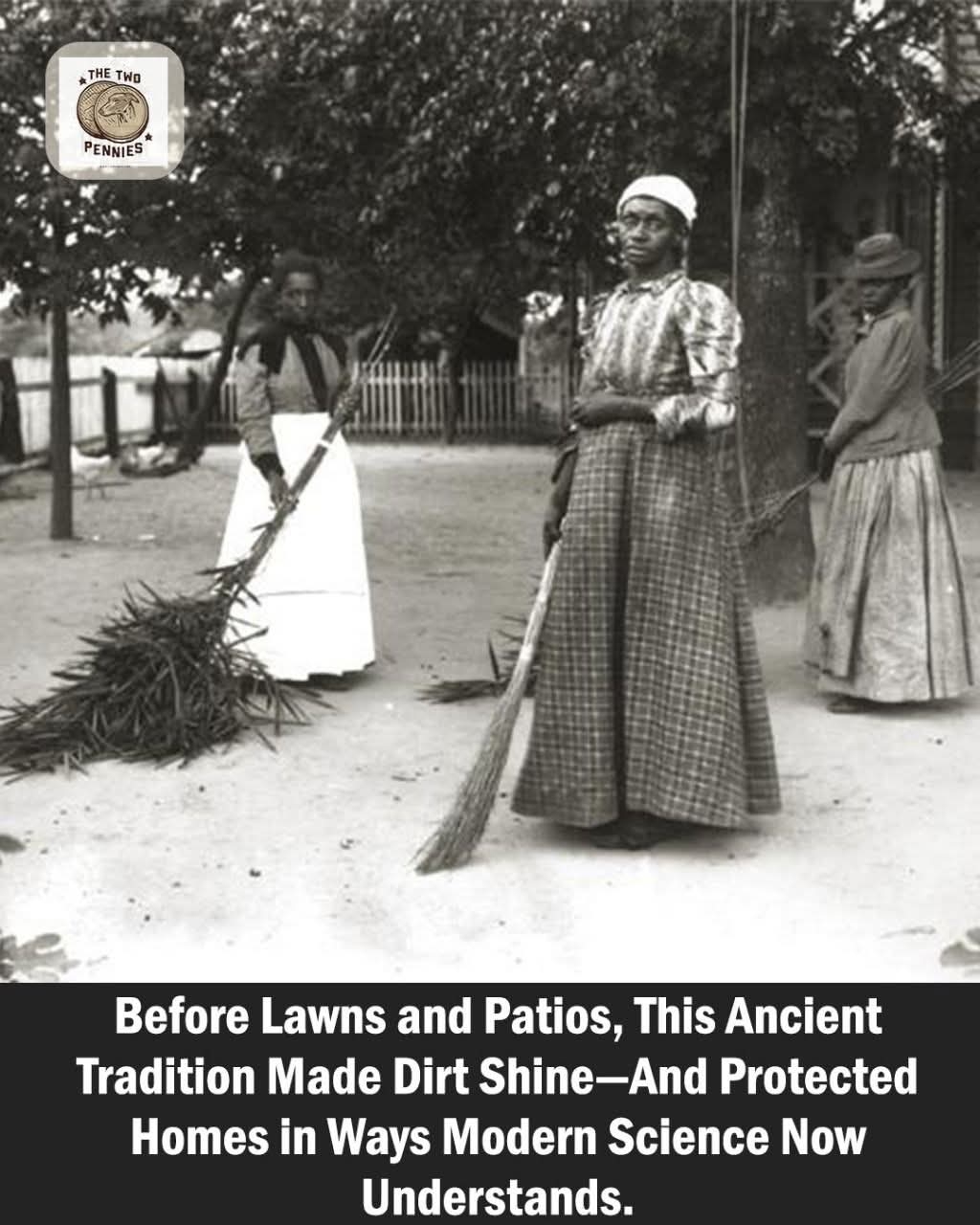
  • In the Deep South, long before manicured lawns and patio decks, families used to sweep their yards until the bare earth gleamed like polished stone.
    This wasn’t just about keeping things tidy—it was tradition, survival, and quiet pride. The custom is believed to have come with enslaved Africans who brought this practice from their homelands. Using handmade brooms made from bundled twigs or broom straw, they swept every inch of grass away from their homes. And it served a purpose.
    No grass meant fewer places for snakes to hide. It reduced mosquitoes and other pests. Fires, especially from open cooking flames, were less likely to spread. Over time, the constant sweeping compacted the earth so firmly it became smooth as stone—a natural patio, where families gathered to cook, rest, and share stories.
    It was also an act of welcome. A freshly swept yard signaled hospitality. And once guests left, the ground was swept again—a blessing over the home and its memories. In many households, this was done daily, sometimes multiple times a day, under the Southern sun, with patience and deep devotion.
    Grass has since grown back in most places, but the memory of those earth yards lives on—a powerful symbol of resilience, creativity, and the quiet care passed down through generations.

    #CulturalHeritage #SouthernTraditions
    In the Deep South, long before manicured lawns and patio decks, families used to sweep their yards until the bare earth gleamed like polished stone. This wasn’t just about keeping things tidy—it was tradition, survival, and quiet pride. The custom is believed to have come with enslaved Africans who brought this practice from their homelands. Using handmade brooms made from bundled twigs or broom straw, they swept every inch of grass away from their homes. And it served a purpose. No grass meant fewer places for snakes to hide. It reduced mosquitoes and other pests. Fires, especially from open cooking flames, were less likely to spread. Over time, the constant sweeping compacted the earth so firmly it became smooth as stone—a natural patio, where families gathered to cook, rest, and share stories. It was also an act of welcome. A freshly swept yard signaled hospitality. And once guests left, the ground was swept again—a blessing over the home and its memories. In many households, this was done daily, sometimes multiple times a day, under the Southern sun, with patience and deep devotion. Grass has since grown back in most places, but the memory of those earth yards lives on—a powerful symbol of resilience, creativity, and the quiet care passed down through generations. #CulturalHeritage #SouthernTraditions
    0 Comments 0 Shares 2867 Views