


• ChatGPT is no longer just a chatbot.

    It’s becoming an entire AI ecosystem for reasoning, research, creation, work, coding and automation.

    Here’s how the ecosystem fits together:

    01 — Models

    Different models can be used for different workloads.

    → GPT-5.6 Sol — complex reasoning
    → GPT-5.6 Terra — everyday intelligence
    → GPT-5.6 Luna — fast and efficient workloads

    02 — Chat & Reasoning

    ChatGPT can handle more than simple questions.

    → Deep reasoning
    → Multimodal input
    → Voice conversations
    → Files and images
    → Complex problem solving

    03 — Research & Creation

    Turn ideas into actual work.

    → Deep Research
    → ChatGPT Images
    → Documents
    → Spreadsheets
    → Presentations
    → Company knowledge
    → Website creation

    04 — Work & Agents

    This is where ChatGPT starts becoming an AI worker.

    → ChatGPT Work
    → Scheduled tasks
    → Monitoring
    → Long-running tasks
    → Connected tools
    → Codex for software development

    05 — Memory & Context

    ChatGPT can work with information beyond a single conversation.

    → Memory
    → Instructions
    → Personal context
    → Project context
    → Files
    → Projects

    06 — Apps & Automation

    Reusable workflows can turn repetitive work into automated processes.

    → Connections
    → External tools
    → Skills
    → Custom GPTs
    → Automation
    → Reusable workflows
    → Developer automation

    The bigger picture:

    ChatGPT → Reason → Research → Create → Work → Remember → Automate

    The future of AI isn’t just about asking better questions.

    It’s about building workflows where AI can understand context, use tools and complete real work.

    Save this visual for later.


    #ChatGPT #OpenAI #AI #ArtificialIntelligence #AIAgents #AItools #Automation #Productivity #GenerativeAI #AIEngineering
    ChatGPT is no longer just a chatbot. It’s becoming an entire AI ecosystem for reasoning, research, creation, work, coding and automation. Here’s how the ecosystem fits together: 01 — Models Different models can be used for different workloads. → GPT-5.6 Sol — complex reasoning → GPT-5.6 Terra — everyday intelligence → GPT-5.6 Luna — fast and efficient workloads 02 — Chat & Reasoning ChatGPT can handle more than simple questions. → Deep reasoning → Multimodal input → Voice conversations → Files and images → Complex problem solving 03 — Research & Creation Turn ideas into actual work. → Deep Research → ChatGPT Images → Documents → Spreadsheets → Presentations → Company knowledge → Website creation 04 — Work & Agents This is where ChatGPT starts becoming an AI worker. → ChatGPT Work → Scheduled tasks → Monitoring → Long-running tasks → Connected tools → Codex for software development 05 — Memory & Context ChatGPT can work with information beyond a single conversation. → Memory → Instructions → Personal context → Project context → Files → Projects 06 — Apps & Automation Reusable workflows can turn repetitive work into automated processes. → Connections → External tools → Skills → Custom GPTs → Automation → Reusable workflows → Developer automation The bigger picture: ChatGPT → Reason → Research → Create → Work → Remember → Automate The future of AI isn’t just about asking better questions. It’s about building workflows where AI can understand context, use tools and complete real work. Save this visual for later. #ChatGPT #OpenAI #AI #ArtificialIntelligence #AIAgents #AItools #Automation #Productivity #GenerativeAI #AIEngineering
    0 التعليقات 0 المشاركات 86 مشاهدة
  • https://m.economictimes.com/news/international/us/quote-of-the-day-by-janet-jackson-a-lot-of-people-who-start-work-at-a-very-young-age-never-inspiring-lessons-on-childhood-growing-older-maturity-responsibility-and-why-you-should-not-grow-up-too-fast-by-the-american-singer-known-for-her-powerful-performances-and-deep-insights-on-experiences-and-freedom/articleshow/133471639.cms
    https://m.economictimes.com/news/international/us/quote-of-the-day-by-janet-jackson-a-lot-of-people-who-start-work-at-a-very-young-age-never-inspiring-lessons-on-childhood-growing-older-maturity-responsibility-and-why-you-should-not-grow-up-too-fast-by-the-american-singer-known-for-her-powerful-performances-and-deep-insights-on-experiences-and-freedom/articleshow/133471639.cms
    M.ECONOMICTIMES.COM
    Quote of the Day by Janet Jackson: “A lot of people who start work at a very young age never… – Inspiring lessons on childhood, growing older, maturity, responsibility and why you should not grow up too fast by the American Singer known for her powerful performances and deep insights on experiences and freedom
    Quote of the Day by Janet Jackson: Janet Jacksons quote, “A lot of people who start work at a very young age never grow up because they never got that opportunity to be a child, so they hold on to that and still do a lot of childish, silly things,” explores the importance of childhood, emotional development, and the experience of growing up. The quote suggests that people who take on adult responsibilities too early may miss important childhood experiences and later hold on to playful or immature behaviors as a way of reconnecting with what they missed.
    0 التعليقات 0 المشاركات 57 مشاهدة
  • How to Make a Simple Survival Water Filter

    INTRODUCTION

    A homemade filter can help remove dirt and larger particles, but it does not reliably make water safe to drink. Always disinfect filtered water before drinking.

    1. CHOOSE A CONTAINER

    Use a Clean Bottle
    Cut the bottom from a plastic bottle and turn it upside down to create a simple filter chamber.

    2. ADD A CLOTH LAYER

    Start With Fine Material
    Place clean cloth or similar material at the narrow opening to help prevent filter layers from escaping.

    3. ADD CHARCOAL

    Reduce Some Impurities
    Use clean, untreated charcoal as a middle layer to help improve the water's appearance and reduce some odors.

    4. ADD SAND

    Trap Fine Particles
    Place a layer of clean fine sand above the charcoal to catch smaller suspended particles.

    5. ADD GRAVEL

    Create a Coarse Layer
    Use clean gravel or small stones at the top to catch larger debris before water reaches the finer layers.

    6. POUR WATER SLOWLY

    Let the Filter Work
    Pour untreated water gradually through the layers and collect the filtered water in a clean container.

    7. DISINFECT BEFORE DRINKING

    Filtering Is Not Enough
    Boil or otherwise properly disinfect the filtered water before consumption to reduce harmful microorganisms.

    WILDERNESS TIPS

    Use the clearest available water source when possible.

    Never assume clear water is automatically safe.

    Keep your filter materials as clean as possible.

    Discard the first filtered water if it contains excessive sediment.

    Store treated water in a clean, covered container.

    A commercial water filter or purifier is generally more reliable when available.

    BONUS TIP

    CLEAR WATER DOES NOT MEAN SAFE WATER.

    A homemade filter mainly improves clarity and removes particles. For drinking water, always follow it with a reliable disinfection method.

    SURVIVAL SECRETS

    Prepare. Survive. Thrive.

    #WaterFilter #WaterPurification #SurvivalSkills #SurvivalTips #WildernessSurvival #EmergencyWater #OutdoorSurvival #Bushcraft #WildernessSkills #EmergencyPreparedness #SurvivalGuide #BackcountrySurvival #WaterSafety #OutdoorSkills #Preparedness #SelfReliance #SurvivalSecrets #PrepareSurviveThrive #LearnSurvival
    💧 How to Make a Simple Survival Water Filter INTRODUCTION A homemade filter can help remove dirt and larger particles, but it does not reliably make water safe to drink. Always disinfect filtered water before drinking. 1. CHOOSE A CONTAINER Use a Clean Bottle Cut the bottom from a plastic bottle and turn it upside down to create a simple filter chamber. 2. ADD A CLOTH LAYER Start With Fine Material Place clean cloth or similar material at the narrow opening to help prevent filter layers from escaping. 3. ADD CHARCOAL Reduce Some Impurities Use clean, untreated charcoal as a middle layer to help improve the water's appearance and reduce some odors. 4. ADD SAND Trap Fine Particles Place a layer of clean fine sand above the charcoal to catch smaller suspended particles. 5. ADD GRAVEL Create a Coarse Layer Use clean gravel or small stones at the top to catch larger debris before water reaches the finer layers. 6. POUR WATER SLOWLY Let the Filter Work Pour untreated water gradually through the layers and collect the filtered water in a clean container. 7. DISINFECT BEFORE DRINKING Filtering Is Not Enough Boil or otherwise properly disinfect the filtered water before consumption to reduce harmful microorganisms. 🌲 WILDERNESS TIPS Use the clearest available water source when possible. Never assume clear water is automatically safe. Keep your filter materials as clean as possible. Discard the first filtered water if it contains excessive sediment. Store treated water in a clean, covered container. A commercial water filter or purifier is generally more reliable when available. ⚡ BONUS TIP CLEAR WATER DOES NOT MEAN SAFE WATER. A homemade filter mainly improves clarity and removes particles. For drinking water, always follow it with a reliable disinfection method. 💧 SURVIVAL SECRETS Prepare. Survive. Thrive. #WaterFilter #WaterPurification #SurvivalSkills #SurvivalTips #WildernessSurvival #EmergencyWater #OutdoorSurvival #Bushcraft #WildernessSkills #EmergencyPreparedness #SurvivalGuide #BackcountrySurvival #WaterSafety #OutdoorSkills #Preparedness #SelfReliance #SurvivalSecrets #PrepareSurviveThrive #LearnSurvival
    0 التعليقات 0 المشاركات 1كيلو بايت مشاهدة
  • https://www.uschamber.com/co/start/strategy/registered-agent-explained
    https://www.uschamber.com/co/start/strategy/registered-agent-explained
    WWW.USCHAMBER.COM
    What Is a Registered Agent and Why Your Business Needs One
    A registered agent handles your business’s legal and compliance documents. Learn when you need one and how to choose the right person.
    0 التعليقات 0 المشاركات 389 مشاهدة
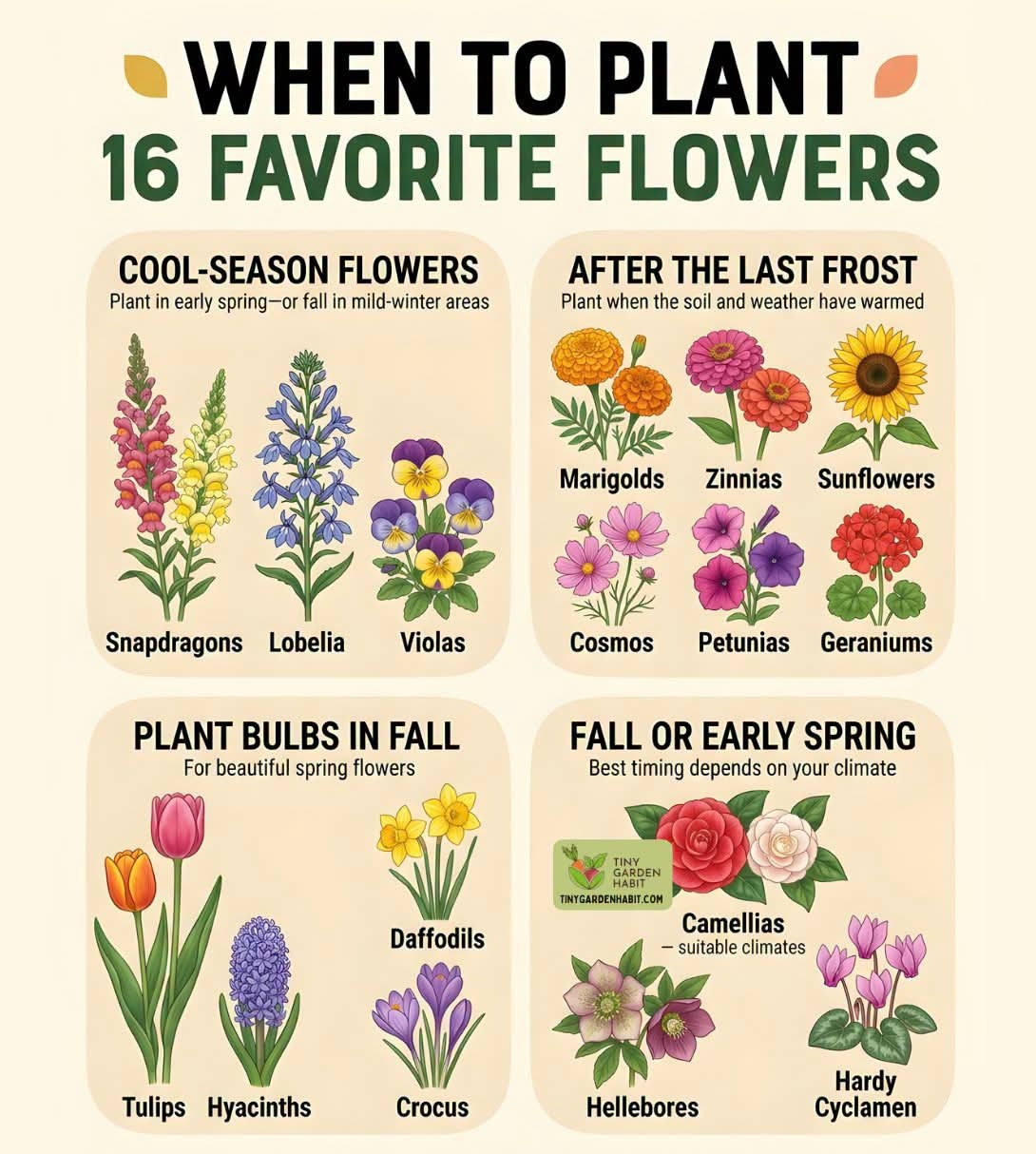
  • Flower timing gets much easier once I stop treating every plant the same A few things I keep in mind with these 16 favorite flowers:
    Snapdragons, violas, and lobelia handle cooler weather better than heat-loving annuals
    Marigolds, zinnias, cosmos, sunflowers, petunias, and geraniums are safest outdoors after frost danger has passed and temperatures are warming
    Tulips, daffodils, hyacinths, and crocuses are generally planted in fall for spring flowers
    Hellebores and hardy cyclamen are usually happiest planted during cooler weather
    Camellia timing depends much more on climate, with fall planting especially useful in mild-winter areas
    I always use my local frost dates rather than relying on the calendar alone
    Getting the timing right gives young plants a much easier start and usually means stronger flowering later.
    Flower timing gets much easier once I stop treating every plant the same 🌸 A few things I keep in mind with these 16 favorite flowers: 🌱 Snapdragons, violas, and lobelia handle cooler weather better than heat-loving annuals ☀️ Marigolds, zinnias, cosmos, sunflowers, petunias, and geraniums are safest outdoors after frost danger has passed and temperatures are warming 🌷 Tulips, daffodils, hyacinths, and crocuses are generally planted in fall for spring flowers 🌿 Hellebores and hardy cyclamen are usually happiest planted during cooler weather 🌺 Camellia timing depends much more on climate, with fall planting especially useful in mild-winter areas 📅 I always use my local frost dates rather than relying on the calendar alone Getting the timing right gives young plants a much easier start and usually means stronger flowering later.
    0 التعليقات 0 المشاركات 332 مشاهدة
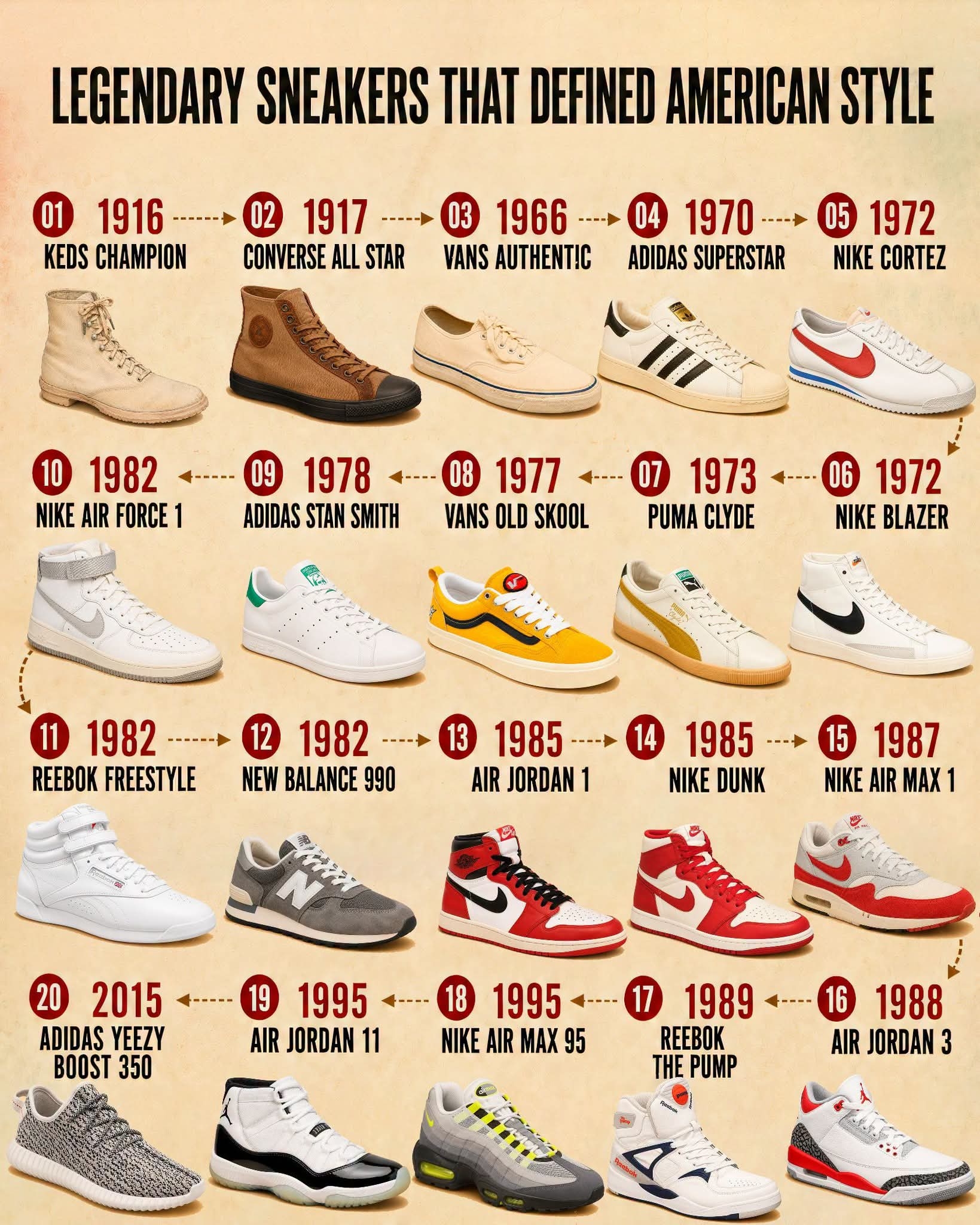
  • Rubber soles were so quiet that people started calling them sneakers, because a person could walk right up behind you and never be heard. That one small detail turned athletic equipment into the most personal thing Americans wear.

    Keds Champion came first in 1916: canvas over rubber, nothing more. A year later Converse released a basketball shoe most people today would not even recognize, because the early All Star was brown canvas, not the white icon everyone pictures.

    Then the shoe left the court. A small shop in Anaheim started selling the Vans Authentic in 1966, and customers could walk in with their own fabric and pick up finished shoes the same afternoon. Skateboarders found the waffle sole soon after and never let go.

    Adidas gave basketball its first leather low top with a rubber shell toe in 1970, and the Superstar ended up spending more time on sidewalks and stages than on hardwood. Nike answered with the Cortez in 1972, built by a track coach who simply wanted more cushioning under distance runners. The Blazer took its name from a Portland team that same year. In 1973 Puma made the Clyde for one man, Walt Frazier, whose taste for style made suede feel like tailoring.

    The eighties arrived like a wave. Air Force 1 put air cushioning into a basketball shoe in 1982, was quietly retired, and came back only because shops kept demanding it. Reebok Freestyle, released the same year, was the first athletic shoe designed for women, and it walked straight out of the gym into daily life. New Balance 990 asked nearly a hundred dollars when most running shoes cost half that, and people paid it. Air Jordan 1 turned a league uniform rule into the loudest advertising campaign of the decade, and the Dunk quietly borrowed college team colors before skaters claimed it.

    In 1987 Tinker Hatfield cut a window into the midsole of the Air Max 1 so you could actually see the air, an idea he took from a Paris building that wears its pipes on the outside. A year later the Air Jordan 3 introduced the Jumpman and that elephant print. Reebok put a tiny basketball on the tongue of the Pump in 1989 and let you inflate your own fit. The Air Max 95 borrowed the layered look of the human body and made bright neon normal, while the Air Jordan 11 wrapped patent leather around a basketball shoe so it could be worn with a suit.

    By 2015 the Yeezy Boost 350 had turned a release date into a worldwide event, with lines forming before sunrise. The quiet shoe had become the loudest thing in the room.

    #SneakerHistory #AmericanSneakerCulture #ClassicSneakers #SneakerCollectors #AmericanPopCulture
    Rubber soles were so quiet that people started calling them sneakers, because a person could walk right up behind you and never be heard. 👟 That one small detail turned athletic equipment into the most personal thing Americans wear. Keds Champion came first in 1916: canvas over rubber, nothing more. A year later Converse released a basketball shoe most people today would not even recognize, because the early All Star was brown canvas, not the white icon everyone pictures. 🏀 Then the shoe left the court. A small shop in Anaheim started selling the Vans Authentic in 1966, and customers could walk in with their own fabric and pick up finished shoes the same afternoon. Skateboarders found the waffle sole soon after and never let go. 🛹 Adidas gave basketball its first leather low top with a rubber shell toe in 1970, and the Superstar ended up spending more time on sidewalks and stages than on hardwood. Nike answered with the Cortez in 1972, built by a track coach who simply wanted more cushioning under distance runners. The Blazer took its name from a Portland team that same year. In 1973 Puma made the Clyde for one man, Walt Frazier, whose taste for style made suede feel like tailoring. The eighties arrived like a wave. 💥 Air Force 1 put air cushioning into a basketball shoe in 1982, was quietly retired, and came back only because shops kept demanding it. Reebok Freestyle, released the same year, was the first athletic shoe designed for women, and it walked straight out of the gym into daily life. New Balance 990 asked nearly a hundred dollars when most running shoes cost half that, and people paid it. Air Jordan 1 turned a league uniform rule into the loudest advertising campaign of the decade, and the Dunk quietly borrowed college team colors before skaters claimed it. 🎨 In 1987 Tinker Hatfield cut a window into the midsole of the Air Max 1 so you could actually see the air, an idea he took from a Paris building that wears its pipes on the outside. 🏛️ A year later the Air Jordan 3 introduced the Jumpman and that elephant print. Reebok put a tiny basketball on the tongue of the Pump in 1989 and let you inflate your own fit. The Air Max 95 borrowed the layered look of the human body and made bright neon normal, while the Air Jordan 11 wrapped patent leather around a basketball shoe so it could be worn with a suit. ✨ By 2015 the Yeezy Boost 350 had turned a release date into a worldwide event, with lines forming before sunrise. The quiet shoe had become the loudest thing in the room. #SneakerHistory #AmericanSneakerCulture #ClassicSneakers #SneakerCollectors #AmericanPopCulture
    0 التعليقات 0 المشاركات 3كيلو بايت مشاهدة
  • There is a clothing store in America older than the state of Illinois.

    Brooks Brothers opened its doors in New York in April 1818. Illinois joined the Union eight months later. One of them is a state, the other is a shop, and both are still here.

    That is the quiet magic of American retail. Some of these places outlived the horse and buggy, the telegraph, and even the shopping mall, and they are open for business right now while you read this.

    Macy’s stamps a red star on everything it sells because founder Rowland Macy reportedly carried one as a tattoo from his years aboard a Nantucket whaling ship. It became his personal mark and eventually one of the most recognizable retail symbols in the country.

    Barney Kroger was so focused on quality in 1883 Cincinnati that he began baking bread inside his own grocery store, helping pioneer the idea of producing food under the same roof where it was sold.

    Then there is the little store in Kemmerer, Wyoming, a town of barely a thousand people. James Cash Penney named it The Golden Rule and built the business around treating customers fairly. Years later, a young man named Sam Walton worked behind a JCPenney counter, learned the retail trade from the inside, and opened his first Walmart store in Rogers, Arkansas, in 1962.

    Leon Bean sold 100 pairs of his new hunting boots in 1912. Most were returned after the leather separated from the rubber bottoms. He refunded every customer, redesigned the boot, and built a Maine institution around that commitment to quality.

    Piggly Wiggly changed everyday shopping more than almost any name here. Before 1916, customers usually handed a list to a clerk, who gathered the groceries from behind a counter. The Memphis store is widely credited with introducing the modern self-service grocery model, allowing shoppers to walk the aisles and choose products for themselves.

    Best Buy was originally called Sound of Music. After a tornado damaged one of its largest stores in 1981, the company held a major sale to clear the surviving inventory and promoted some of the “best buys” in town. The success of that event helped inspire the Best Buy name, which the company adopted in 1983.

    Home Depot’s first Atlanta stores were so short on inventory that the founders reportedly stacked empty boxes on the upper shelves to make the aisles appear fuller.

    One remarkable year, 1962, gave America both Walmart and Target within nine weeks of each other.

    Every name here started with one store, one idea, and someone willing to risk everything on it.

    #AmericanRetail #RetailHistory #AmericanBrands #USHistory #VintageAmerica
    There is a clothing store in America older than the state of Illinois. 🧵 Brooks Brothers opened its doors in New York in April 1818. Illinois joined the Union eight months later. One of them is a state, the other is a shop, and both are still here. That is the quiet magic of American retail. Some of these places outlived the horse and buggy, the telegraph, and even the shopping mall, and they are open for business right now while you read this. 🛒 Macy’s stamps a red star on everything it sells because founder Rowland Macy reportedly carried one as a tattoo from his years aboard a Nantucket whaling ship. It became his personal mark and eventually one of the most recognizable retail symbols in the country. ⭐ Barney Kroger was so focused on quality in 1883 Cincinnati that he began baking bread inside his own grocery store, helping pioneer the idea of producing food under the same roof where it was sold. 🍞 Then there is the little store in Kemmerer, Wyoming, a town of barely a thousand people. James Cash Penney named it The Golden Rule and built the business around treating customers fairly. Years later, a young man named Sam Walton worked behind a JCPenney counter, learned the retail trade from the inside, and opened his first Walmart store in Rogers, Arkansas, in 1962. 👔 Leon Bean sold 100 pairs of his new hunting boots in 1912. Most were returned after the leather separated from the rubber bottoms. He refunded every customer, redesigned the boot, and built a Maine institution around that commitment to quality. 🥾 Piggly Wiggly changed everyday shopping more than almost any name here. Before 1916, customers usually handed a list to a clerk, who gathered the groceries from behind a counter. The Memphis store is widely credited with introducing the modern self-service grocery model, allowing shoppers to walk the aisles and choose products for themselves. 🐷 Best Buy was originally called Sound of Music. After a tornado damaged one of its largest stores in 1981, the company held a major sale to clear the surviving inventory and promoted some of the “best buys” in town. The success of that event helped inspire the Best Buy name, which the company adopted in 1983. 🎵 Home Depot’s first Atlanta stores were so short on inventory that the founders reportedly stacked empty boxes on the upper shelves to make the aisles appear fuller. 📦 One remarkable year, 1962, gave America both Walmart and Target within nine weeks of each other. Every name here started with one store, one idea, and someone willing to risk everything on it. 💡 #AmericanRetail #RetailHistory #AmericanBrands #USHistory #VintageAmerica
    0 التعليقات 0 المشاركات 2كيلو بايت مشاهدة
  • There are actually many potentially "smart" people who end up very confused and lost in life because they started in an environment where they never had any high-quality conversations with any clear mind, and then they never made the effort to readjust their standards as an adult
    There are actually many potentially "smart" people who end up very confused and lost in life because they started in an environment where they never had any high-quality conversations with any clear mind, and then they never made the effort to readjust their standards as an adult
    0 التعليقات 0 المشاركات 162 مشاهدة
  • The easiest person to take for granted is usually the hardest to replace. Why?

    Because they made loyalty look normal. Because they made consistency look normal. Because they made effort look normal

    So normal that you start believing you can find that anywhere. That's why many people leave good partners NOT because they found better BUT because they assume that can be easily found

    The person you get "bored" of is often the person you'll end up looking for in other people

    If you have that person in your life, value them.
    The easiest person to take for granted is usually the hardest to replace. Why? Because they made loyalty look normal. Because they made consistency look normal. Because they made effort look normal So normal that you start believing you can find that anywhere. That's why many people leave good partners NOT because they found better BUT because they assume that can be easily found The person you get "bored" of is often the person you'll end up looking for in other people If you have that person in your life, value them.
    0 التعليقات 0 المشاركات 407 مشاهدة
  • Never force relationships or conversations. If the effort isn’t mutual, let it go. People know exactly what they’re doing. If they wanted to match your energy, they would.
    Start rewarding inconsistency with distance. Let them lose you because of their lack of effort.
    Never force relationships or conversations. If the effort isn’t mutual, let it go. People know exactly what they’re doing. If they wanted to match your energy, they would. Start rewarding inconsistency with distance. Let them lose you because of their lack of effort.
    0 التعليقات 0 المشاركات 71 مشاهدة
الصفحات المعززة