• G36 vs HK416 vs HK417 — Comparing Three of Heckler & Koch's Most Recognizable Modern Rifle Platforms

    #germany #europe
    G36 vs HK416 vs HK417 — Comparing Three of Heckler & Koch's Most Recognizable Modern Rifle Platforms #germany #europe
    0 Yorumlar 0 hisse senetleri 117 Views
  • Haiti Has Nothing

    By: Michael Elijah Muhammad Clare

    They said Haiti has nothing.

    No riches.
    No future.
    No hidden power.

    They were wrong.

    They have been wrong for centuries.

    Beneath Haiti’s mountains, valleys, coastlines, and forgotten villages lies one of the most ignored treasure zones in the Caribbean — possibly in the world.

    And almost nobody is talking about it.

    Until now.

    The Sleeping Treasure of Haiti

    Haiti is sitting on a buried fortune that few nations of its size can match.

    Not rumors.
    Not myths.
    Not dreams.

    Real materials.
    Real value.
    Real money.

    Hidden underground.

    Waiting.

    Estimated Untapped Wealth (USD)

    Gold: $3 Billion
    Silver: $900 Million
    Copper: $12 Billion
    Bauxite (Aluminum Ore): $500 Million
    Manganese: $300 Million
    Limestone, Marble, Cement Minerals: $800 Million
    Gypsum & Industrial Minerals: $150 Million
    Lignite Coal: $600 Million
    Oil & Gas (Offshore & Onshore Potential): $10+ Billion
    Rare & Precious Metals: $50 Million

    Total Potential Value: $28+ Billion USD

    And this does NOT include agriculture.

    This is only what is buried.

    Millions of Tons Under Haitian Soil

    Geological surveys and historical reports point to:

    Tens of millions of tons of copper-bearing rock
    Millions of tons of bauxite
    Massive limestone formations
    Extensive mineral belts in northern and central regions
    Offshore energy basins still largely unexplored

    Haiti is not empty.

    Haiti is locked.

    And the key has never been used properly.

    The Forgotten Agricultural Empire

    Long before modern nations existed, Haiti fed empires.

    And it still can.

    Haiti’s Natural Gold Above Ground

    Sugarcane — $800 Million per year
    Cocoa — $250 Million per year
    Coffee — $100 Million per year
    Chocolate-grade cacao — $150 Million per year
    Tropical fruits — $200 Million per year
    Spices — $50 Million per year
    Essential oils — $30 Million per year
    Timber — $100 Million per year
    Medicinal plants — $20 Million per year

    Historically, Haiti was one of the world’s largest producers of sugar and coffee.

    Cocoa from Haitian soil has flavor profiles that rival the best in Africa and South America.

    Chocolate companies already know this.

    They just don’t want Haitians to know it.

    Why You Were Never Told This

    Ask yourself:

    Why isn’t this taught in schools?
    Why isn’t this on the news?
    Why isn’t this in global investment reports?

    Because poor countries with rich resources are easier to control.

    If Haitians believe “we have nothing,”
    they won’t defend what they own.

    If they feel small,
    others will feel entitled.

    History proves this.

    The Psychology of Being Told You Are Worthless

    For decades, Haitians have been trained to believe:

    “We are poor.”
    “We are weak.”
    “We have no options.”
    “We must leave.”

    That belief is more powerful than any weapon.

    It keeps minds locked.

    It keeps ambition small.

    It keeps opportunity invisible.

    Meanwhile, outsiders study the land quietly.

    They map it.
    They analyze it.
    They wait.

    A Gold Rush Waiting to Happen

    Imagine this:

    Modern mining.
    Local ownership.
    Processing plants.
    Export hubs.
    Agricultural cooperatives.
    Global branding.

    Haitian gold.
    Haitian chocolate.
    Haitian copper.
    Haitian stone.
    Haitian energy.

    Made. Owned. Marketed by Haitians.

    Not exported cheap.
    Not stolen.
    Not forgotten.

    Sold at full value.

    The Diaspora Advantage

    Haitians abroad hold the missing piece.

    Education.
    Capital.
    Networks.
    Technology.
    Global access.

    The land is in Haiti.

    The skills are worldwide.

    When those connect, everything changes.

    This is how nations rise.

    What Happens If Haitians Don’t Act

    History is clear.

    If locals don’t organize:

    Others will.

    If Haitians don’t invest:

    Foreign corporations will.

    If Haitians don’t claim:

    Someone else will.

    And when that happens, the wealth will leave again.

    With little left behind.

    The Opportunity of a Lifetime

    Few countries on Earth sit on:

    Billions in minerals
    Billions in agriculture
    Strategic Caribbean location
    Massive diaspora
    Global attention

    Haiti does.

    Right now.

    In this generation.

    This is not about politics.
    Not about parties.
    Not about promises.

    This is about ownership.

    Haiti Has Nothing? No.

    Haiti has:

    Gold in its ground.
    Power in its soil.
    Wealth in its climate.
    Strength in its people.

    What it lacks is organization.

    And that can be fixed.

    A Message to Haitians Everywhere

    Wherever you live:

    America.
    Canada.
    France.
    Chile.
    Brazil.
    Bahamas.
    Africa.
    Europe.

    Remember this:

    You come from valuable land.

    You come from strategic ground.

    You come from a nation that was rich before it was made poor.

    And it can be rich again.

    With you.

    Or without you.

    The choice is yours.

    Final Word

    They said:

    “Haiti has nothing.”

    That lie has lasted too long.

    The truth is rising.

    The treasure is waiting.

    And history is watching who claims it first.

    Potential Yearly GDP Haiti Could Earn from Resources

    Minerals + Agriculture combined at high estimates (realistically achievable):
    Mineral production (10% of high-end underground wealth per year): $1,500,000,000–$2,830,000,000
    Agriculture exports (high-end annual): $1,000,000,000–$1,700,000,000

    Total High-End Potential Annual GDP (minerals + agriculture): $2,500,000,000–$4,530,000,000 per year

    Tourism Potential GDP

    If Haiti’s tourism sector operated like the Bahamas’ Ministry of Tourism model, scaled for Haiti’s size and diaspora, a realistic high-end estimate could generate $20–30 billion per year.

    Combined Potential Annual GDP with Tourism, Minerals, and Agriculture for Haiti:

    $22,500,000,000–$34,530,000,000 billion per year.

    ---------

    In my own country the Bahamas our yearly GDP is currently at: $14,000,000,000 billion per year. And this includes markets I didn't include in my assessment of Haiti because it would be too many things that make money in other regular functioning countries, such as real estate sales and Customs duties yearly collections plus Vat tax in other markets of our nation.

    If Haiti had a working government such as the Bahamas, Jamaica and or especially Barbados, these estimates above for Haiti would easily double or even triple for Haiti's annual GDP figures!

    Lord have mercy, too much potential...
    Haiti Has Nothing By: Michael Elijah Muhammad Clare They said Haiti has nothing. No riches. No future. No hidden power. They were wrong. They have been wrong for centuries. Beneath Haiti’s mountains, valleys, coastlines, and forgotten villages lies one of the most ignored treasure zones in the Caribbean — possibly in the world. And almost nobody is talking about it. Until now. The Sleeping Treasure of Haiti Haiti is sitting on a buried fortune that few nations of its size can match. Not rumors. Not myths. Not dreams. Real materials. Real value. Real money. Hidden underground. Waiting. Estimated Untapped Wealth (USD) Gold: $3 Billion Silver: $900 Million Copper: $12 Billion Bauxite (Aluminum Ore): $500 Million Manganese: $300 Million Limestone, Marble, Cement Minerals: $800 Million Gypsum & Industrial Minerals: $150 Million Lignite Coal: $600 Million Oil & Gas (Offshore & Onshore Potential): $10+ Billion Rare & Precious Metals: $50 Million Total Potential Value: $28+ Billion USD And this does NOT include agriculture. This is only what is buried. Millions of Tons Under Haitian Soil Geological surveys and historical reports point to: Tens of millions of tons of copper-bearing rock Millions of tons of bauxite Massive limestone formations Extensive mineral belts in northern and central regions Offshore energy basins still largely unexplored Haiti is not empty. Haiti is locked. And the key has never been used properly. The Forgotten Agricultural Empire Long before modern nations existed, Haiti fed empires. And it still can. Haiti’s Natural Gold Above Ground Sugarcane — $800 Million per year Cocoa — $250 Million per year Coffee — $100 Million per year Chocolate-grade cacao — $150 Million per year Tropical fruits — $200 Million per year Spices — $50 Million per year Essential oils — $30 Million per year Timber — $100 Million per year Medicinal plants — $20 Million per year Historically, Haiti was one of the world’s largest producers of sugar and coffee. Cocoa from Haitian soil has flavor profiles that rival the best in Africa and South America. Chocolate companies already know this. They just don’t want Haitians to know it. Why You Were Never Told This Ask yourself: Why isn’t this taught in schools? Why isn’t this on the news? Why isn’t this in global investment reports? Because poor countries with rich resources are easier to control. If Haitians believe “we have nothing,” they won’t defend what they own. If they feel small, others will feel entitled. History proves this. The Psychology of Being Told You Are Worthless For decades, Haitians have been trained to believe: “We are poor.” “We are weak.” “We have no options.” “We must leave.” That belief is more powerful than any weapon. It keeps minds locked. It keeps ambition small. It keeps opportunity invisible. Meanwhile, outsiders study the land quietly. They map it. They analyze it. They wait. A Gold Rush Waiting to Happen Imagine this: Modern mining. Local ownership. Processing plants. Export hubs. Agricultural cooperatives. Global branding. Haitian gold. Haitian chocolate. Haitian copper. Haitian stone. Haitian energy. Made. Owned. Marketed by Haitians. Not exported cheap. Not stolen. Not forgotten. Sold at full value. The Diaspora Advantage Haitians abroad hold the missing piece. Education. Capital. Networks. Technology. Global access. The land is in Haiti. The skills are worldwide. When those connect, everything changes. This is how nations rise. What Happens If Haitians Don’t Act History is clear. If locals don’t organize: Others will. If Haitians don’t invest: Foreign corporations will. If Haitians don’t claim: Someone else will. And when that happens, the wealth will leave again. With little left behind. The Opportunity of a Lifetime Few countries on Earth sit on: Billions in minerals Billions in agriculture Strategic Caribbean location Massive diaspora Global attention Haiti does. Right now. In this generation. This is not about politics. Not about parties. Not about promises. This is about ownership. Haiti Has Nothing? No. Haiti has: Gold in its ground. Power in its soil. Wealth in its climate. Strength in its people. What it lacks is organization. And that can be fixed. A Message to Haitians Everywhere Wherever you live: America. Canada. France. Chile. Brazil. Bahamas. Africa. Europe. Remember this: You come from valuable land. You come from strategic ground. You come from a nation that was rich before it was made poor. And it can be rich again. With you. Or without you. The choice is yours. Final Word They said: “Haiti has nothing.” That lie has lasted too long. The truth is rising. The treasure is waiting. And history is watching who claims it first. Potential Yearly GDP Haiti Could Earn from Resources Minerals + Agriculture combined at high estimates (realistically achievable): Mineral production (10% of high-end underground wealth per year): $1,500,000,000–$2,830,000,000 Agriculture exports (high-end annual): $1,000,000,000–$1,700,000,000 Total High-End Potential Annual GDP (minerals + agriculture): $2,500,000,000–$4,530,000,000 per year Tourism Potential GDP If Haiti’s tourism sector operated like the Bahamas’ Ministry of Tourism model, scaled for Haiti’s size and diaspora, a realistic high-end estimate could generate $20–30 billion per year. Combined Potential Annual GDP with Tourism, Minerals, and Agriculture for Haiti: $22,500,000,000–$34,530,000,000 billion per year. --------- In my own country the Bahamas our yearly GDP is currently at: $14,000,000,000 billion per year. And this includes markets I didn't include in my assessment of Haiti because it would be too many things that make money in other regular functioning countries, such as real estate sales and Customs duties yearly collections plus Vat tax in other markets of our nation. If Haiti had a working government such as the Bahamas, Jamaica and or especially Barbados, these estimates above for Haiti would easily double or even triple for Haiti's annual GDP figures! Lord have mercy, 🌞 too much potential...
    0 Yorumlar 0 hisse senetleri 6292 Views
  • Did you know that Cuba had a policy to "Whiten" the African population? This is a very deep article that deals with 5 Countries that deliberately brought Europeans into their country to lighten the complexion of the people in many cases. Many of us don't know this aspect of history.

    "After the trans-Atlantic slave trade was officially abolished toward the end of the 19th century, many whites felt threatened and feared free Blacks would become a menacing element in society. The elites spent a great dealing of time mulling over how best to solve the so-called Negro problem. A popular solution that emerged during this period was the ideology of racial whitening or “whitening"."

    "Supporters of the “whitening” ideology believed that if a “superior” white population was encouraged to mix with an “inferior” Black population, Blacks would advance culturally, genetically or even disappear totally, within several generations. Some also believed that an influx of immigrants from Europe would be necessary to successfully carry out the process."

    Although both ideologies were driven by racism and white supremacy, whitening was in contrast to some countries that opted for segregation rather than miscegenation, ultimately outlawing the mixing of the races. This, however, was just a different means to the same end as these nations also imported more Europeans while slaughtering and oppressing the Black population.

    SOURCE:

    https://atlantablackstar.com/2014/03/10/5-black-nations-that-imported-europeans-to-whiten-the-population/

    #Africa #AfricanHistory #Cuba #Slavery #TheAHNShow #BlackHistoryMonth #BlackHistory
    Did you know that Cuba had a policy to "Whiten" the African population? This is a very deep article that deals with 5 Countries that deliberately brought Europeans into their country to lighten the complexion of the people in many cases. Many of us don't know this aspect of history. "After the trans-Atlantic slave trade was officially abolished toward the end of the 19th century, many whites felt threatened and feared free Blacks would become a menacing element in society. The elites spent a great dealing of time mulling over how best to solve the so-called Negro problem. A popular solution that emerged during this period was the ideology of racial whitening or “whitening"." "Supporters of the “whitening” ideology believed that if a “superior” white population was encouraged to mix with an “inferior” Black population, Blacks would advance culturally, genetically or even disappear totally, within several generations. Some also believed that an influx of immigrants from Europe would be necessary to successfully carry out the process." Although both ideologies were driven by racism and white supremacy, whitening was in contrast to some countries that opted for segregation rather than miscegenation, ultimately outlawing the mixing of the races. This, however, was just a different means to the same end as these nations also imported more Europeans while slaughtering and oppressing the Black population. SOURCE: https://atlantablackstar.com/2014/03/10/5-black-nations-that-imported-europeans-to-whiten-the-population/ #Africa #AfricanHistory #Cuba #Slavery #TheAHNShow #BlackHistoryMonth #BlackHistory
    0 Yorumlar 0 hisse senetleri 8777 Views
  • Inside the control room of the Chernobyl nuclear power plant, engineers monitored Reactor No. 4 on April 26, 1986, as a late-night safety test spiraled out of control. A series of critical design flaws and operator errors triggered a catastrophic explosion.

    The blast released massive amounts of radioactive material, devastating nearby Pripyat and contaminating much of Europe. Today, the control room remains frozen in time—an eerie symbol of human miscalculation and the immense dangers of nuclear power when safety is compromised.
    Inside the control room of the Chernobyl nuclear power plant, engineers monitored Reactor No. 4 on April 26, 1986, as a late-night safety test spiraled out of control. A series of critical design flaws and operator errors triggered a catastrophic explosion. The blast released massive amounts of radioactive material, devastating nearby Pripyat and contaminating much of Europe. Today, the control room remains frozen in time—an eerie symbol of human miscalculation and the immense dangers of nuclear power when safety is compromised.
    0 Yorumlar 0 hisse senetleri 1532 Views
  • Creole languages can be categorized by their base language, such as French-based (e.g., Haitian Creole, Louisiana Creole), English-based (e.g., Jamaican Patois, Gullah), Portuguese-based (e.g., Papiamento, Cape Verdean Creole), and others that have a mixed or non-European base (e.g., Sango, Saramacca). They are found worldwide, with large concentrations in the Caribbean, Africa, and the Indian Ocean.
    By base language

    French-based: These languages developed from contact between French and other languages. Examples include Haitian Creole, Louisiana Creole, Mauritian Creole, and Dominican Creole French.

    English-based: These are creoles where English is the primary base. Examples include Jamaican Patois, Guyanese Creole, Gullah (spoken in the southeastern U.S.), and Tok Pisin (in Papua New Guinea).

    Portuguese-based: These languages have Portuguese as their main foundation. Papiamento (spoken in Aruba, Bonaire, and Curaçao) and Cape Verdean Creole are prominent examples.

    Mixed or non-European based: Some creoles are based on contact between multiple European languages or primarily non-European languages.

    Sango: Based on the Ngbandi language in the Central African Republic.

    Saramacca: Based on English but heavily influenced by Portuguese, spoken in Suriname.

    Papiamentu: Though based on Portuguese, it has significant Spanish and Dutch influence.

    By external history

    Plantation creoles: Developed on plantations, such as many French-based creoles in the Caribbean.

    Fort creoles: Developed around forts, often involving trade and administration.

    Maroon creoles: Developed by communities of formerly enslaved people who escaped to form their own settlements.

    Creolized pidgins: Languages that evolved from pidgins into more complex, stable languages.

    By region

    Caribbean: Haitian Creole, Jamaican Patois, Papiamento (Aruba, Bonaire, Curaçao), and various French-based creoles in the French West Indies are examples.

    Africa: Nigerian Pidgin, Sango, and Kikongo-Kituba are spoken in various countries.

    Indian Ocean: Mauritian Creole, Seychellois Creole, and Reunion Creole are spoken in this region.

    Americas: Besides the Caribbean and Louisiana creoles, there are also Liberian Creole and Belizean Kriol.
    Creole languages can be categorized by their base language, such as French-based (e.g., Haitian Creole, Louisiana Creole), English-based (e.g., Jamaican Patois, Gullah), Portuguese-based (e.g., Papiamento, Cape Verdean Creole), and others that have a mixed or non-European base (e.g., Sango, Saramacca). They are found worldwide, with large concentrations in the Caribbean, Africa, and the Indian Ocean. By base language French-based: These languages developed from contact between French and other languages. Examples include Haitian Creole, Louisiana Creole, Mauritian Creole, and Dominican Creole French. English-based: These are creoles where English is the primary base. Examples include Jamaican Patois, Guyanese Creole, Gullah (spoken in the southeastern U.S.), and Tok Pisin (in Papua New Guinea). Portuguese-based: These languages have Portuguese as their main foundation. Papiamento (spoken in Aruba, Bonaire, and Curaçao) and Cape Verdean Creole are prominent examples. Mixed or non-European based: Some creoles are based on contact between multiple European languages or primarily non-European languages. Sango: Based on the Ngbandi language in the Central African Republic. Saramacca: Based on English but heavily influenced by Portuguese, spoken in Suriname. Papiamentu: Though based on Portuguese, it has significant Spanish and Dutch influence. By external history Plantation creoles: Developed on plantations, such as many French-based creoles in the Caribbean. Fort creoles: Developed around forts, often involving trade and administration. Maroon creoles: Developed by communities of formerly enslaved people who escaped to form their own settlements. Creolized pidgins: Languages that evolved from pidgins into more complex, stable languages. By region Caribbean: Haitian Creole, Jamaican Patois, Papiamento (Aruba, Bonaire, Curaçao), and various French-based creoles in the French West Indies are examples. Africa: Nigerian Pidgin, Sango, and Kikongo-Kituba are spoken in various countries. Indian Ocean: Mauritian Creole, Seychellois Creole, and Reunion Creole are spoken in this region. Americas: Besides the Caribbean and Louisiana creoles, there are also Liberian Creole and Belizean Kriol.
    0 Yorumlar 0 hisse senetleri 8897 Views
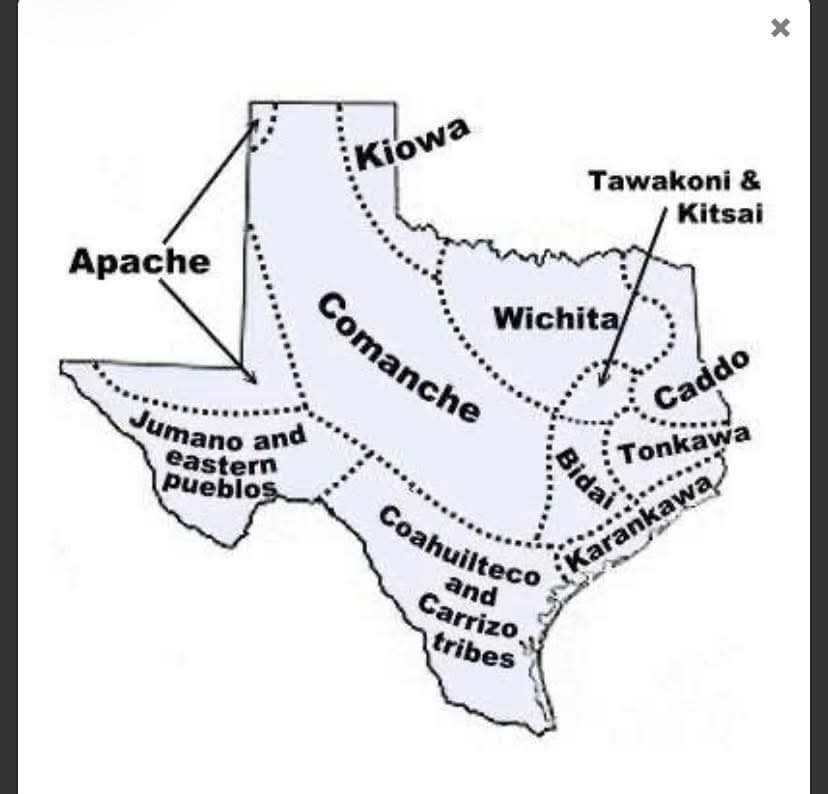
  • Native American tribes who originally inhabited the Texas region, including the meaning of their names and their history.

    1. Apache
    • Meaning of the Name: Generally believed to derive from the Pueblo-Zuni word "Apachu," meaning "enemy." However, the Apache people call themselves "Inde," "Tinde," or "Tinneh," all meaning "the people."
    • History and Culture:
    • Originally from the north, they migrated to the American Southwest and Plains regions between the 12th and 16th centuries.
    • They were nomadic hunter-gatherers, roaming vast territories to hunt buffalo and forage for food.
    • After acquiring horses from the Spanish in the 17th century, they became a powerful mounted nation. The Lipan Apache were prominent in the Texas region.

    2. Comanche
    • Meaning of the Name: Derived from a Ute word meaning "anyone who wants to fight me all the time." The people refer to themselves as "Nʉmʉnʉʉ" (NUH-MUH-NUH), meaning "The People."
    • History and Culture:
    • Dominated the Southern Plains of Texas in the 18th and 19th centuries and were known as the "Lords of the Plains."
    • They were originally part of the Shoshone tribe from Wyoming and moved south.
    • They were exceptionally skilled at breeding and using horses, and their horseback fighting ability was unique and unmatched by other tribes of the time.
    • Buffalo products were the core of their economy and way of life.

    3. Kiowa
    • Meaning of the Name: Derived from "Ka'I gwu" or "Ka'I gua" in their own language, meaning "principal people" or "leading people."
    • History and Culture:
    • Originally from western Montana, they migrated to the Yellowstone River and Black Hills, becoming skilled horsemen and buffalo hunters.
    • They gradually moved south into the northern Texas and Oklahoma regions in the early 18th century.
    • They were known for unique cultural practices like their Sun Dance ceremony.
    • They had a prestigious warrior society known as the "Principal Dogs" or "Ten Bravest."

    4. Jumano and Eastern Pueblos

    Meaning of the Name: The term "Jumano" referred to at least three distinct groups in the Southwest and Southern Plains between 1500 and 1700. They were called "rayado" (striped or marked people) due to the distinctive horizontal striped patterns tattooed or painted on their faces.
    • History and Culture:
    • They were primarily buffalo hunters and traders, playing a crucial role as middlemen between the Spanish colonies and various Indigenous groups.
    • Their main territory was in Central Texas, between the lower Pecos River and the Colorado River.
    • "Eastern Pueblos" may refer to people living in villages like the "Humanas pueblos" in eastern New Mexico, with whom the Jumano were associated.

    5. Coahuilteco and Carrizo Tribes
    • Meaning of the Name:
    • Coahuilteco: Not an original name for a single tribe, but an umbrella term created by Mexican linguists to group many bands and clans speaking various dialects in Northern Mexico and South Texas.
    • Carrizo: A Spanish word meaning "reed," applied to many Coahuiltecan groups along the Rio Grande. (For example, the Comecrudo tribe, whose Spanish name means "eats raw meat," was also called Carrizo).
    • History and Culture:
    • They were nomadic hunter-gatherers who lived along the Rio Grande and throughout South Texas.
    • They established villages near rivers and water sources.
    • Due to disease and conflict with European settlers, their population was decimated. Many sought refuge in Spanish missions, where they adopted European farming techniques.

    6. Karankawa
    • Meaning of the Name: Generally believed to mean "dog-lovers" or "dog-raisers" in their own language, as they were known to keep dogs described as a fox-like or coyote-like breed.
    • History and Culture:
    • A coastal people who lived along the Texas Coast from Galveston Island to south of Corpus Christi.
    • Their encounter with the Spanish explorer Álvar Núñez Cabeza de Vaca in 1528 marks the earliest recorded contact between Europeans and the First Peoples of Texas.
    • They were nomadic, using dugout canoes to travel the shallow coastal waterways.
    • They were known for tattooing their bodies.

    7. Tonkawa
    • Meaning of the Name: Comes from the Waco language, meaning "they all stay together." They called themselves "Titska Watitch," which means "the most human of people."
    • History and Culture:
    • A nomadic hunting tribe originally from eastern and central Texas and Oklahoma, hunting buffalo, deer, and other game.
    • They lived in about 20 independent wandering bands.
    • Historically, they were often at war with neighboring tribes like the Apache and Comanche.
    • They faced forced relocations and population decline due to violence in the 19th century.

    8. Bidai
    • Meaning of the Name: A Caddo word for "brushwood," named after the local geography along Bedias Creek where they lived. They referred to themselves as "Quasmigdo."
    • History and Culture:
    • Settled in East Texas, between the Brazos and Neches Rivers.
    • Some historical records suggest they may be one of the oldest tribes in Texas.
    • They practiced agriculture (maize), hunting (bison, deer), and fishing.
    • They were allied with Caddo and Atakapan tribes.

    9. Caddo
    • Meaning of the Name: Derived from the French abbreviation of "Kadohadacho," a Caddo word meaning "real chief" or "real Caddo."
    • History and Culture:
    • A confederacy of about 25 affiliated groups centered around the Red River in Texas, Arkansas, Louisiana, and Oklahoma.
    • They were sedentary agriculturalists, focusing on farming.
    • They developed complex social and political systems, centered around the construction and use of earthen temple and burial mounds.
    • Their leadership hierarchy included the xinesi (spiritual leader), caddi (principal headman), and canahas (subordinate headmen). The name of the state, Texas, comes from the Caddo word taysha, meaning "friend" or "ally."

    10. Wichita
    • Meaning of the Name: The origin is unknown, but they called themselves "Kitikiti'sh," meaning "the people" or "the preeminent people." French traders called them "Pani Piqué" (Tattooed Pawnee), referring to their distinctive tattoos.
    • History and Culture:
    • A confederacy of subtribes (including Taovaya, Tawakoni, Waco, and Kichai) who mainly lived in Northern Texas and South-Central Kansas.
    • They combined agriculture (corn, beans) with hunting (buffalo, deer).
    • They lived in distinctive conical, haystack-shaped houses made of grass and matting.
    • Their society was matrilocal (married couples lived with the wife's family) and matrilineal (descent was traced through the mother's line).

    11. Tawakoni & Kitsai
    • Tawakoni:
    • Meaning of the Name: Believed to mean "river bend among red sand hills." The French also referred to them as "Three Canes."
    • History: A Caddoan tribe and member of the Wichita Confederacy, they settled along the Brazos and Trinity Rivers in Texas in the 18th century. They shared similar agricultural and housing methods with the Wichita.
    • Kitsai:
    • A subtribe of the Wichita Confederacy. Notably, the Kitsai were the only group within the Wichita Confederacy to speak a distinct Caddoan language.

    Note : Most descendants of these historic Texas tribes were forcibly relocated to reservations, primarily in Oklahoma, during the 19th century. However, as noted in the follow-up, three federally recognized tribes and numerous descendants of the original tribes continue to reside in Texas today.


    Native American tribes who originally inhabited the Texas region, including the meaning of their names and their history. 1. Apache • Meaning of the Name: Generally believed to derive from the Pueblo-Zuni word "Apachu," meaning "enemy." However, the Apache people call themselves "Inde," "Tinde," or "Tinneh," all meaning "the people." • History and Culture: • Originally from the north, they migrated to the American Southwest and Plains regions between the 12th and 16th centuries. • They were nomadic hunter-gatherers, roaming vast territories to hunt buffalo and forage for food. • After acquiring horses from the Spanish in the 17th century, they became a powerful mounted nation. The Lipan Apache were prominent in the Texas region. 2. Comanche • Meaning of the Name: Derived from a Ute word meaning "anyone who wants to fight me all the time." The people refer to themselves as "Nʉmʉnʉʉ" (NUH-MUH-NUH), meaning "The People." • History and Culture: • Dominated the Southern Plains of Texas in the 18th and 19th centuries and were known as the "Lords of the Plains." • They were originally part of the Shoshone tribe from Wyoming and moved south. • They were exceptionally skilled at breeding and using horses, and their horseback fighting ability was unique and unmatched by other tribes of the time. • Buffalo products were the core of their economy and way of life. 3. Kiowa • Meaning of the Name: Derived from "Ka'I gwu" or "Ka'I gua" in their own language, meaning "principal people" or "leading people." • History and Culture: • Originally from western Montana, they migrated to the Yellowstone River and Black Hills, becoming skilled horsemen and buffalo hunters. • They gradually moved south into the northern Texas and Oklahoma regions in the early 18th century. • They were known for unique cultural practices like their Sun Dance ceremony. • They had a prestigious warrior society known as the "Principal Dogs" or "Ten Bravest." 4. Jumano and Eastern Pueblos Meaning of the Name: The term "Jumano" referred to at least three distinct groups in the Southwest and Southern Plains between 1500 and 1700. They were called "rayado" (striped or marked people) due to the distinctive horizontal striped patterns tattooed or painted on their faces. • History and Culture: • They were primarily buffalo hunters and traders, playing a crucial role as middlemen between the Spanish colonies and various Indigenous groups. • Their main territory was in Central Texas, between the lower Pecos River and the Colorado River. • "Eastern Pueblos" may refer to people living in villages like the "Humanas pueblos" in eastern New Mexico, with whom the Jumano were associated. 5. Coahuilteco and Carrizo Tribes • Meaning of the Name: • Coahuilteco: Not an original name for a single tribe, but an umbrella term created by Mexican linguists to group many bands and clans speaking various dialects in Northern Mexico and South Texas. • Carrizo: A Spanish word meaning "reed," applied to many Coahuiltecan groups along the Rio Grande. (For example, the Comecrudo tribe, whose Spanish name means "eats raw meat," was also called Carrizo). • History and Culture: • They were nomadic hunter-gatherers who lived along the Rio Grande and throughout South Texas. • They established villages near rivers and water sources. • Due to disease and conflict with European settlers, their population was decimated. Many sought refuge in Spanish missions, where they adopted European farming techniques. 6. Karankawa • Meaning of the Name: Generally believed to mean "dog-lovers" or "dog-raisers" in their own language, as they were known to keep dogs described as a fox-like or coyote-like breed. • History and Culture: • A coastal people who lived along the Texas Coast from Galveston Island to south of Corpus Christi. • Their encounter with the Spanish explorer Álvar Núñez Cabeza de Vaca in 1528 marks the earliest recorded contact between Europeans and the First Peoples of Texas. • They were nomadic, using dugout canoes to travel the shallow coastal waterways. • They were known for tattooing their bodies. 7. Tonkawa • Meaning of the Name: Comes from the Waco language, meaning "they all stay together." They called themselves "Titska Watitch," which means "the most human of people." • History and Culture: • A nomadic hunting tribe originally from eastern and central Texas and Oklahoma, hunting buffalo, deer, and other game. • They lived in about 20 independent wandering bands. • Historically, they were often at war with neighboring tribes like the Apache and Comanche. • They faced forced relocations and population decline due to violence in the 19th century. 8. Bidai • Meaning of the Name: A Caddo word for "brushwood," named after the local geography along Bedias Creek where they lived. They referred to themselves as "Quasmigdo." • History and Culture: • Settled in East Texas, between the Brazos and Neches Rivers. • Some historical records suggest they may be one of the oldest tribes in Texas. • They practiced agriculture (maize), hunting (bison, deer), and fishing. • They were allied with Caddo and Atakapan tribes. 9. Caddo • Meaning of the Name: Derived from the French abbreviation of "Kadohadacho," a Caddo word meaning "real chief" or "real Caddo." • History and Culture: • A confederacy of about 25 affiliated groups centered around the Red River in Texas, Arkansas, Louisiana, and Oklahoma. • They were sedentary agriculturalists, focusing on farming. • They developed complex social and political systems, centered around the construction and use of earthen temple and burial mounds. • Their leadership hierarchy included the xinesi (spiritual leader), caddi (principal headman), and canahas (subordinate headmen). The name of the state, Texas, comes from the Caddo word taysha, meaning "friend" or "ally." 10. Wichita • Meaning of the Name: The origin is unknown, but they called themselves "Kitikiti'sh," meaning "the people" or "the preeminent people." French traders called them "Pani Piqué" (Tattooed Pawnee), referring to their distinctive tattoos. • History and Culture: • A confederacy of subtribes (including Taovaya, Tawakoni, Waco, and Kichai) who mainly lived in Northern Texas and South-Central Kansas. • They combined agriculture (corn, beans) with hunting (buffalo, deer). • They lived in distinctive conical, haystack-shaped houses made of grass and matting. • Their society was matrilocal (married couples lived with the wife's family) and matrilineal (descent was traced through the mother's line). 11. Tawakoni & Kitsai • Tawakoni: • Meaning of the Name: Believed to mean "river bend among red sand hills." The French also referred to them as "Three Canes." • History: A Caddoan tribe and member of the Wichita Confederacy, they settled along the Brazos and Trinity Rivers in Texas in the 18th century. They shared similar agricultural and housing methods with the Wichita. • Kitsai: • A subtribe of the Wichita Confederacy. Notably, the Kitsai were the only group within the Wichita Confederacy to speak a distinct Caddoan language. Note : Most descendants of these historic Texas tribes were forcibly relocated to reservations, primarily in Oklahoma, during the 19th century. However, as noted in the follow-up, three federally recognized tribes and numerous descendants of the original tribes continue to reside in Texas today.

    0 Yorumlar 0 hisse senetleri 10404 Views
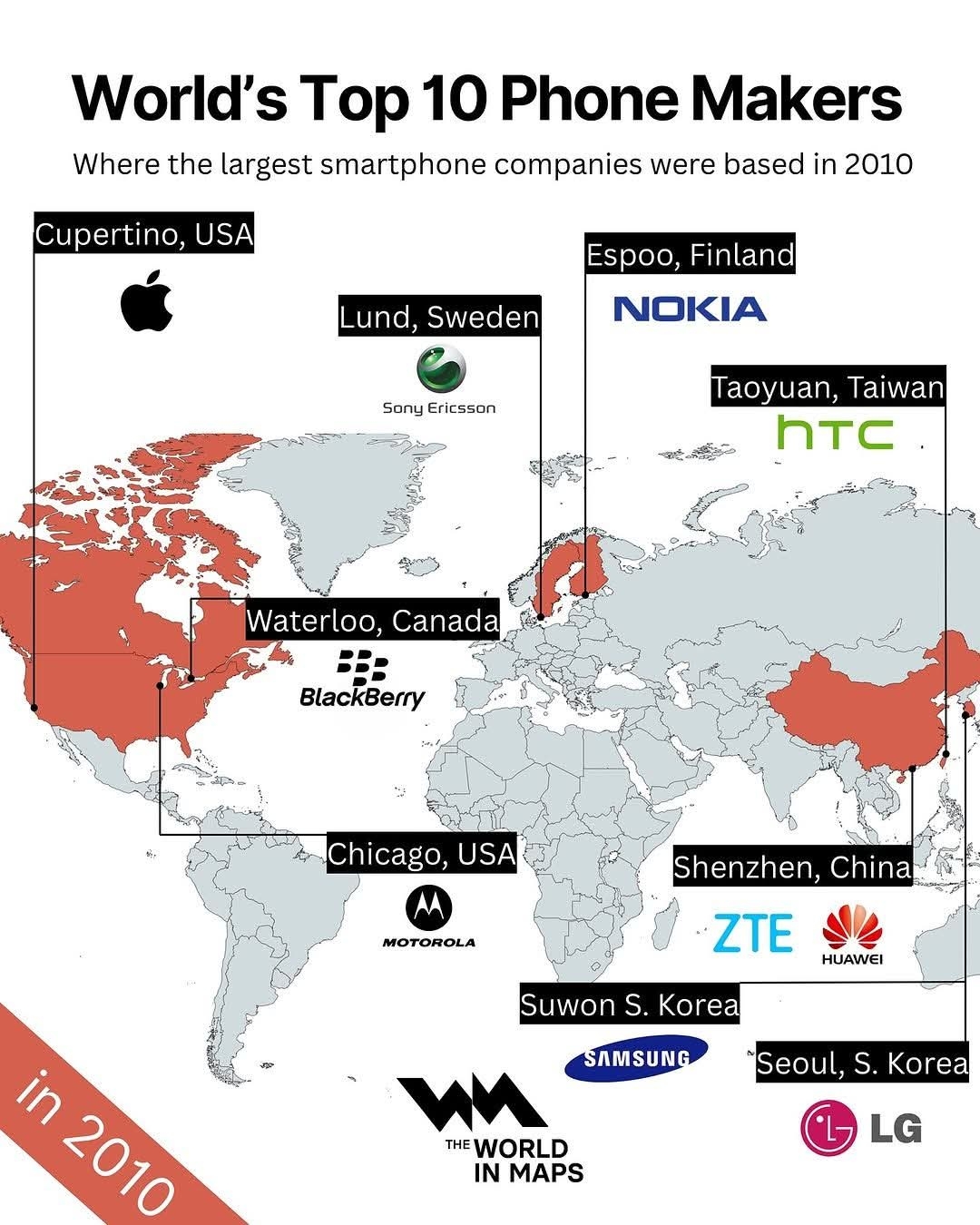
  • These two maps tell a story of rapid transformation. In 2010, the world's top 10 phone makers were spread across North America, Europe, and Asia, with major players like Nokia (Finland), BlackBerry (Canada), Motorola (USA), and Sony Ericsson (Sweden) dominating the market. It was a time when hardware innovation, physical keyboards, and legacy tech brands still defined mobile communication.

    Fast forward to today, and the landscape has changed dramatically. Many of those once-dominant brands have disappeared, merged, or fallen behind, while China and South Korea have emerged as the clear powerhouses. Companies like Samsung, Apple, Huawei, Xiaomi, Oppo, and Vivo now control the global market-reflecting a shift not just in geography, but in design, innovation, and global supply chains.

    These maps offer more than a snapshot-they capture the rise and fall of tech empires and the center of gravity shifting eastward. A reminder that in tech, even giants can fall-and new players can rise fast.

    These two maps tell a story of rapid transformation. In 2010, the world's top 10 phone makers were spread across North America, Europe, and Asia, with major players like Nokia (Finland), BlackBerry (Canada), Motorola (USA), and Sony Ericsson (Sweden) dominating the market. It was a time when hardware innovation, physical keyboards, and legacy tech brands still defined mobile communication. Fast forward to today, and the landscape has changed dramatically. Many of those once-dominant brands have disappeared, merged, or fallen behind, while China and South Korea have emerged as the clear powerhouses. Companies like Samsung, Apple, Huawei, Xiaomi, Oppo, and Vivo now control the global market-reflecting a shift not just in geography, but in design, innovation, and global supply chains. These maps offer more than a snapshot-they capture the rise and fall of tech empires and the center of gravity shifting eastward. A reminder that in tech, even giants can fall-and new players can rise fast.
    0 Yorumlar 0 hisse senetleri 2707 Views
  • NATO vs Russia | Land Power Comparison 2025 #russia #europe
    NATO vs Russia | Land Power Comparison 2025 #russia #europe
    0 Yorumlar 0 hisse senetleri 2778 Views