• Why did highly trained US Combat Engineers intentionally violently spray raw, unlit gasoline directly at the enemy instead of lighting it on fire?
    Concrete pillboxes were incredibly tough, heavily armored fortresses.
    If an ordinary soldier fired a fully lit flamethrower directly at the front door, it was a fluid-dynamic failure! Fire is a rapidly expanding gas! When the roaring 2,000-degree flame hit the thick concrete, it violently expanded outward! It entirely bounced off the exterior wall, splashing harmlessly into the open sky! The enemy defenders sitting safely inside the concrete room barely felt the heat!
    Veteran US Combat Engineers deployed absolute psychological and chemical terror: The Cold Shot!
    They aggressively turned the igniter completely off! The incredibly brave engineer stepped right up to the bunker window! He pulled the trigger and violently blasted a massive, heavy stream of raw, completely unlit liquid Napalm directly into the room! The physics were utterly terrifying! Because the heavy liquid wasn't burning, it didn't expand! It flawlessly, seamlessly ricocheted off the walls, utterly flooding the entire enclosed space and completely physically soaking the terrified enemy defenders in incredibly sticky, highly volatile fuel! The engineer simply waited exactly three seconds, stepped back, and fired a single tiny spark! The entire fully-soaked room instantly, violently, and catastrophically erupted into a completely inescapable 2,000-degree internal vapor explosion, utterly neutralizing the bunker!
    Harmless bouncing flames or a genius utterly devastating liquid soaking?
    #SurvivalTactics #Strategy #WW2History #PhysicsFacts #USArmy #CombatEngineering #TacticalGear #Thermodynamics #MilitaryTech #CrossSection #EngineeringMarvel #HistoryGeek #WorldWar2 #UrbanWarfare #USMC #AmericanHistory #WW2USA #AmericanEngineering #USHistory #MilitaryHistoryUSA
    Why did highly trained US Combat Engineers intentionally violently spray raw, unlit gasoline directly at the enemy instead of lighting it on fire? 🔥🧱 Concrete pillboxes were incredibly tough, heavily armored fortresses. If an ordinary soldier fired a fully lit flamethrower directly at the front door, it was a fluid-dynamic failure! Fire is a rapidly expanding gas! When the roaring 2,000-degree flame hit the thick concrete, it violently expanded outward! It entirely bounced off the exterior wall, splashing harmlessly into the open sky! The enemy defenders sitting safely inside the concrete room barely felt the heat! Veteran US Combat Engineers deployed absolute psychological and chemical terror: The Cold Shot! They aggressively turned the igniter completely off! The incredibly brave engineer stepped right up to the bunker window! He pulled the trigger and violently blasted a massive, heavy stream of raw, completely unlit liquid Napalm directly into the room! The physics were utterly terrifying! Because the heavy liquid wasn't burning, it didn't expand! It flawlessly, seamlessly ricocheted off the walls, utterly flooding the entire enclosed space and completely physically soaking the terrified enemy defenders in incredibly sticky, highly volatile fuel! The engineer simply waited exactly three seconds, stepped back, and fired a single tiny spark! The entire fully-soaked room instantly, violently, and catastrophically erupted into a completely inescapable 2,000-degree internal vapor explosion, utterly neutralizing the bunker! Harmless bouncing flames or a genius utterly devastating liquid soaking? 👇 #SurvivalTactics #Strategy #WW2History #PhysicsFacts #USArmy #CombatEngineering #TacticalGear #Thermodynamics #MilitaryTech #CrossSection #EngineeringMarvel #HistoryGeek #WorldWar2 #UrbanWarfare #USMC #AmericanHistory #WW2USA #AmericanEngineering #USHistory #MilitaryHistoryUSA
    0 Reacties 0 aandelen 6K Views
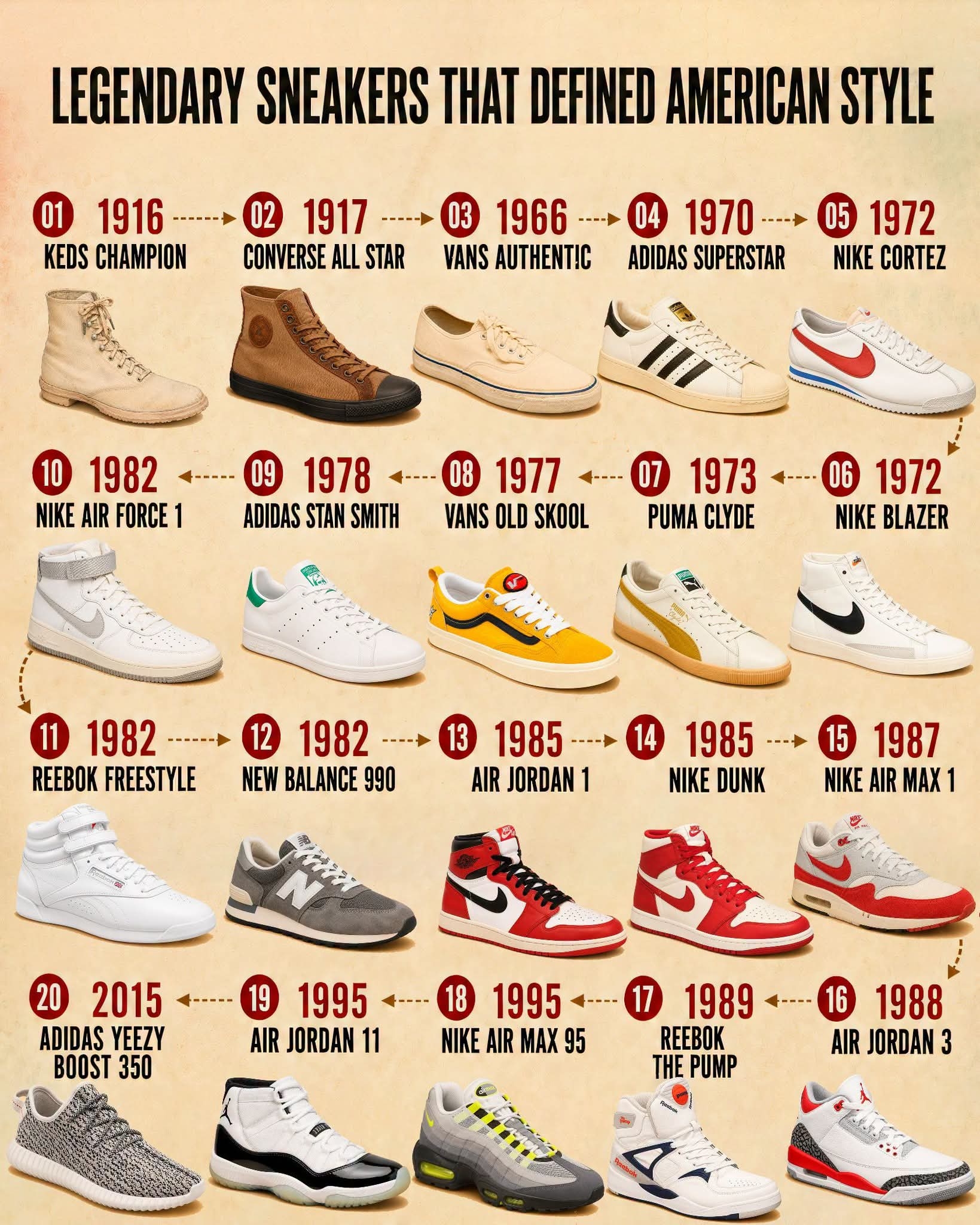
  • Rubber soles were so quiet that people started calling them sneakers, because a person could walk right up behind you and never be heard. That one small detail turned athletic equipment into the most personal thing Americans wear.

    Keds Champion came first in 1916: canvas over rubber, nothing more. A year later Converse released a basketball shoe most people today would not even recognize, because the early All Star was brown canvas, not the white icon everyone pictures.

    Then the shoe left the court. A small shop in Anaheim started selling the Vans Authentic in 1966, and customers could walk in with their own fabric and pick up finished shoes the same afternoon. Skateboarders found the waffle sole soon after and never let go.

    Adidas gave basketball its first leather low top with a rubber shell toe in 1970, and the Superstar ended up spending more time on sidewalks and stages than on hardwood. Nike answered with the Cortez in 1972, built by a track coach who simply wanted more cushioning under distance runners. The Blazer took its name from a Portland team that same year. In 1973 Puma made the Clyde for one man, Walt Frazier, whose taste for style made suede feel like tailoring.

    The eighties arrived like a wave. Air Force 1 put air cushioning into a basketball shoe in 1982, was quietly retired, and came back only because shops kept demanding it. Reebok Freestyle, released the same year, was the first athletic shoe designed for women, and it walked straight out of the gym into daily life. New Balance 990 asked nearly a hundred dollars when most running shoes cost half that, and people paid it. Air Jordan 1 turned a league uniform rule into the loudest advertising campaign of the decade, and the Dunk quietly borrowed college team colors before skaters claimed it.

    In 1987 Tinker Hatfield cut a window into the midsole of the Air Max 1 so you could actually see the air, an idea he took from a Paris building that wears its pipes on the outside. A year later the Air Jordan 3 introduced the Jumpman and that elephant print. Reebok put a tiny basketball on the tongue of the Pump in 1989 and let you inflate your own fit. The Air Max 95 borrowed the layered look of the human body and made bright neon normal, while the Air Jordan 11 wrapped patent leather around a basketball shoe so it could be worn with a suit.

    By 2015 the Yeezy Boost 350 had turned a release date into a worldwide event, with lines forming before sunrise. The quiet shoe had become the loudest thing in the room.

    #SneakerHistory #AmericanSneakerCulture #ClassicSneakers #SneakerCollectors #AmericanPopCulture
    Rubber soles were so quiet that people started calling them sneakers, because a person could walk right up behind you and never be heard. 👟 That one small detail turned athletic equipment into the most personal thing Americans wear. Keds Champion came first in 1916: canvas over rubber, nothing more. A year later Converse released a basketball shoe most people today would not even recognize, because the early All Star was brown canvas, not the white icon everyone pictures. 🏀 Then the shoe left the court. A small shop in Anaheim started selling the Vans Authentic in 1966, and customers could walk in with their own fabric and pick up finished shoes the same afternoon. Skateboarders found the waffle sole soon after and never let go. 🛹 Adidas gave basketball its first leather low top with a rubber shell toe in 1970, and the Superstar ended up spending more time on sidewalks and stages than on hardwood. Nike answered with the Cortez in 1972, built by a track coach who simply wanted more cushioning under distance runners. The Blazer took its name from a Portland team that same year. In 1973 Puma made the Clyde for one man, Walt Frazier, whose taste for style made suede feel like tailoring. The eighties arrived like a wave. 💥 Air Force 1 put air cushioning into a basketball shoe in 1982, was quietly retired, and came back only because shops kept demanding it. Reebok Freestyle, released the same year, was the first athletic shoe designed for women, and it walked straight out of the gym into daily life. New Balance 990 asked nearly a hundred dollars when most running shoes cost half that, and people paid it. Air Jordan 1 turned a league uniform rule into the loudest advertising campaign of the decade, and the Dunk quietly borrowed college team colors before skaters claimed it. 🎨 In 1987 Tinker Hatfield cut a window into the midsole of the Air Max 1 so you could actually see the air, an idea he took from a Paris building that wears its pipes on the outside. 🏛️ A year later the Air Jordan 3 introduced the Jumpman and that elephant print. Reebok put a tiny basketball on the tongue of the Pump in 1989 and let you inflate your own fit. The Air Max 95 borrowed the layered look of the human body and made bright neon normal, while the Air Jordan 11 wrapped patent leather around a basketball shoe so it could be worn with a suit. ✨ By 2015 the Yeezy Boost 350 had turned a release date into a worldwide event, with lines forming before sunrise. The quiet shoe had become the loudest thing in the room. #SneakerHistory #AmericanSneakerCulture #ClassicSneakers #SneakerCollectors #AmericanPopCulture
    0 Reacties 0 aandelen 4K Views
  • “I helped a man climb a mountain and found that I too had reached the top.” — Unknown
    “I helped a man climb a mountain and found that I too had reached the top.” — Unknown
    0 Reacties 0 aandelen 146 Views
  • https://www.hunker.com/2199462/how-to-sharpen-lawn-mower-blades-with-drill/
    https://www.hunker.com/2199462/how-to-sharpen-lawn-mower-blades-with-drill/
    WWW.HUNKER.COM
    How To Easily Sharpen Lawn Mower Blades With A Common Tool You Probably Have - Hunker
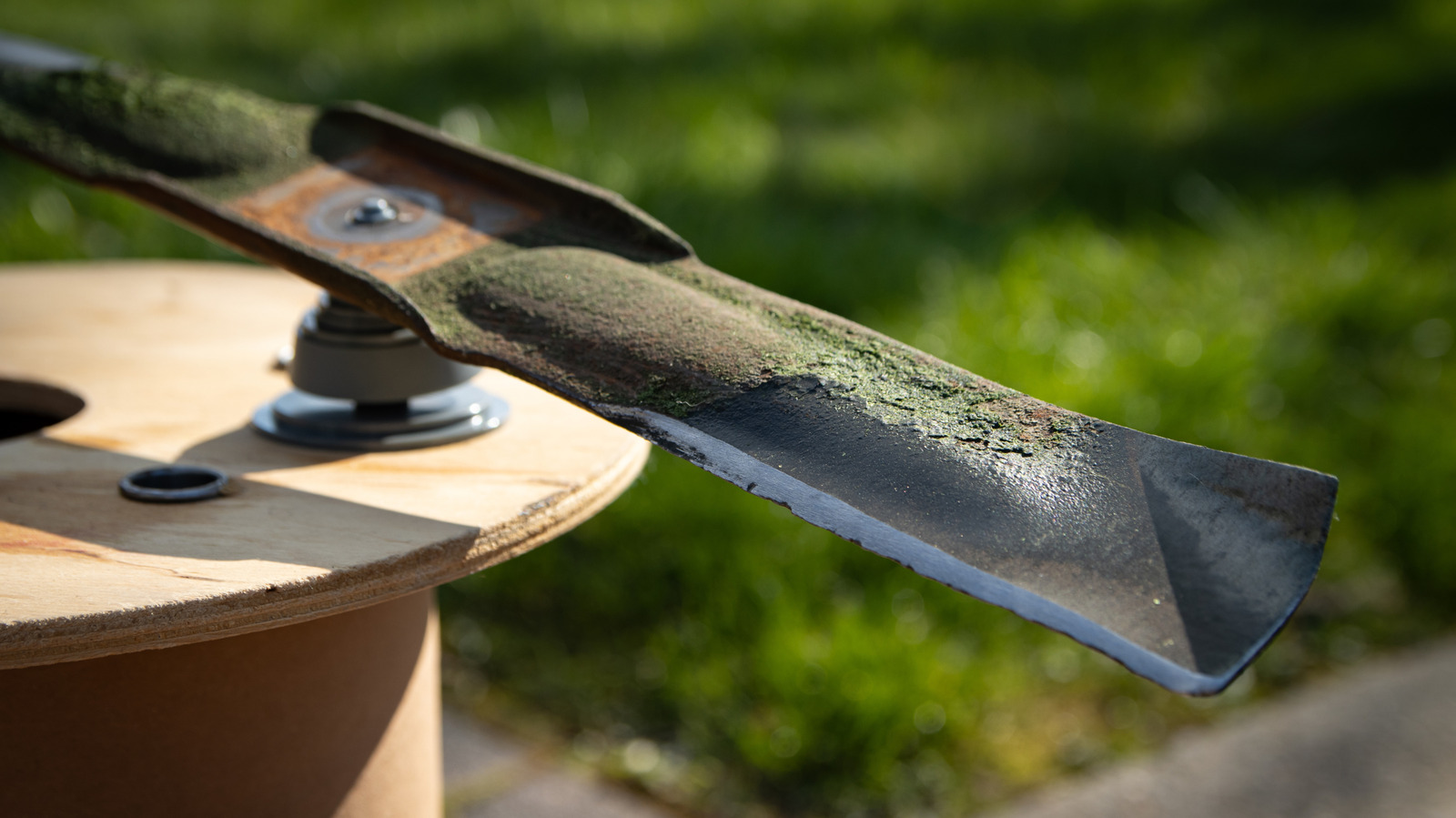
    Rather than sharpening a lawn mower blade with a manual file, get a dedicated mower blade sharpening wheel attachment for your drill. It's quick and easy.
    0 Reacties 0 aandelen 402 Views
  • Men do not always marry the most physically attractive woman they date. They marry the woman they like the most.

    Sometimes thats the same woman, sometimes not.

    Despite common narratives, wise men evaluate the whole person and the life they expect to have with her.

    Attraction may begin with appearance, but as many attractive women are not suitable for marriage it is simply not enough.

    It is entirely possible that the woman a man marries is the second, third, or even fourth most attractive woman he dated, yet he chooses her.

    He chooses her because of her other qualities combined.

    Maybe he could have done better looks wise. If that was all he cared about.

    His interest in her as a whole person does not diminish her.

    And he is attracted to her. That attraction is why he chose to date her in the first place.

    It may be unkind to dwell on the comparison, but it can still be the reality.
    Men do not always marry the most physically attractive woman they date. They marry the woman they like the most. Sometimes thats the same woman, sometimes not. Despite common narratives, wise men evaluate the whole person and the life they expect to have with her. Attraction may begin with appearance, but as many attractive women are not suitable for marriage it is simply not enough. It is entirely possible that the woman a man marries is the second, third, or even fourth most attractive woman he dated, yet he chooses her. He chooses her because of her other qualities combined. Maybe he could have done better looks wise. If that was all he cared about. His interest in her as a whole person does not diminish her. And he is attracted to her. That attraction is why he chose to date her in the first place. It may be unkind to dwell on the comparison, but it can still be the reality.
    0 Reacties 0 aandelen 2K Views
  • https://talkingupscotlandtwo.com/2026/02/15/major-leak-at-highland-nuclear-site-triggers-hunt-for-mystery-bunkers-reminds-us-that-spikes-in-childhood-leukaemia-breast-cancer-thyroid-cancer-and-all-cancers-around-nuclear-facilities-have-be/
    https://talkingupscotlandtwo.com/2026/02/15/major-leak-at-highland-nuclear-site-triggers-hunt-for-mystery-bunkers-reminds-us-that-spikes-in-childhood-leukaemia-breast-cancer-thyroid-cancer-and-all-cancers-around-nuclear-facilities-have-be/
    TALKINGUPSCOTLANDTWO.COM
    ‘Major leak at Highland nuclear site triggers hunt for mystery bunkers’ reminds us that spikes in childhood leukaemia, breast cancer, thyroid cancer and all cancers around nuclear facilities have been confirmed by German and other independent researchers
    Please Support Talking-up Scotland at: on the above. The National’s report today with the above headline, reminds me. Of what? Increased child leukaemia Increased breast cancer Increased thyr…
    0 Reacties 0 aandelen 591 Views
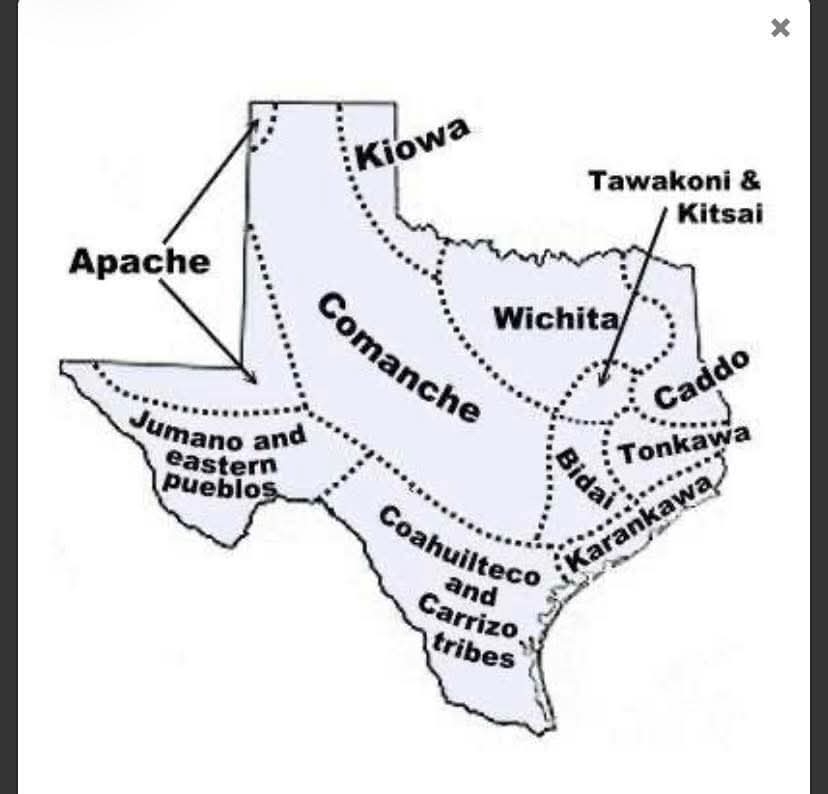
  • Native American tribes who originally inhabited the Texas region, including the meaning of their names and their history.

    1. Apache
    • Meaning of the Name: Generally believed to derive from the Pueblo-Zuni word "Apachu," meaning "enemy." However, the Apache people call themselves "Inde," "Tinde," or "Tinneh," all meaning "the people."
    • History and Culture:
    • Originally from the north, they migrated to the American Southwest and Plains regions between the 12th and 16th centuries.
    • They were nomadic hunter-gatherers, roaming vast territories to hunt buffalo and forage for food.
    • After acquiring horses from the Spanish in the 17th century, they became a powerful mounted nation. The Lipan Apache were prominent in the Texas region.

    2. Comanche
    • Meaning of the Name: Derived from a Ute word meaning "anyone who wants to fight me all the time." The people refer to themselves as "Nʉmʉnʉʉ" (NUH-MUH-NUH), meaning "The People."
    • History and Culture:
    • Dominated the Southern Plains of Texas in the 18th and 19th centuries and were known as the "Lords of the Plains."
    • They were originally part of the Shoshone tribe from Wyoming and moved south.
    • They were exceptionally skilled at breeding and using horses, and their horseback fighting ability was unique and unmatched by other tribes of the time.
    • Buffalo products were the core of their economy and way of life.

    3. Kiowa
    • Meaning of the Name: Derived from "Ka'I gwu" or "Ka'I gua" in their own language, meaning "principal people" or "leading people."
    • History and Culture:
    • Originally from western Montana, they migrated to the Yellowstone River and Black Hills, becoming skilled horsemen and buffalo hunters.
    • They gradually moved south into the northern Texas and Oklahoma regions in the early 18th century.
    • They were known for unique cultural practices like their Sun Dance ceremony.
    • They had a prestigious warrior society known as the "Principal Dogs" or "Ten Bravest."

    4. Jumano and Eastern Pueblos

    Meaning of the Name: The term "Jumano" referred to at least three distinct groups in the Southwest and Southern Plains between 1500 and 1700. They were called "rayado" (striped or marked people) due to the distinctive horizontal striped patterns tattooed or painted on their faces.
    • History and Culture:
    • They were primarily buffalo hunters and traders, playing a crucial role as middlemen between the Spanish colonies and various Indigenous groups.
    • Their main territory was in Central Texas, between the lower Pecos River and the Colorado River.
    • "Eastern Pueblos" may refer to people living in villages like the "Humanas pueblos" in eastern New Mexico, with whom the Jumano were associated.

    5. Coahuilteco and Carrizo Tribes
    • Meaning of the Name:
    • Coahuilteco: Not an original name for a single tribe, but an umbrella term created by Mexican linguists to group many bands and clans speaking various dialects in Northern Mexico and South Texas.
    • Carrizo: A Spanish word meaning "reed," applied to many Coahuiltecan groups along the Rio Grande. (For example, the Comecrudo tribe, whose Spanish name means "eats raw meat," was also called Carrizo).
    • History and Culture:
    • They were nomadic hunter-gatherers who lived along the Rio Grande and throughout South Texas.
    • They established villages near rivers and water sources.
    • Due to disease and conflict with European settlers, their population was decimated. Many sought refuge in Spanish missions, where they adopted European farming techniques.

    6. Karankawa
    • Meaning of the Name: Generally believed to mean "dog-lovers" or "dog-raisers" in their own language, as they were known to keep dogs described as a fox-like or coyote-like breed.
    • History and Culture:
    • A coastal people who lived along the Texas Coast from Galveston Island to south of Corpus Christi.
    • Their encounter with the Spanish explorer Álvar Núñez Cabeza de Vaca in 1528 marks the earliest recorded contact between Europeans and the First Peoples of Texas.
    • They were nomadic, using dugout canoes to travel the shallow coastal waterways.
    • They were known for tattooing their bodies.

    7. Tonkawa
    • Meaning of the Name: Comes from the Waco language, meaning "they all stay together." They called themselves "Titska Watitch," which means "the most human of people."
    • History and Culture:
    • A nomadic hunting tribe originally from eastern and central Texas and Oklahoma, hunting buffalo, deer, and other game.
    • They lived in about 20 independent wandering bands.
    • Historically, they were often at war with neighboring tribes like the Apache and Comanche.
    • They faced forced relocations and population decline due to violence in the 19th century.

    8. Bidai
    • Meaning of the Name: A Caddo word for "brushwood," named after the local geography along Bedias Creek where they lived. They referred to themselves as "Quasmigdo."
    • History and Culture:
    • Settled in East Texas, between the Brazos and Neches Rivers.
    • Some historical records suggest they may be one of the oldest tribes in Texas.
    • They practiced agriculture (maize), hunting (bison, deer), and fishing.
    • They were allied with Caddo and Atakapan tribes.

    9. Caddo
    • Meaning of the Name: Derived from the French abbreviation of "Kadohadacho," a Caddo word meaning "real chief" or "real Caddo."
    • History and Culture:
    • A confederacy of about 25 affiliated groups centered around the Red River in Texas, Arkansas, Louisiana, and Oklahoma.
    • They were sedentary agriculturalists, focusing on farming.
    • They developed complex social and political systems, centered around the construction and use of earthen temple and burial mounds.
    • Their leadership hierarchy included the xinesi (spiritual leader), caddi (principal headman), and canahas (subordinate headmen). The name of the state, Texas, comes from the Caddo word taysha, meaning "friend" or "ally."

    10. Wichita
    • Meaning of the Name: The origin is unknown, but they called themselves "Kitikiti'sh," meaning "the people" or "the preeminent people." French traders called them "Pani Piqué" (Tattooed Pawnee), referring to their distinctive tattoos.
    • History and Culture:
    • A confederacy of subtribes (including Taovaya, Tawakoni, Waco, and Kichai) who mainly lived in Northern Texas and South-Central Kansas.
    • They combined agriculture (corn, beans) with hunting (buffalo, deer).
    • They lived in distinctive conical, haystack-shaped houses made of grass and matting.
    • Their society was matrilocal (married couples lived with the wife's family) and matrilineal (descent was traced through the mother's line).

    11. Tawakoni & Kitsai
    • Tawakoni:
    • Meaning of the Name: Believed to mean "river bend among red sand hills." The French also referred to them as "Three Canes."
    • History: A Caddoan tribe and member of the Wichita Confederacy, they settled along the Brazos and Trinity Rivers in Texas in the 18th century. They shared similar agricultural and housing methods with the Wichita.
    • Kitsai:
    • A subtribe of the Wichita Confederacy. Notably, the Kitsai were the only group within the Wichita Confederacy to speak a distinct Caddoan language.

    Note : Most descendants of these historic Texas tribes were forcibly relocated to reservations, primarily in Oklahoma, during the 19th century. However, as noted in the follow-up, three federally recognized tribes and numerous descendants of the original tribes continue to reside in Texas today.


    Native American tribes who originally inhabited the Texas region, including the meaning of their names and their history. 1. Apache • Meaning of the Name: Generally believed to derive from the Pueblo-Zuni word "Apachu," meaning "enemy." However, the Apache people call themselves "Inde," "Tinde," or "Tinneh," all meaning "the people." • History and Culture: • Originally from the north, they migrated to the American Southwest and Plains regions between the 12th and 16th centuries. • They were nomadic hunter-gatherers, roaming vast territories to hunt buffalo and forage for food. • After acquiring horses from the Spanish in the 17th century, they became a powerful mounted nation. The Lipan Apache were prominent in the Texas region. 2. Comanche • Meaning of the Name: Derived from a Ute word meaning "anyone who wants to fight me all the time." The people refer to themselves as "Nʉmʉnʉʉ" (NUH-MUH-NUH), meaning "The People." • History and Culture: • Dominated the Southern Plains of Texas in the 18th and 19th centuries and were known as the "Lords of the Plains." • They were originally part of the Shoshone tribe from Wyoming and moved south. • They were exceptionally skilled at breeding and using horses, and their horseback fighting ability was unique and unmatched by other tribes of the time. • Buffalo products were the core of their economy and way of life. 3. Kiowa • Meaning of the Name: Derived from "Ka'I gwu" or "Ka'I gua" in their own language, meaning "principal people" or "leading people." • History and Culture: • Originally from western Montana, they migrated to the Yellowstone River and Black Hills, becoming skilled horsemen and buffalo hunters. • They gradually moved south into the northern Texas and Oklahoma regions in the early 18th century. • They were known for unique cultural practices like their Sun Dance ceremony. • They had a prestigious warrior society known as the "Principal Dogs" or "Ten Bravest." 4. Jumano and Eastern Pueblos Meaning of the Name: The term "Jumano" referred to at least three distinct groups in the Southwest and Southern Plains between 1500 and 1700. They were called "rayado" (striped or marked people) due to the distinctive horizontal striped patterns tattooed or painted on their faces. • History and Culture: • They were primarily buffalo hunters and traders, playing a crucial role as middlemen between the Spanish colonies and various Indigenous groups. • Their main territory was in Central Texas, between the lower Pecos River and the Colorado River. • "Eastern Pueblos" may refer to people living in villages like the "Humanas pueblos" in eastern New Mexico, with whom the Jumano were associated. 5. Coahuilteco and Carrizo Tribes • Meaning of the Name: • Coahuilteco: Not an original name for a single tribe, but an umbrella term created by Mexican linguists to group many bands and clans speaking various dialects in Northern Mexico and South Texas. • Carrizo: A Spanish word meaning "reed," applied to many Coahuiltecan groups along the Rio Grande. (For example, the Comecrudo tribe, whose Spanish name means "eats raw meat," was also called Carrizo). • History and Culture: • They were nomadic hunter-gatherers who lived along the Rio Grande and throughout South Texas. • They established villages near rivers and water sources. • Due to disease and conflict with European settlers, their population was decimated. Many sought refuge in Spanish missions, where they adopted European farming techniques. 6. Karankawa • Meaning of the Name: Generally believed to mean "dog-lovers" or "dog-raisers" in their own language, as they were known to keep dogs described as a fox-like or coyote-like breed. • History and Culture: • A coastal people who lived along the Texas Coast from Galveston Island to south of Corpus Christi. • Their encounter with the Spanish explorer Álvar Núñez Cabeza de Vaca in 1528 marks the earliest recorded contact between Europeans and the First Peoples of Texas. • They were nomadic, using dugout canoes to travel the shallow coastal waterways. • They were known for tattooing their bodies. 7. Tonkawa • Meaning of the Name: Comes from the Waco language, meaning "they all stay together." They called themselves "Titska Watitch," which means "the most human of people." • History and Culture: • A nomadic hunting tribe originally from eastern and central Texas and Oklahoma, hunting buffalo, deer, and other game. • They lived in about 20 independent wandering bands. • Historically, they were often at war with neighboring tribes like the Apache and Comanche. • They faced forced relocations and population decline due to violence in the 19th century. 8. Bidai • Meaning of the Name: A Caddo word for "brushwood," named after the local geography along Bedias Creek where they lived. They referred to themselves as "Quasmigdo." • History and Culture: • Settled in East Texas, between the Brazos and Neches Rivers. • Some historical records suggest they may be one of the oldest tribes in Texas. • They practiced agriculture (maize), hunting (bison, deer), and fishing. • They were allied with Caddo and Atakapan tribes. 9. Caddo • Meaning of the Name: Derived from the French abbreviation of "Kadohadacho," a Caddo word meaning "real chief" or "real Caddo." • History and Culture: • A confederacy of about 25 affiliated groups centered around the Red River in Texas, Arkansas, Louisiana, and Oklahoma. • They were sedentary agriculturalists, focusing on farming. • They developed complex social and political systems, centered around the construction and use of earthen temple and burial mounds. • Their leadership hierarchy included the xinesi (spiritual leader), caddi (principal headman), and canahas (subordinate headmen). The name of the state, Texas, comes from the Caddo word taysha, meaning "friend" or "ally." 10. Wichita • Meaning of the Name: The origin is unknown, but they called themselves "Kitikiti'sh," meaning "the people" or "the preeminent people." French traders called them "Pani Piqué" (Tattooed Pawnee), referring to their distinctive tattoos. • History and Culture: • A confederacy of subtribes (including Taovaya, Tawakoni, Waco, and Kichai) who mainly lived in Northern Texas and South-Central Kansas. • They combined agriculture (corn, beans) with hunting (buffalo, deer). • They lived in distinctive conical, haystack-shaped houses made of grass and matting. • Their society was matrilocal (married couples lived with the wife's family) and matrilineal (descent was traced through the mother's line). 11. Tawakoni & Kitsai • Tawakoni: • Meaning of the Name: Believed to mean "river bend among red sand hills." The French also referred to them as "Three Canes." • History: A Caddoan tribe and member of the Wichita Confederacy, they settled along the Brazos and Trinity Rivers in Texas in the 18th century. They shared similar agricultural and housing methods with the Wichita. • Kitsai: • A subtribe of the Wichita Confederacy. Notably, the Kitsai were the only group within the Wichita Confederacy to speak a distinct Caddoan language. Note : Most descendants of these historic Texas tribes were forcibly relocated to reservations, primarily in Oklahoma, during the 19th century. However, as noted in the follow-up, three federally recognized tribes and numerous descendants of the original tribes continue to reside in Texas today.

    0 Reacties 0 aandelen 12K Views
  • Unclog a Drain with Baking Soda & Vinegar
    Why it works: This classic combination creates a fizzy chemical reaction that helps break down organic gunk, hair, and soap scum, loosening minor blockages.

    The Method: Pour half a cup of baking soda down the drain, followed immediately by half a cup of white vinegar. Cover the drain to contain the fizz, wait 15-20 minutes, then flush with a pot of boiling hot water.

    Remove Water Stains with Mayonnaise
    Why it works: The oils in mayonnaise can penetrate the wood finish and displace the moisture trapped inside, making the white, cloudy ring disappear.

    The Method: Apply a small dollop of full-fat mayonnaise directly to the water stain on your wood table. Let it sit for 15 minutes to several hours, then wipe clean with a soft cloth and polish as usual.

    Clean Your Microwave with Lemon
    Why it works: The steam from boiling lemon water will loosen baked-on food splatters, and the citric acid helps to break down grease, making it easy to wipe clean.

    The Method: Juice one lemon into a microwave-safe bowl filled with 1 cup of water (you can add the spent lemon halves too). Microwave on high for 3-5 minutes until the window is steamy. Let it sit for another 5 minutes, then simply wipe the interior clean.

    Remove Sticker Residue with Rubbing Alcohol
    Why it works: Rubbing alcohol is a powerful solvent that breaks down the adhesive glue left behind by stickers and labels without damaging most surfaces.

    The Method: Soak a cotton ball or cloth in rubbing alcohol (or hand sanitizer) and dab it onto the sticky residue. Let it sit for a minute to dissolve the glue, then wipe away with a clean cloth.

    Deodorize Carpets with Baking Soda
    Why it works: Baking soda is a natural odor neutralizer. Its fine particles settle deep into carpet fibers, absorbing and eliminating smells instead of just covering them up.

    The Method: Liberally sprinkle baking soda over your dry carpet. Let it sit for at least 15 minutes, or for strong odors, several hours or overnight. Then, vacuum thoroughly.

    Remove Pet Hair with a Rubber Glove
    Why it works: The rubber creates friction and static electricity, which attracts and lifts pet hair from upholstery, carpets, and clothing much more effectively than many brushes.

    The Method: Put on a clean, damp rubber glove (like a dishwashing glove). Run your hand over the fabric in one direction—the hair will ball up for easy pickup.
    Unclog a Drain with Baking Soda & Vinegar Why it works: This classic combination creates a fizzy chemical reaction that helps break down organic gunk, hair, and soap scum, loosening minor blockages. The Method: Pour half a cup of baking soda down the drain, followed immediately by half a cup of white vinegar. Cover the drain to contain the fizz, wait 15-20 minutes, then flush with a pot of boiling hot water. Remove Water Stains with Mayonnaise Why it works: The oils in mayonnaise can penetrate the wood finish and displace the moisture trapped inside, making the white, cloudy ring disappear. The Method: Apply a small dollop of full-fat mayonnaise directly to the water stain on your wood table. Let it sit for 15 minutes to several hours, then wipe clean with a soft cloth and polish as usual. Clean Your Microwave with Lemon Why it works: The steam from boiling lemon water will loosen baked-on food splatters, and the citric acid helps to break down grease, making it easy to wipe clean. The Method: Juice one lemon into a microwave-safe bowl filled with 1 cup of water (you can add the spent lemon halves too). Microwave on high for 3-5 minutes until the window is steamy. Let it sit for another 5 minutes, then simply wipe the interior clean. Remove Sticker Residue with Rubbing Alcohol Why it works: Rubbing alcohol is a powerful solvent that breaks down the adhesive glue left behind by stickers and labels without damaging most surfaces. The Method: Soak a cotton ball or cloth in rubbing alcohol (or hand sanitizer) and dab it onto the sticky residue. Let it sit for a minute to dissolve the glue, then wipe away with a clean cloth. Deodorize Carpets with Baking Soda Why it works: Baking soda is a natural odor neutralizer. Its fine particles settle deep into carpet fibers, absorbing and eliminating smells instead of just covering them up. The Method: Liberally sprinkle baking soda over your dry carpet. Let it sit for at least 15 minutes, or for strong odors, several hours or overnight. Then, vacuum thoroughly. Remove Pet Hair with a Rubber Glove Why it works: The rubber creates friction and static electricity, which attracts and lifts pet hair from upholstery, carpets, and clothing much more effectively than many brushes. The Method: Put on a clean, damp rubber glove (like a dishwashing glove). Run your hand over the fabric in one direction—the hair will ball up for easy pickup.
    0 Reacties 0 aandelen 2K Views
  • "Based on a True Story" is the debut studio album by #Miami based rapper #TrickDaddy, and the only studio album released under his 'Trick Daddy Dollars' alias.
    It was released on July 29, 1997, through Slip-N-Slide and Warlock Records.
    Production was handled by Alvin Clark, Darren "DJ Spin" Rudnick, Devastator X, Mike "Fresh" McCray, Righteous Funk Boogie, and Trak & Tek.
    It features guest appearances from Buddy Roe, #JTMoney, Verb and Jamal. The album peaked at number 59 on the Top R&B/Hip-Hop Albums in the United States.
    "Based on a True Story" is the debut studio album by #Miami based rapper #TrickDaddy, and the only studio album released under his 'Trick Daddy Dollars' alias. ▪️It was released on July 29, 1997, through Slip-N-Slide and Warlock Records. ▪️Production was handled by Alvin Clark, Darren "DJ Spin" Rudnick, Devastator X, Mike "Fresh" McCray, Righteous Funk Boogie, and Trak & Tek. ▪️It features guest appearances from Buddy Roe, #JTMoney, Verb and Jamal. The album peaked at number 59 on the Top R&B/Hip-Hop Albums in the United States.
    0 Reacties 0 aandelen 8K Views
  • "Gettin' It (Album Number Ten)" is the 10th studio album by #BayArea rapper #TooShort.
    It was released on May 21, 1996, by Jive Records, making it his seventh album on the label.
    It was announced and marketed as his "final album", although his career would continue with the release of his aptly-titled eleventh album, Can't Stay Away (1999).
    The album was supported by the lead single of the same name (featuring Parliament-Funkadelic), which served as its first track.
    🚨"Gettin' It (Album Number Ten)" is the 10th studio album by #BayArea rapper #TooShort. ▪️It was released on May 21, 1996, by Jive Records, making it his seventh album on the label. ▪️It was announced and marketed as his "final album", although his career would continue with the release of his aptly-titled eleventh album, Can't Stay Away (1999). ▪️The album was supported by the lead single of the same name (featuring Parliament-Funkadelic), which served as its first track.
    0 Reacties 0 aandelen 5K Views
Zoekresultaten