• Why Letting a Car Sit Too Long Can Hurt It

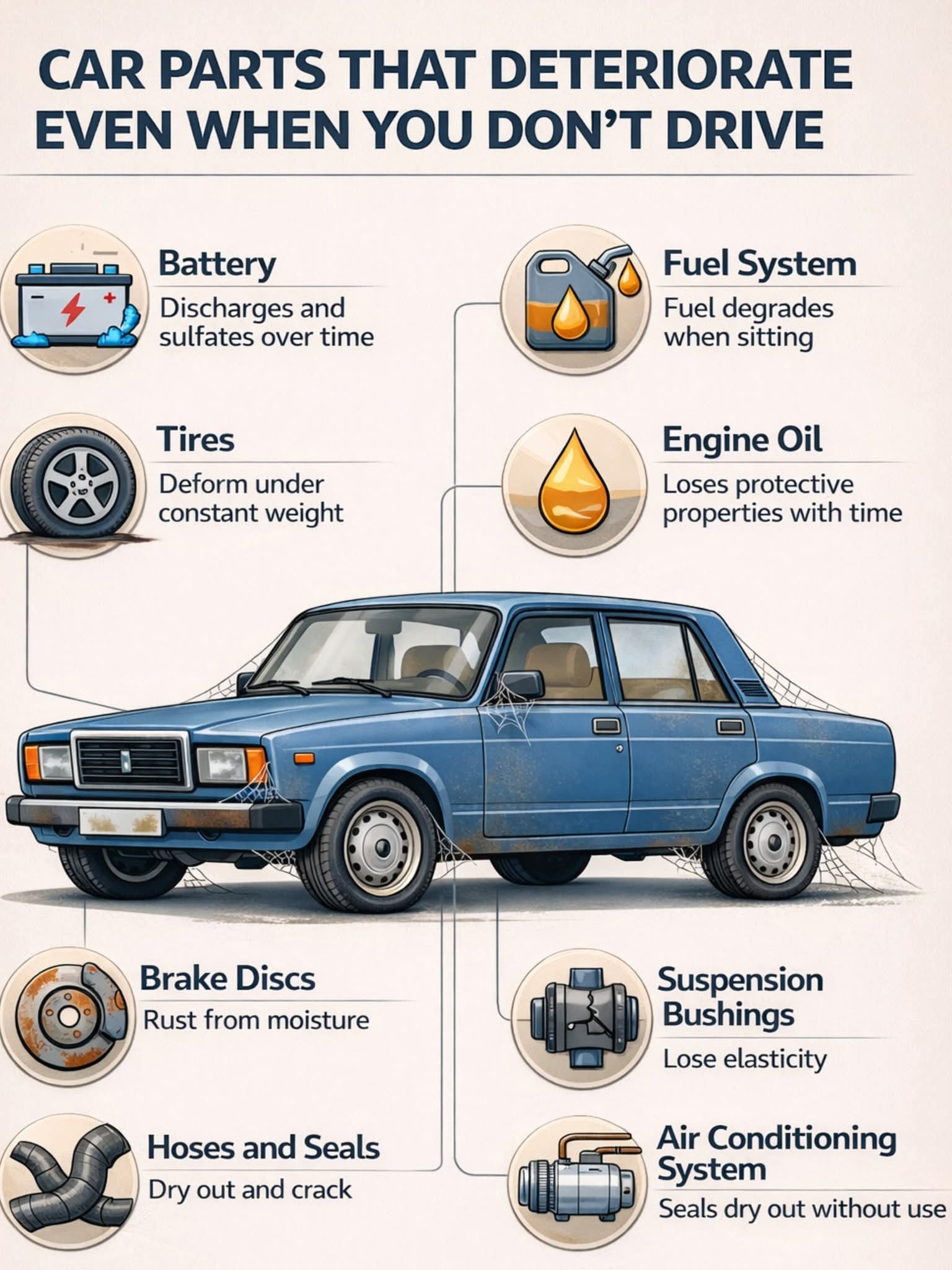
    The battery slowly dies
    Even when parked, the battery loses charge over time. Leave it too long, and you may come back to a car that won’t start at all.

    Tires lose shape
    Staying in the same position for weeks can cause flat spots. The next drive may feel bumpy or unstable.

    Brakes begin to rust
    Moisture builds up on the brake discs, creating rust. This can reduce braking performance or cause annoying noises.

    Hoses and seals dry out
    Rubber parts need movement and fluid circulation. When the car sits, they can crack, harden, or leak.

    Fluids lose effectiveness
    Fuel and engine oil degrade with time. Old fuel can cause starting issues, and worn-out oil won’t protect the engine properly.

    Relatable mistake: many people think leaving the car parked keeps it “like new.” In reality, cars are built to move, and a short drive every week often keeps them healthier than months of sitting still.

    Why Letting a Car Sit Too Long Can Hurt It ⏳ 1️⃣ The battery slowly dies Even when parked, the battery loses charge over time. Leave it too long, and you may come back to a car that won’t start at all. 2️⃣ Tires lose shape Staying in the same position for weeks can cause flat spots. The next drive may feel bumpy or unstable. 3️⃣ Brakes begin to rust Moisture builds up on the brake discs, creating rust. This can reduce braking performance or cause annoying noises. 4️⃣ Hoses and seals dry out Rubber parts need movement and fluid circulation. When the car sits, they can crack, harden, or leak. 5️⃣ Fluids lose effectiveness Fuel and engine oil degrade with time. Old fuel can cause starting issues, and worn-out oil won’t protect the engine properly. Relatable mistake: many people think leaving the car parked keeps it “like new.” In reality, cars are built to move, and a short drive every week often keeps them healthier than months of sitting still.

    0 التعليقات 0 المشاركات 933 مشاهدة
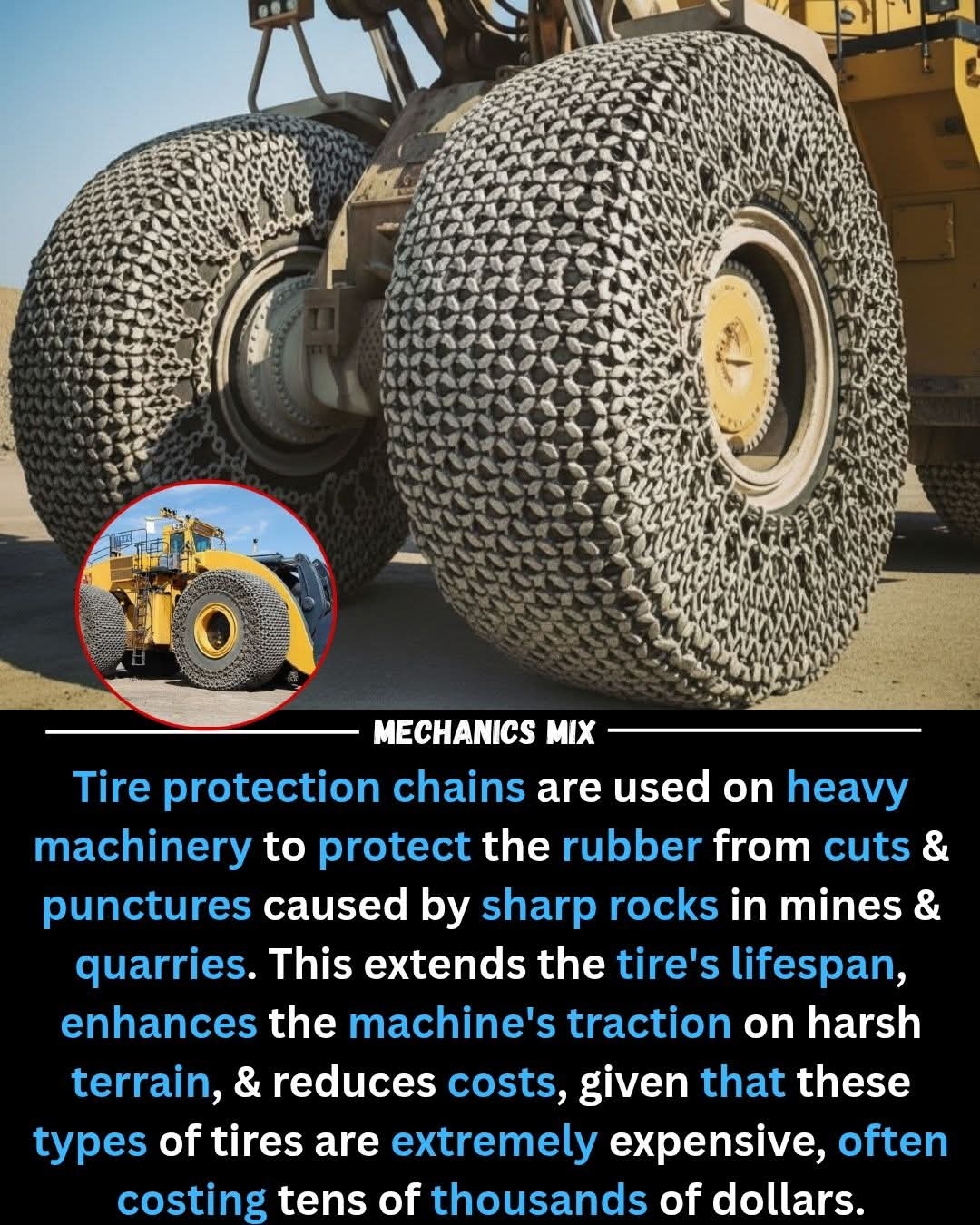
  • In the demanding world of industrial mining and heavy construction, tire protection chains serve as an indispensable steel armor for massive earthmovers. These intricately woven mesh systems wrap around the enormous rubber tires to shield them from the jagged, razor-sharp rocks typically found in quarries and underground mines. By acting as a sacrificial barrier, these chains prevent catastrophic punctures and surface tears that could lead to dangerous blowouts or costly operational downtime. Beyond mere protection, they significantly improve the machine's traction and stability on loose or slippery terrain, ensuring that these mechanical giants can operate with precision even in the most hostile environments.

    ​The primary driver behind adopting this technology is the staggering economic reality of heavy-duty equipment maintenance. A single tire for a large loader can command a price tag of tens of thousands of dollars, making any premature failure a significant financial blow to a project. By investing in high-quality steel chains, companies can effectively double or even triple the service life of their tires, transforming a vulnerable high-cost component into a durable long-term asset. This strategic layer of steel not only safeguards the equipment but also ensures a more sustainable and cost-effective workflow by minimizing the need for frequent, expensive replacements in the world’s toughest workspaces.
    In the demanding world of industrial mining and heavy construction, tire protection chains serve as an indispensable steel armor for massive earthmovers. These intricately woven mesh systems wrap around the enormous rubber tires to shield them from the jagged, razor-sharp rocks typically found in quarries and underground mines. By acting as a sacrificial barrier, these chains prevent catastrophic punctures and surface tears that could lead to dangerous blowouts or costly operational downtime. Beyond mere protection, they significantly improve the machine's traction and stability on loose or slippery terrain, ensuring that these mechanical giants can operate with precision even in the most hostile environments. ​The primary driver behind adopting this technology is the staggering economic reality of heavy-duty equipment maintenance. A single tire for a large loader can command a price tag of tens of thousands of dollars, making any premature failure a significant financial blow to a project. By investing in high-quality steel chains, companies can effectively double or even triple the service life of their tires, transforming a vulnerable high-cost component into a durable long-term asset. This strategic layer of steel not only safeguards the equipment but also ensures a more sustainable and cost-effective workflow by minimizing the need for frequent, expensive replacements in the world’s toughest workspaces.
    0 التعليقات 0 المشاركات 1193 مشاهدة
  • Few people know that Brazil has the largest population of black people outside of the African continent. In fact, it is the second largest “Black nation” after Nigeria, with over 100 million Black people.

    Yet, there is little information in the media outside of the country about this group, specifically, information about the history of Africans in the country that defined and continues to define the affairs of black people globally. For example, the country’s Malê Revolt in its province of Bahia in 1835 is not only considered the most important revolt in Brazillian history but it is believed to have been instrumental in bringing an end to the international slave trade in the country.

    Historians say that on the night of January 24 to 25, 1835, African-born slaves and freed-people in the northeastern Brazilian city of Salvador da Bahia carried out a rebellion to liberate themselves from slavery and create an Islamic homeland. The group of some six hundred Yoruba, Nupe, Kanuri and Hausa people from present-day Nigeria were led by Muslim leaders, having heard of and being inspired by the Haitian Revolution (1791−1804).

    SOURCE: Face2FaceAfrica

    https://face2faceafrica.com/article/how-enslaved-nigerians-in-brazil-helped-usher-in-the-end-of-international-slave-trade-in-1835

    #Brazil #Nigeria #African #AfricanHistory #Yoruba #Hausa #Slavery #Haiti #HaitiRevolution
    Few people know that Brazil has the largest population of black people outside of the African continent. In fact, it is the second largest “Black nation” after Nigeria, with over 100 million Black people. Yet, there is little information in the media outside of the country about this group, specifically, information about the history of Africans in the country that defined and continues to define the affairs of black people globally. For example, the country’s Malê Revolt in its province of Bahia in 1835 is not only considered the most important revolt in Brazillian history but it is believed to have been instrumental in bringing an end to the international slave trade in the country. Historians say that on the night of January 24 to 25, 1835, African-born slaves and freed-people in the northeastern Brazilian city of Salvador da Bahia carried out a rebellion to liberate themselves from slavery and create an Islamic homeland. The group of some six hundred Yoruba, Nupe, Kanuri and Hausa people from present-day Nigeria were led by Muslim leaders, having heard of and being inspired by the Haitian Revolution (1791−1804). SOURCE: Face2FaceAfrica https://face2faceafrica.com/article/how-enslaved-nigerians-in-brazil-helped-usher-in-the-end-of-international-slave-trade-in-1835 #Brazil #Nigeria #African #AfricanHistory #Yoruba #Hausa #Slavery #Haiti #HaitiRevolution
    0 التعليقات 0 المشاركات 3042 مشاهدة
  • Automobile tires have undergone a remarkable transformation over the last century, evolving from simple rubber coverings into highly engineered components critical for safety, comfort, performance, and efficiency. This evolution reflects changes in vehicle design, road conditions, driving speeds, and advances in material science.

    In the early 1900s and 1920s, tires were narrow, tall, and often mounted on spoked wheels. These early tyres were made from natural rubber with cotton fabric plies and had smooth or lightly grooved surfaces. They were designed mainly to cope with rough, unpaved roads and low vehicle speeds. Durability was limited, punctures were common, and ride comfort was basic. Bias-ply construction dominated this era, where fabric layers were laid diagonally across each other, making tires stiff and prone to heat buildup.

    By the 1930s and 1940s, tire designs became slightly wider and stronger. Rubber compounds improved, and tread patterns became more defined to enhance grip on wet and muddy roads. During this period, vehicles grew heavier and faster, especially due to wartime engineering advances, pushing tire manufacturers to focus more on load capacity and reliability.

    The 1950s marked a major visual and technical shift with the introduction of whitewall tyres, symbolizing style and luxury. More importantly, tire construction continued to improve, offering better comfort and longer life. In the late 1940s and 1950s, radial tire technology was developed, though it gained widespread adoption slightly later. Radial tires used steel belts laid perpendicular to the direction of travel, significantly improving grip, fuel efficiency, and tread life.

    During the 1960s and 1970s, radial tires became mainstream globally. Tires grew wider, and tread designs became more aggressive to support higher speeds and better cornering. Performance-oriented tires emerged alongside off-road and all-terrain tires, reflecting the rise of sports cars and utility vehicles. Safety, heat resistance, and handling became central design goals.

    By the 1980s and 1990s, tire technology advanced rapidly. Low-profile tyres paired with alloy wheels became popular, improving handling and aesthetics. Rubber compounds were enhanced using synthetic materials, silica, and carbon black to balance grip, durability, and rolling resistance. Specialized tires such as winter tires, high-performance summer tires, and touring tires became common, each designed for specific driving conditions.

    From the 2000s onward, tires evolved into highly specialized, technology-driven products. Modern tires feature advanced tread patterns for noise reduction, water dispersion, and improved braking. Run-flat tires allow limited driving even after punctures, while tubeless designs became standard for safety and convenience. Sensors for tire pressure monitoring systems (TPMS) were integrated to enhance safety.

    Today, tires are engineered with sustainability and efficiency in mind. There are eco-friendly tires designed to reduce rolling resistance and improve electric vehicle range, ultra-high-performance tires for sports cars, all-season tires for everyday use, off-road and mud-terrain tires for extreme conditions, and smart tires being developed with embedded sensors to monitor wear, temperature, and road conditions in real time.

    From simple rubber rings to intelligent, high-performance components, tire evolution mirrors the progress of the automobile itself focused on safety, efficiency, comfort, and innovation.

    #TireEvolution #AutomobileHistory #CarTechnology #RadialTires #VehicleSafety #AutomotiveEngineering #ModernTires #MobilityInnovation #Cars #Tire
    Automobile tires have undergone a remarkable transformation over the last century, evolving from simple rubber coverings into highly engineered components critical for safety, comfort, performance, and efficiency. This evolution reflects changes in vehicle design, road conditions, driving speeds, and advances in material science. In the early 1900s and 1920s, tires were narrow, tall, and often mounted on spoked wheels. These early tyres were made from natural rubber with cotton fabric plies and had smooth or lightly grooved surfaces. They were designed mainly to cope with rough, unpaved roads and low vehicle speeds. Durability was limited, punctures were common, and ride comfort was basic. Bias-ply construction dominated this era, where fabric layers were laid diagonally across each other, making tires stiff and prone to heat buildup. By the 1930s and 1940s, tire designs became slightly wider and stronger. Rubber compounds improved, and tread patterns became more defined to enhance grip on wet and muddy roads. During this period, vehicles grew heavier and faster, especially due to wartime engineering advances, pushing tire manufacturers to focus more on load capacity and reliability. The 1950s marked a major visual and technical shift with the introduction of whitewall tyres, symbolizing style and luxury. More importantly, tire construction continued to improve, offering better comfort and longer life. In the late 1940s and 1950s, radial tire technology was developed, though it gained widespread adoption slightly later. Radial tires used steel belts laid perpendicular to the direction of travel, significantly improving grip, fuel efficiency, and tread life. During the 1960s and 1970s, radial tires became mainstream globally. Tires grew wider, and tread designs became more aggressive to support higher speeds and better cornering. Performance-oriented tires emerged alongside off-road and all-terrain tires, reflecting the rise of sports cars and utility vehicles. Safety, heat resistance, and handling became central design goals. By the 1980s and 1990s, tire technology advanced rapidly. Low-profile tyres paired with alloy wheels became popular, improving handling and aesthetics. Rubber compounds were enhanced using synthetic materials, silica, and carbon black to balance grip, durability, and rolling resistance. Specialized tires such as winter tires, high-performance summer tires, and touring tires became common, each designed for specific driving conditions. From the 2000s onward, tires evolved into highly specialized, technology-driven products. Modern tires feature advanced tread patterns for noise reduction, water dispersion, and improved braking. Run-flat tires allow limited driving even after punctures, while tubeless designs became standard for safety and convenience. Sensors for tire pressure monitoring systems (TPMS) were integrated to enhance safety. Today, tires are engineered with sustainability and efficiency in mind. There are eco-friendly tires designed to reduce rolling resistance and improve electric vehicle range, ultra-high-performance tires for sports cars, all-season tires for everyday use, off-road and mud-terrain tires for extreme conditions, and smart tires being developed with embedded sensors to monitor wear, temperature, and road conditions in real time. From simple rubber rings to intelligent, high-performance components, tire evolution mirrors the progress of the automobile itself focused on safety, efficiency, comfort, and innovation. #TireEvolution #AutomobileHistory #CarTechnology #RadialTires #VehicleSafety #AutomotiveEngineering #ModernTires #MobilityInnovation #Cars #Tire
    0 التعليقات 0 المشاركات 3691 مشاهدة
  • If they betrayed your trust, they’ll do it again. You don’t need to drink the entire ocean to know it’s salty. 👌🏽
    If they betrayed your trust, they’ll do it again. You don’t need to drink the entire ocean to know it’s salty. 🧂👌🏽💯
    0 التعليقات 0 المشاركات 513 مشاهدة
  • Grind culture is killing people. Being exhausted, burned out & tired just to flex on social media is not a sustainable life.
    Grind culture is killing people. Being exhausted, burned out & tired just to flex on social media is not a sustainable life.
    0 التعليقات 0 المشاركات 1412 مشاهدة
  • The entire state of Texas as photographed by NASA from space, 2018. This is a fascinating image to look at if you're at all familiar with Texas geography. Not only can you see all of the major cities but even towns like Temple-Killeen, Midland-Odessa ... even small towns like Monahans, Alpine, Marfa etc.. The Eagle Ford can also clearly be seen. But what blows me away is the lights in the area around Pecos. The lights aren't quite as intense as they are in Midland-Odessa (immediately to the east of Pecos) but the area is at least as big, perhaps bigger. Amazing. Fortunately, with the exception of Presidio, the Big Bend remains dark. May it ever be so!
    The entire state of Texas as photographed by NASA from space, 2018. This is a fascinating image to look at if you're at all familiar with Texas geography. Not only can you see all of the major cities but even towns like Temple-Killeen, Midland-Odessa ... even small towns like Monahans, Alpine, Marfa etc.. The Eagle Ford can also clearly be seen. But what blows me away is the lights in the area around Pecos. The lights aren't quite as intense as they are in Midland-Odessa (immediately to the east of Pecos) but the area is at least as big, perhaps bigger. Amazing. Fortunately, with the exception of Presidio, the Big Bend remains dark. May it ever be so!
    0 التعليقات 0 المشاركات 2853 مشاهدة
  • https://soundcloud.com/sunsetsherb/sick-and-tired-screwed-chopped?si=7818481c875745239c31f42d341b161a&utm_source=clipboard&utm_medium=text&utm_campaign=social_sharing
    https://soundcloud.com/sunsetsherb/sick-and-tired-screwed-chopped?si=7818481c875745239c31f42d341b161a&utm_source=clipboard&utm_medium=text&utm_campaign=social_sharing
    0 التعليقات 0 المشاركات 1338 مشاهدة
  • https://soundcloud.com/sunsetsherb/sick-and-tired-screwed-chopped?si=5ad358747a844da292a05c86b86ce8ea&utm_source=clipboard&utm_medium=text&utm_campaign=social_sharing
    https://soundcloud.com/sunsetsherb/sick-and-tired-screwed-chopped?si=5ad358747a844da292a05c86b86ce8ea&utm_source=clipboard&utm_medium=text&utm_campaign=social_sharing
    0 التعليقات 0 المشاركات 1150 مشاهدة
  • https://www.worldatlas.com/cities/10-best-towns-in-louisiana-to-retire-comfortably.html
    https://www.worldatlas.com/cities/10-best-towns-in-louisiana-to-retire-comfortably.html
    WWW.WORLDATLAS.COM
    10 Best Towns In Louisiana To Retire Comfortably
    Louisiana is a great state. It's warm and presents opportunities for leisure and cultural exploration — especially in its 10 best towns to retire comfortably.
    0 التعليقات 0 المشاركات 526 مشاهدة
الصفحات المعززة